By Patrick Dobyns, Opinion Editor
At the final Imaginary Gardens meeting last semester, we put together a list of stories we planned to get done in time for classes starting this semester. When it was my turn to pitch ideas, I said to our lead editor, “Put me down for a blank spot, something political is bound to happen over winter break.” One of the fingers of the monkey’s paw curled up, making me wish I had never uttered those words.
With everything that has happened over the last two months, I have a plethora of current events I could write about: the release of the Epstein Files, the abduction of Nicolás Maduro and his family by the Trump administration, and the shooting of Renee Nicole Good by an ICE agent in Minneapolis all provide ample talking points and have serious implications that mirror events in history. Rather than trying to shove all of these events into a single story, I plan on writing several stories which all reflect on the same historical time period: the Cold War.
The Cold War saw the United States engage in a race of dominance with the Soviet Union, an authoritarian power bloc based out of modern-day Russia. In addition to a nuclear arms race, both nations engaged in heavy espionage, proxy wars, and influencing the leadership of foreign nations through diplomacy and military operations.
It was in this era we saw the United States arm Afghani fundamentalist rebels to oppose the Soviet Union’s influence in the Middle East. It was in this era we saw the CIA run experiments on United States citizens while denying everything. It was in this era we saw paranoia to such an extreme that one’s political alignment became a matter of national security, where people of any significance could be jailed or assassinated if they gave the wrong answer to that infamous question, “Are you now, or have you ever been, a Communist?”
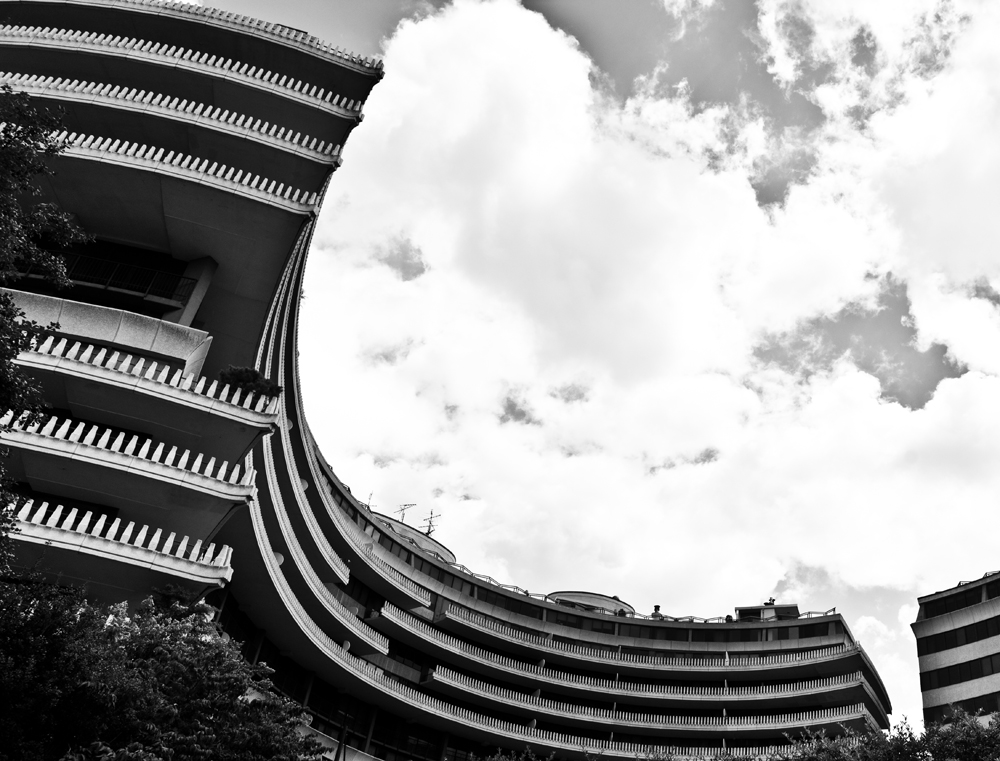
It was also in this era that we saw corruption at the highest level of office, the integrity of the President of the United States being called into question, with the Watergate Scandal.
Watergate has become such a defining event that its name is a parody for almost any scandal of importance; one example of this is Signal-gate, when a reporter was leaked details of a military operation in Yemen over the social media platform Signal. Many will be familiar with at least the name of the Watergate scandal, and likely are familiar with the involvement of President Richard Nixon and his resignation over the affair. Nixon, to this day, is the only person to resign the office of President of the United States. However, the details of the incident are frequently forgotten, with most of us having only heard the general details. If we are to understand the true impact of the scandal and why it’s still relevant today, the following facts need to be understood.
Richard Nixon was the winner of the 1968 presidential election, winning on a platform of withdrawing the United States from the costly and unpopular Vietnam War. While he did fulfill his promise, the abandonment of the South Vietnamese to the Communist North as well as secret bombing operations in Cambodia that came to light meant that even in this regard, his presidency was troubled. The exposure of the Cambodia bombings, as well as earlier leaks about the War’s progress before his administration, led Nixon to become paranoid about potential leaks within his administration. He had the FBI and the chief of domestic policy, John Erlichman, wiretap those he suspected of leaking information to the press.
President Nixon then began to assemble a group of people who would be responsible for preventing any further leaks, bolstering his administration; this duty earned them the nickname of the “White House Plumbers.” Of the members, arguably the most notable was former CIA agent E. Howard Hunt, who was partially responsible for earlier covert operations, including the 1954 coup in Guatemala and the 1961 Bay of Pigs Invasion. Former FBI agent G. Gordon Liddy, who also joined the Special Investigations Unit (as it was called in an official capacity), gave the group another name; ODESSA, named after a code phrase which referred to Nazi groups that escaped Germany after the end of the Second World War.
The Plumbers were responsible for a number of schemes and investigations that involved burglary and sabotage of information, often ransacking offices of suspected leakers and framing notable individuals who Nixon saw as a danger to his administration. When President Nixon established the Committee for the Re-Election of the President (CRP) to fund his 1972 re-election campaign, Liddy was put in charge, being described as “our man in charge of dirty tricks.” Several plans were put into place to sabotage the Democratic National Convention, ranging in severity from sabotaging the air-conditioning of their Miami meeting to a plan nicknamed Nacht und Nebel, named after one of Adolf Hitler’s directives, which proposed hiring mobsters to kidnap and execute protesters at the Republican National Convention in secret. These plans were (thankfully) rejected for being too complicated, and an alternate plan was put into place, which simply involved bugging the Democrats.
Hunt and Liddy became the handlers for the burglars who would break into the Watergate hotel, where the Democratic National Committee (DNC) was headquartered. The burglars themselves were a group of four Cuban nationals who had collaborated in the failed Bay of Pigs Invasion, along with James McCord, a former CIA officer and the CRP’s head of security. On 28 May, the burglars successfully infiltrated the Watergate and bugged the telephones of prominent DNC officials. In addition, they took photographs of the DNC security files.
While the operation was a success, John Mitchell, the former Attorney General who resigned to lead the CRP, was unhappy with the gathered recordings. Another attempt was made on 17 June but, after a night guard discovered tape being used to keep door locks open, the police were called to search the Watergate for potential intruders. Hunt and Liddy escaped undetected, but the five burglars were caught and arrested.
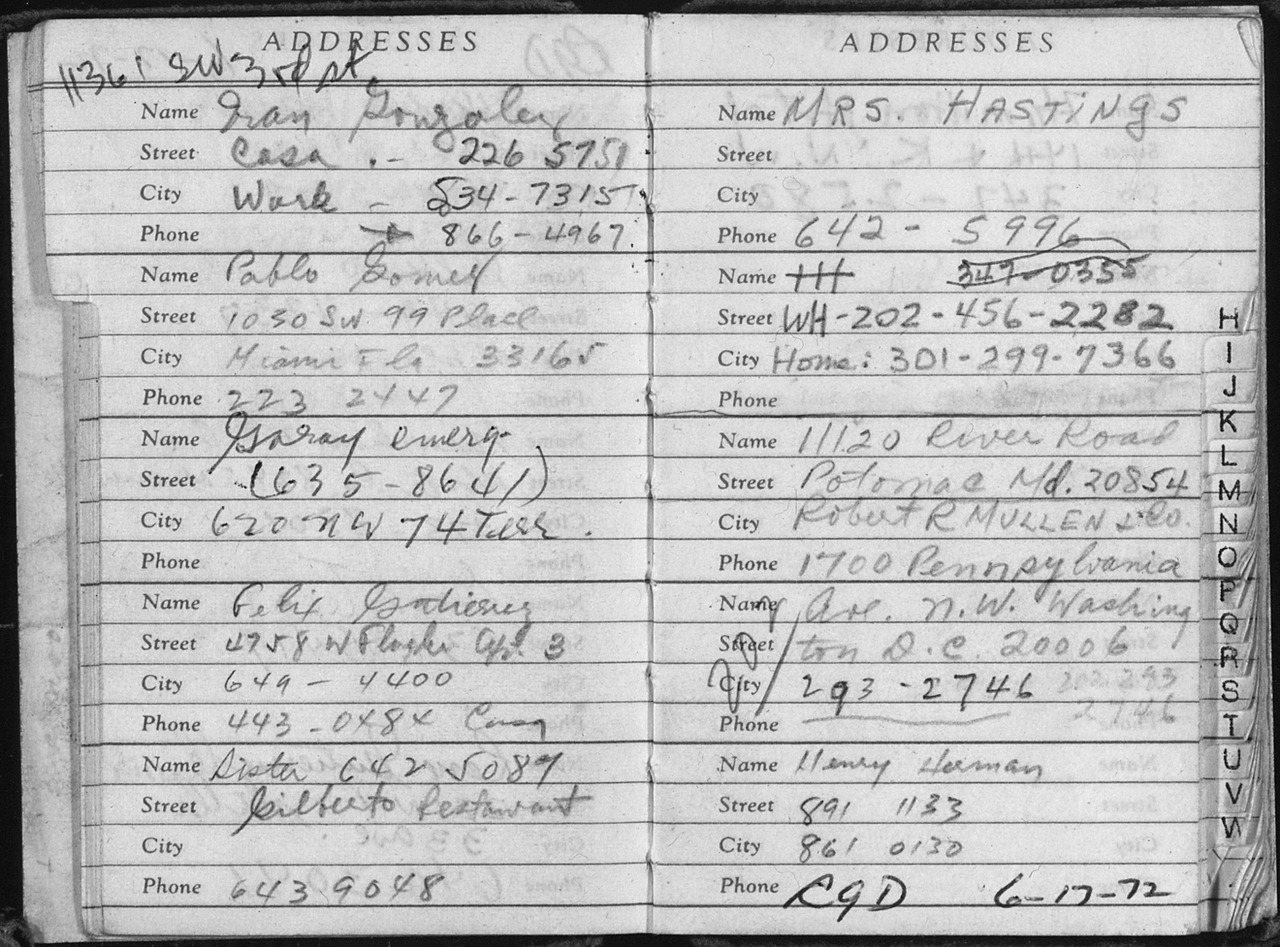
The next morning, Liddy wasted no time destroying files at the CRP regarding all plans to infiltrate the DNC. Although the burglars gave fake names and refused to cooperate with the FBI, phone book entries and documents found in their rooms in the Watergate showed a connection to Hunt and the White House. President Nixon released a press statement on 22 June that denied his administration’s involvement with the burglary while, at the same time, incriminating files were being burned.
It wasn’t long before the press began investigating the situation themselves; The Washington Press assigned journalists Alfred Lewis, Bob Woodward, and Carl Bernstein to the story. They were able to verify Hunt as a White House consultant and link him to the burglars at Watergate using their phone directories.
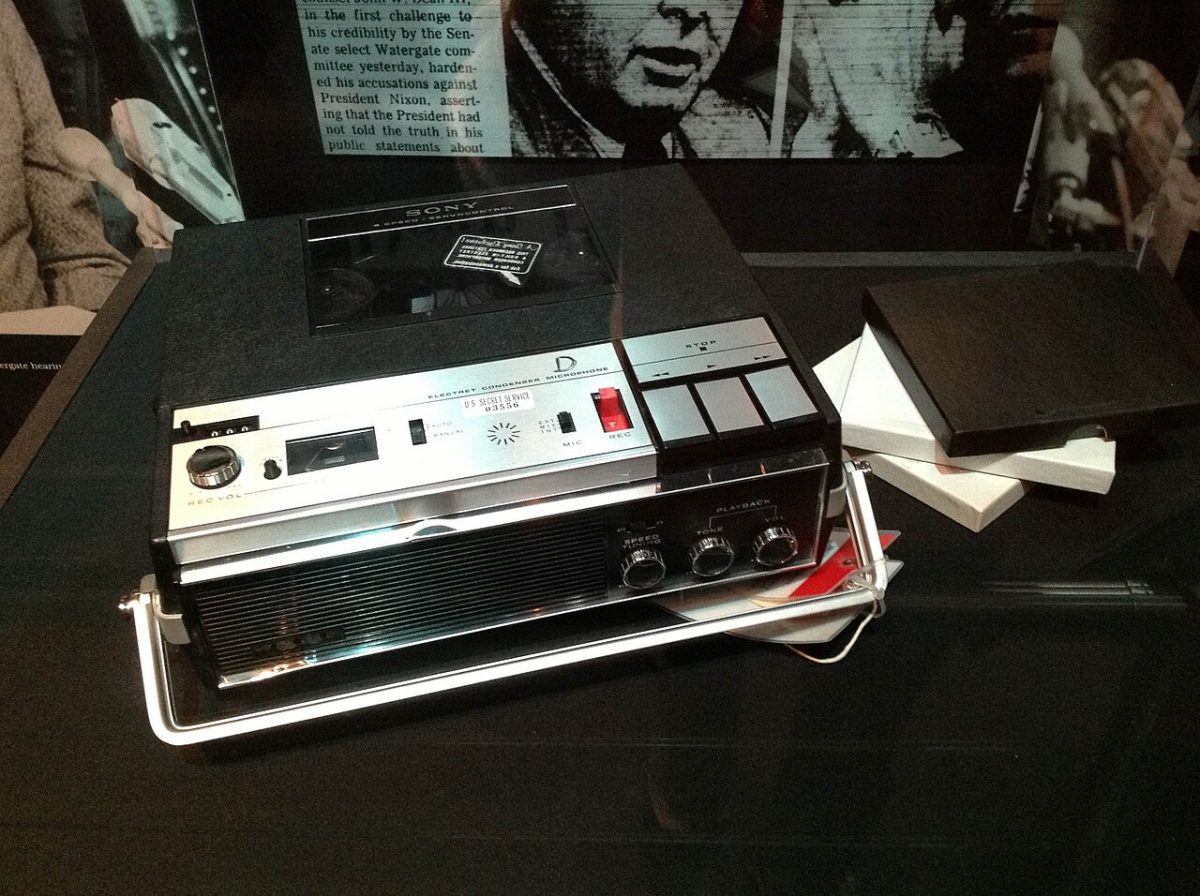
FBI investigations were closing in around the CRP at the same time, tracing over $4,500 in checks towards the organization. President Nixon, growing increasingly worried about the potential of discovery and internal leaks, recorded a conversation with the White House Chief of Staff, Harry Hadelman, regarding White House counsel John Dean and John Mitchell (all members of Nixon’s CRP). During this taped conversation, Nixon and Hadelman speak about getting the CIA to halt further FBI investigations into the incident. This recording would later become known as “the Smoking Gun,” referring to how much it alone damned Richard Nixon. The Director of the CIA, Richard Helms, agreed to pressure FBI Director Patrick Gray into dropping the investigation, but Gray refused without a full written request, which Helms refused.
Over the next few months, the White House and the Plumbers succeeded in obfuscating the investigation. Despite one member resigning from the CRP and providing testimony, Liddy was made into a patsy, the CRP firing him to provide cover for themselves, while Dean provided money to bribe other involved parties to stay quiet. When an audit of Nixon’s campaign spending revealed over $350,000 spent on questionable funding, the DOJ refused to probe into it, and a probe launched by the Democrat House Banking Committee chair, Wright Patman, was obstructed by the White House. On 15 September, Hunt and Liddy, who had already left the CRP, were indicted, along with the five burglars. All White House staffers, as well as Nixon himself, managed to avoid repercussions—Nixon would win his second term in a record-breaking victory, winning every state except Massachusetts.
When the trial for the burglars commenced, the prosecution accused Liddy and McCord of acting as rogue agents, accusing Hunt and the burglars of acting on their orders rather than those of the CRP. The burglars pled guilty to the charge, and while McCord was planning on cooperating with the prosecution, he was convinced through a promise of a government job to refrain from confessing.
While the burglars were indicted, the trial was still considered a failure due to the suspicion that more parties were involved, so the Senate voted in February to establish the Senate Watergate Committee to investigate the case. Patrick Gray admitted to the Committee that he had handed his reports of the Watergate break-in to John Dean and, seeking to save face in front of Congress, offered to hand over the reports to the Committee. President Nixon vetoed the move, citing executive privilege, and released a phony report meant to clear Dean.
In March, things were turning against Nixon and the CRP. McCord admitted that the burglars received payments to plead guilty and keep other details quiet. He gave his full testimony to the courts and, even more importantly, the Press. When his story came out, national attention was focused on the scandal.
In April, John Dean and deputy director of the CRP, Jeb Magruder, began cooperating with the prosecutors, exposing several CRP members’ involvement in the scandal, including Erlichman, Haldeman, and Magruder himself. Members were almost immediately made to resign or were fired by Nixon. The pressure on Nixon was becoming so great that it is theorized his July bout of pneumonia was caused by the stress of Watergate.
When it was revealed that Nixon taped almost every conversation he had within the White House, specific tapes regarding members of the Plumbers were subpoenaed by the courts. Nixon refused, citing executive privilege, but Archibald Cox, the special prosecutor for the case, continued to press the White House for the tapes. Nixon tried to pressure Elliot Richardson, the Attorney General, to fire Cox, but was rebuffed.
Things came to a head on 20 October, when Nixon ordered Richardson to fire Cox, but Richardson refused and resigned instead. Nixon then ordered the Deputy Attorney General to do the same and was met with the same result. The next acting Attorney General, the Solicitor General, agreed to fire Cox, though he would later admit he also considered resigning. This event became known as the Saturday Night Massacre, and Nixon was met with a huge popular backlash. After his landslide victory in the 1972 election, his approval rating dropped to twenty-four percent, and the House Judiciary Committee began an impeachment inquiry.
While some tapes were eventually handed over, two were still missing, having been recorded to be signed out and never returned. Under increasing pressure from the media, Nixon spoke to members of the Associated Press in November, denying any malfeasance on his part and stating that he welcomed inquiries, stating, “People have got to know whether or not their president is a crook; well, I am not a crook.” Four days after this speech, an eighteen-minute gap was discovered in one of the White House tapes, from 20 June 1972, with Haldeman. Prosecutors used this to demand all White House tapes within five days, and Nixon finally relented. The gap in the tape could not be explained, with attempts to do so being regarded as implausible. While the gap was damning, it was not substantive evidence.
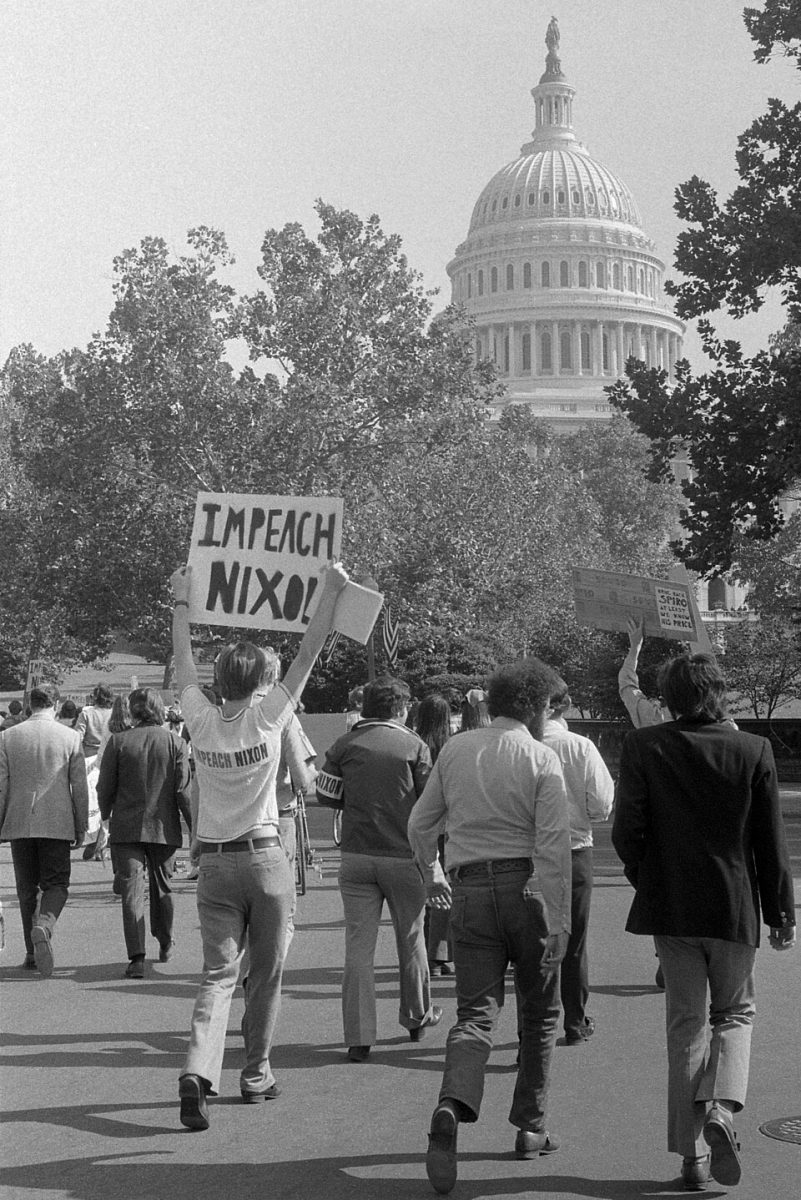
It was around this time that prosecutors changed tactics. Rather than investigating the Watergate break-in itself, they switched to the cover-up, transcribing hundreds of hours of tape that proved that the White House had obstructed justice. Nixon was labelled as a co-conspirator, while the Watergate Seven, those advisors and aides who were more certainly involved in the scandal, were indicted with twenty-four counts of conspiracy and obstruction of justice. Even more tapes were subpoenaed, and Nixon was made to transcribe them over the course of a week. Despite numerous instances of editing and labelling dialogue as “unintelligible,” and despite only twenty of the sixty-four tapes actually being transcribed, the tapes still showed his involvement in the cover-up.
On 9 May 1974, impeachment proceedings for President Nixon began. The Senate Committee that had been formed to investigate Watergate released a report of over a thousand pages, concluding that there had been misconduct from the White House (though Nixon was not specifically accused). The House released a 4000 page statement. Both Republicans and Southern Democrats who had favored Nixon two years earlier began abandoning him in droves. In July, three articles of impeachment were suggested: obstruction of justice, abuse of power, and obstruction of Congress. Impeachment is no easy thing, however, and Nixon needed the support of only 34 senators to be acquitted.
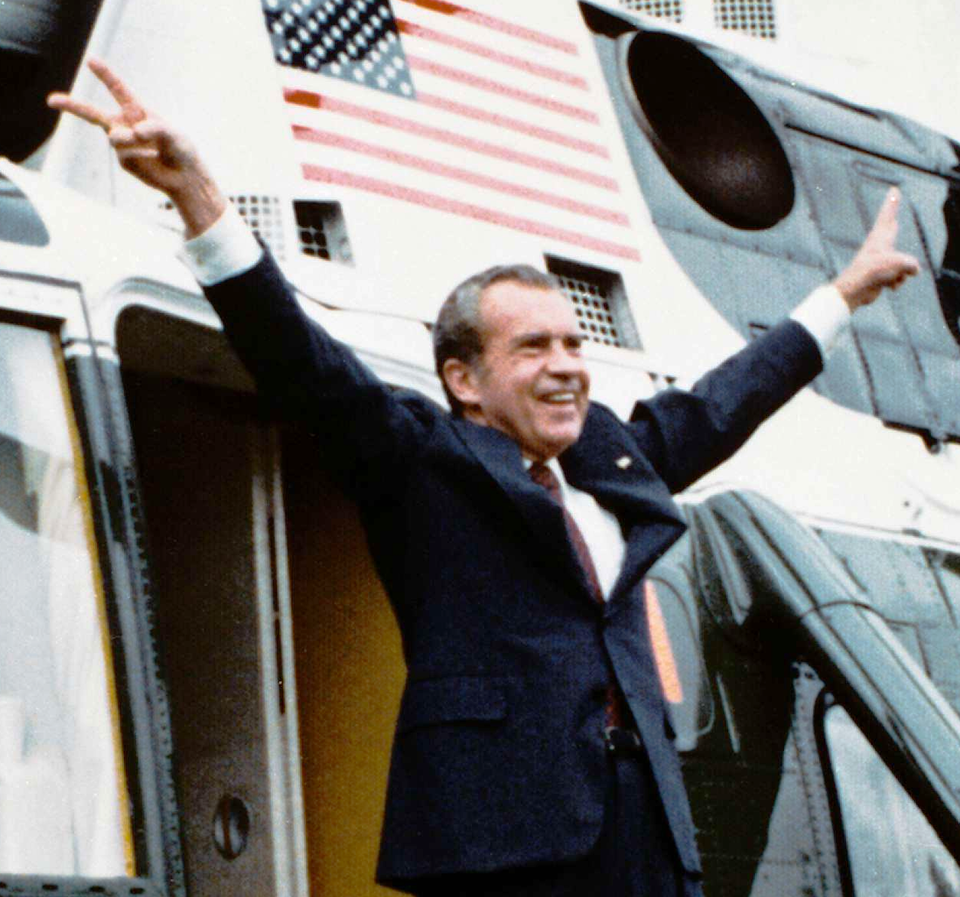
In August, the Smoking Gun tape was released. This tape showed that the president had not been an unwilling co-conspirator but had been involved in the cover-up from the very beginning, pressuring federal agencies to halt investigations into Watergate. Republican senators abandoned Nixon, voting in favor of impeachment. Several prominent Republican leaders, including future presidents Ronald Reagan and George H.W. Bush, urged Nixon to resign, telling him he did not have nearly enough support to be acquitted. The next day, Nixon did exactly that, being the first, and so far, only President of the United States to do so. Vice-President Gerald Ford was sworn in the next morning, and pardoned Nixon a month later.
During his 2024 election campaign, one of Donald Trump’s campaign promises was to release files pertaining to child sex trafficker Jeffrey Epstein. Since his re-election, he has decried them as a Democratic hoax, refused to admit their existence, specifically blocked their release, and finally, after a 427-1 House vote and a unanimous Senate vote, agreed to release the files within thirty days. On December 19, 2025, the files were released with an ‘18-minute gap’ of their own. Not all of the files were released, and those that were released were heavily redacted. At the time of this article being written, less than 1% of the files have been released.
Rumors have long been posited that Donald Trump himself is on the Epstein list, and his adamant refusal to cooperate with Congress on this matter only fuels more suspicion. The partial release was ruled to be in violation of U.S. law, failing to meet the December 19 deadline, but it is yet unclear what actions are going to be taken. Adding more fuel to the fire is the January kidnapping of Nicolás Maduro and the ICE shooting of Renee Good, which have since pulled media attention away from the Epstein Files. There will be more on those in the coming weeks.
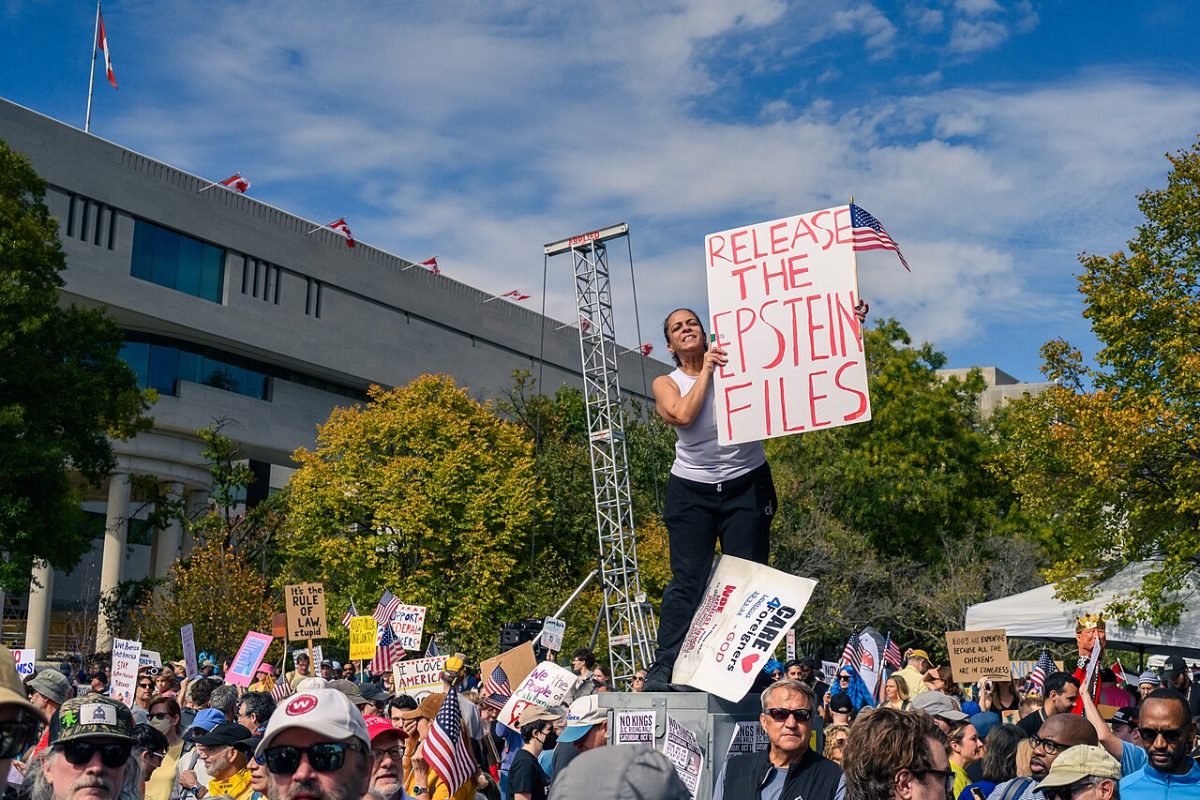
The parallels to the Watergate scandal of 1972 are, frankly, astounding. It frequently feels as if history is repeating itself, as our leaders refuse to learn from the mistakes of the past. Nixon’s troubles started at the Watergate hotel, but that is not what ultimately led to his defeat. His obstruction and policy of “deny everything” led to widespread discontent and feelings of betrayal within his own party. He lied to everyone, betrayed his co-conspirators, and reinforced the idea that politicians could not be trusted.
The President is not, and has never been, immune to the crimes they have committed, in or out of office. Lie after lie after lie brought Nixon low, and if the current administration continues Nixon’s policy of “deny everything,” then it seems inevitable that it will all come crashing down around them.