By David Lavrinovich, Editor

“Winter seems to come earlier every year,” Galina thought, staring at a barren kitchen.
The harsh Siberian winds roared outside the house, entrapping the village in snow and ice. It wouldn’t bode well for anyone to be out in this weather. Galina supposed that she could send one of her fleet-footed sons to the market. Perhaps even one of her keen-eyed daughters could forage for mushrooms in the forest. She shivered and wrapped her khalat tighter.
Dinner would come from what they already had.
Galina was careful to pour the smallest amount of water into the basin to wash her bony, calloused hands. She gathered up the small pile of potatoes they had and peeled the skin away with a dull knife. The harvest from Galina’s garden was not plentiful this year. She couldn’t make as many potato pirozhki as she would like.
Cabbage wasn’t as hearty as potatoes, but Galina knew the vegetable had its own virtues. Cold medicine was expensive and rarely worked, but cabbage never failed. She shredded the greens into thin strips and poured them into the pan atop the stove. They sizzled loudly upon contact with the oil. Galina fanned away the scent her kids complained so much about.
There was no milk, so Galina had to make the batter with water. She kneaded with a sternness that only a woman of her caliber could acquire. It wasn’t long before the dough formed, thinner than she had hoped. Galina individually spooned either potato puree or fried cabbage into pieces of dough the size of her palm. When every hand pie was made, they went into the stove to bake.
Galina had counted and made sure that everyone would get at least a couple of pirozhki. She felt the frost outside seemed far away from her family.
“I don’t understand California supermarkets,” Maria contemplated.
The grocery stores here were never empty like the ones back in Maria’s hometown. Abundance didn’t lower the price, though. She scanned the receipt once more, mentally translating dollars to rubles. Her eyes fell upon the meager bags of groceries she had purchased. She calculated the meals that would stretch until her husband’s next paycheck. The meals her American-born children would actually eat. The meals with recipes that traveled with her across the Atlantic.
Maria remembered her mother’s pirozhki. Potatoes were affordable here, and the bargain on meat this week meant she could spare some for them. That was a treat she and her siblings couldn’t indulge in often. Maria resolved that the same wouldn’t be said about her children.
Maria’s cracked hands didn’t carry the same fluid motions as her mother’s when cooking. This kitchen still seemed foreign to her. The ingredients felt different, from Maria’s own homesickness or American preservatives, she didn’t know. She desperately tried to convert the metric units in her head to the American imperial measuring cups she had at her disposal.
No matter how much flour she used, the dough glued itself to every crevice of her fingers. The potato puree and ground meat growled menacingly in the background, threatening to burn on the stove. It took all of Maria’s willpower to remain focused on every step and keep her already short, bitten nails away from her teeth.
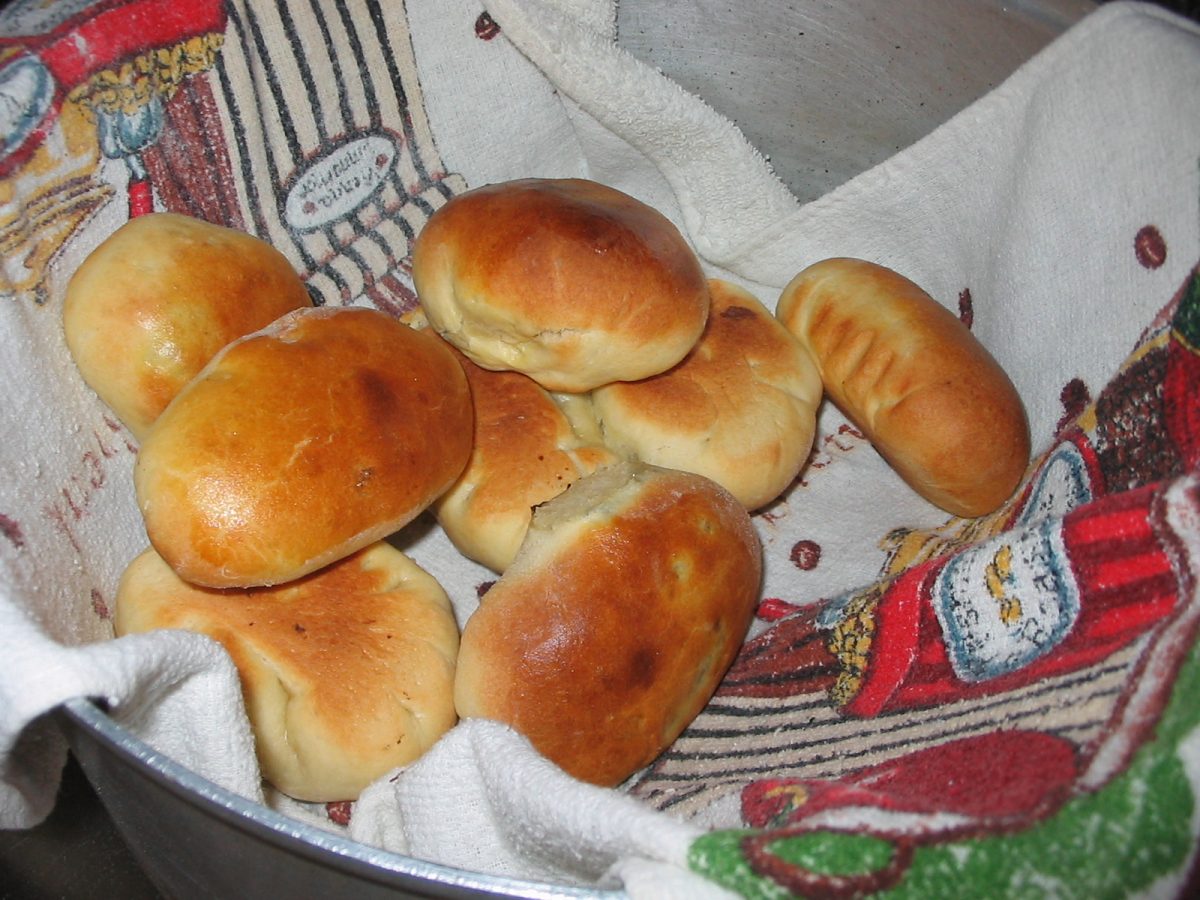
The efforts of her labour proved fruitful when the buns came out just as she had hoped. There were just enough pirozhki for dinner tonight and the kids’ lunches tomorrow. Maria felt satisfied with “just enough.”
“This is an old family recipe,” Elena clapped her manicured hands together, “Just like my mama and babushka used to make back home.”
The warm smell enveloped the apartment, drawing all of Elena’s friends to the kitchen. Multiple plates of steaming buns landed on the counter. She set out several bowls alongside them, filled with various condiments. Not technically traditional, but the young woman couldn’t help thinking that hand pies tasted better with sour cream, honey mustard, or adjika sauce.
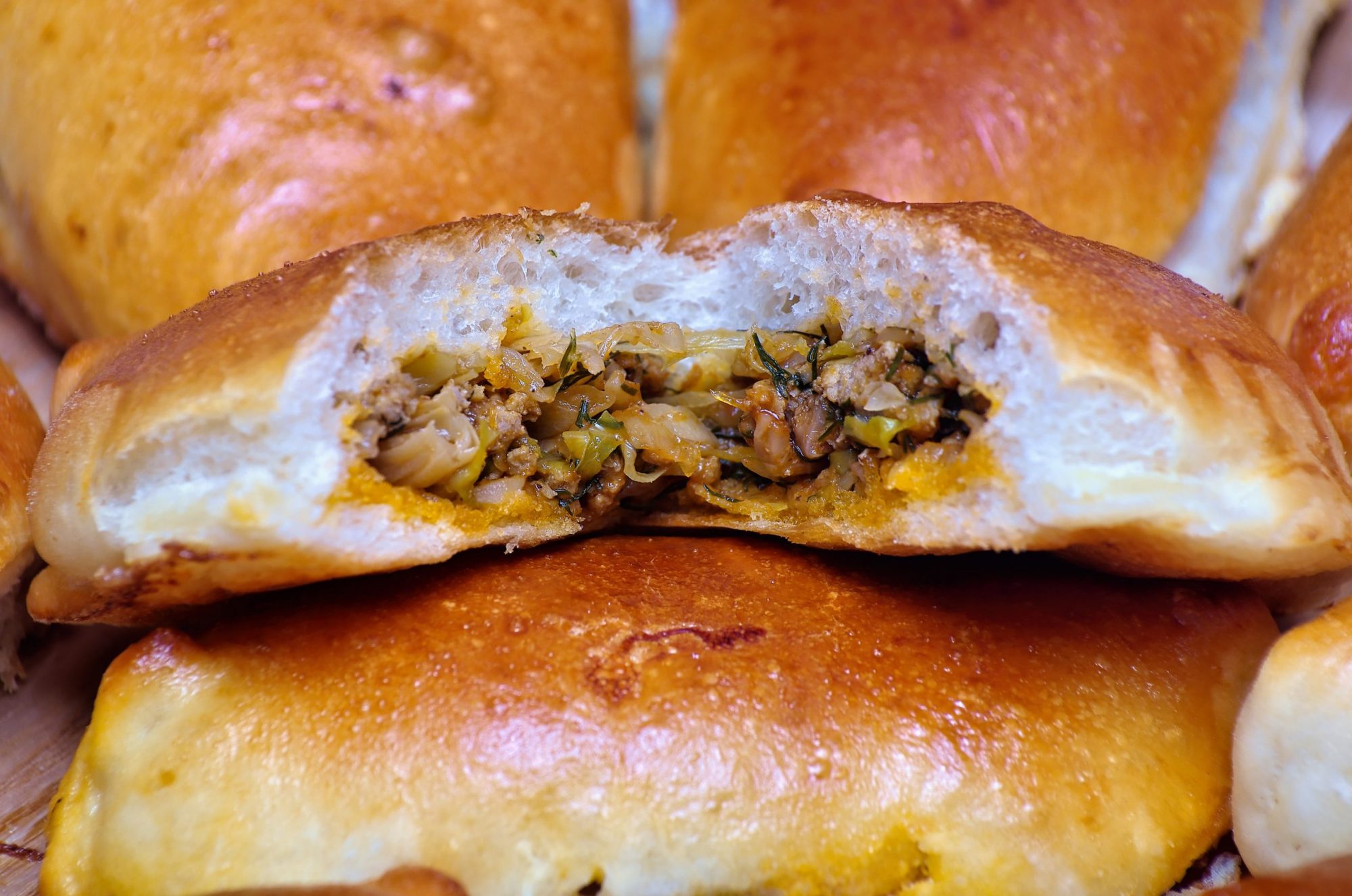
The first batch was filled with cabbage and golden from the egg wash Elena glazed on. Growing up, she had always wrinkled her nose at the bitter-tasting vegetable in pirozhki. But, just as time in a hot pan made cabbage sweeter, so did Elena’s age make her more amicable to having it in her favorite food.
The second tray had slightly darker pirozhki. They were stuffed with а mixture of minced meat and onion; Elena had elected to use beef and pork this time. The exterior of the buns was speckled with whole black sesame seeds, which gave the soft bread a nice crunch.
The final batch was the one Elena was most excited for. While the other pirozhki were baked, the potato-filled ones were pan-fried in butter until crispy. The potato and garlic puree married itself to the sticky dough. It had the effect of melting onto the tongue, coating the mouth with its lush, rich flavor.
Laughter and conversation erupted in Elena’s home, interspersed with compliments on the food. The elaborate feast of pirozhki could feed all of her friends tenfold. Elena had made sure of that.