- Enemies at the ‘Gate
- The United States’ Playground; South America, Pinochet, and Nicolás Maduro
- Enforcing Immigration, Then and Now
By Patrick Dobyns, Opinion Editor
In last week’s article, I began by comparing recent actions of the Trump administration to the actions of other administrations during that time of moral failure known as the Cold War. We covered President Donald Trump’s release of the Epstein Files (or rather, the lack thereof), and compared it to President Richard Nixon’s cover-up of the Watergate Scandal, which ultimately led to his resignation. However, the way the United States government treated its own residents is only part of the story when it comes to Cold War shenanigans. Foreign policy had radically shifted in a way the world had not seen before—at least, not to the scale the US and the Soviet Union (USSR) played their games.
This time, we’ll be looking at how the US has interacted with nations outside of itself and what it deems as its sphere of influence. From its earliest days, the United States has viewed the Western Hemisphere as its domain. When the news came out that Nicolás Maduro had been kidnapped and brought to the US for trial, it was only the latest in a long line of political shenanigans that this country has perpetrated in South America. Guatemala, Bolivia, Brazil, Chile, and now Venezuela have all seen their politics shaped not by their own democracies but by US funding and CIA covert operations.
After the Second World War, the United States and the Soviet Union became the two global superpowers—no other nation could hold a candle to their military and technological might. Because of this, the world became divided along new lines of allegiance. Those who sided with the US and NATO were dubbed the “First World,” those who sided with the Soviets and the Warsaw Pact became the “Second World,” and those who were not aligned with either power were considered the “Third World.” Yes, this is where we get the terms of First World and Third World nations, though the terms are generally avoided in serious political discussions. For all intents and purposes, each sphere only saw itself vs. the enemy; as the classic sentiment goes, “if you aren’t with us, you’re against us.”
When Fidel Castro led a popular revolution in Cuba in 1959, panic sparked across the US that a communist government could set up shop in their own backyard—especially when said government agreed to house nuclear warheads for the Soviet Union, with the majority of the nation well within the radius of mid-range nuclear missiles. Afterward, the United States government sought to ensure that its side of the globe remained within its sphere of influence, by any means necessary. While the USSR did agree to withdraw nuclear warheads from Cuba, the US could not risk a similar incident occurring, so they monitored the progression of left-leaning governments being put into power throughout Latin America.
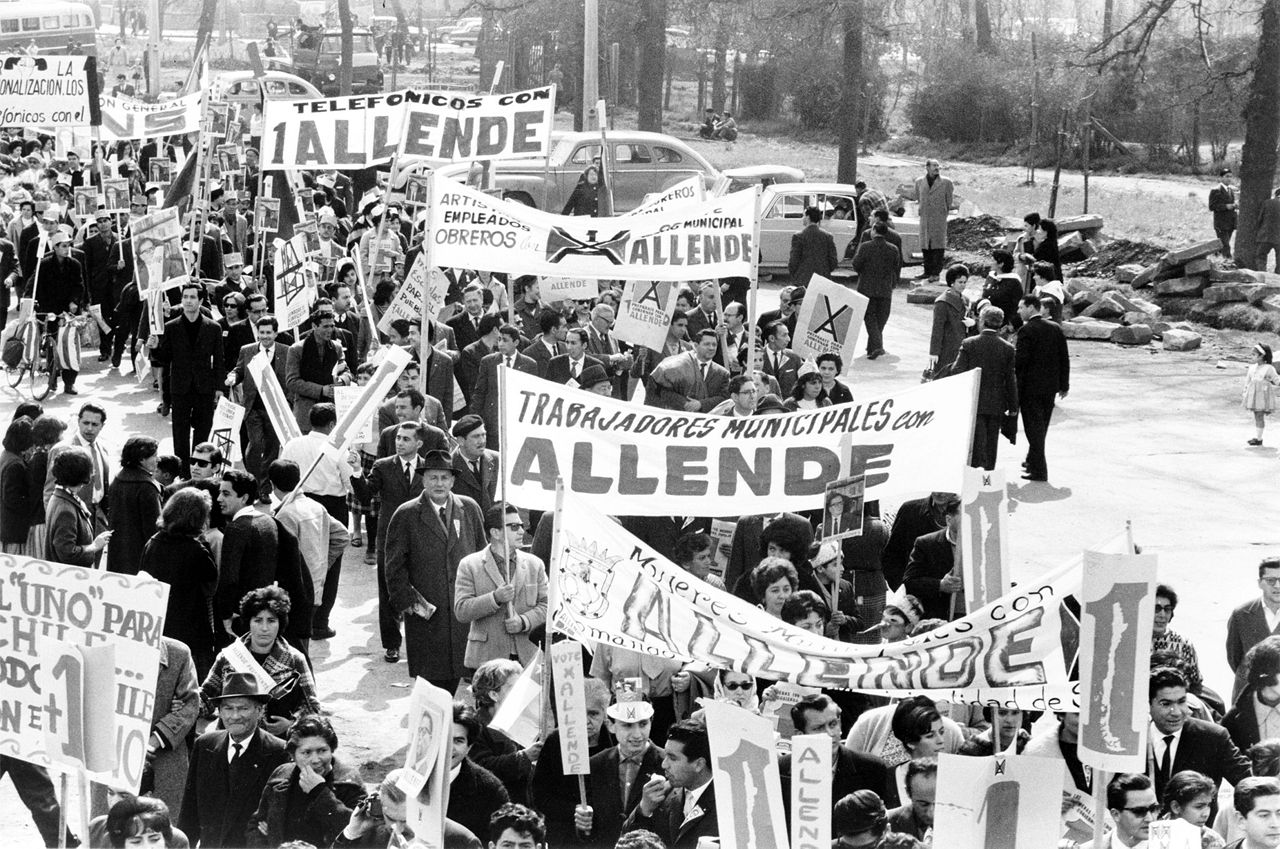
In 1970, Chile was one of the few truly democratic countries in South America. Many other nations in the region had seen authoritarian coup d’etats trounce elections that would place the reins of power with socialist leaders, including Brazil, the Dominican Republic, Guatemala, and Ecuador. While the US tried to promote anti-communist right-wing leadership in the 1970 national election, they failed to seize victory from the democratic socialist candidate Doctor Salvador Allende. In response to this, the CIA began funding far-right dissidents within the Chilean military, forging contacts and making lucrative deals with high-ranking members. Commander-in-Chief of the Chilean Army, Carlos Prats, was a staunch constitutionalist and would not launch any action against the democratically elected president. His resignation in August 1973, amid growing tension within the government, led Allende to replace him with a person he trusted to uphold the Chilean constitution—Augusto Pinochet.
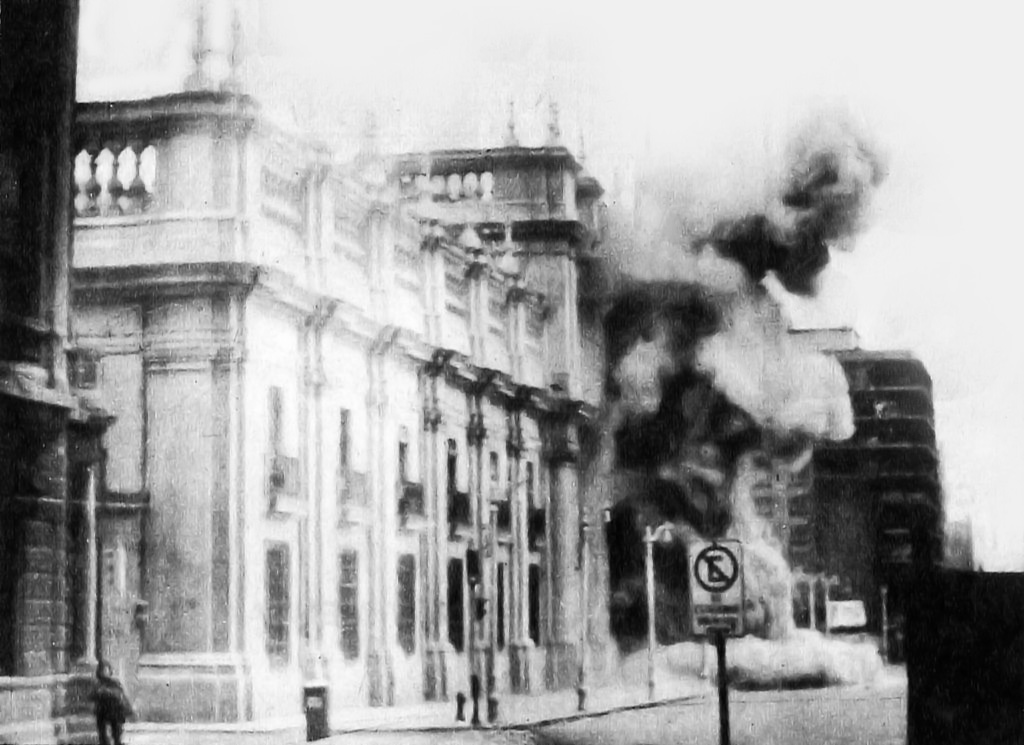
Shortly after taking office, Pinochet was approached by several high-ranking army staff members and asked whether or not he would support a coup. While there was no evidence of discontent with the constitutional government before this point, it can be assumed that Pinochet either saw the writing on the wall or cared more for his own empowerment, as four days later, on 11 September 1973, he mobilized the army and launched his coup d’etat in Santiago. President Allende gave a speech, professing his love for his country and his hope for his countrymen to prevail through the dark times ahead. He was found dead in his office, having committed suicide with an AK-47 gifted from Fidel Castro.
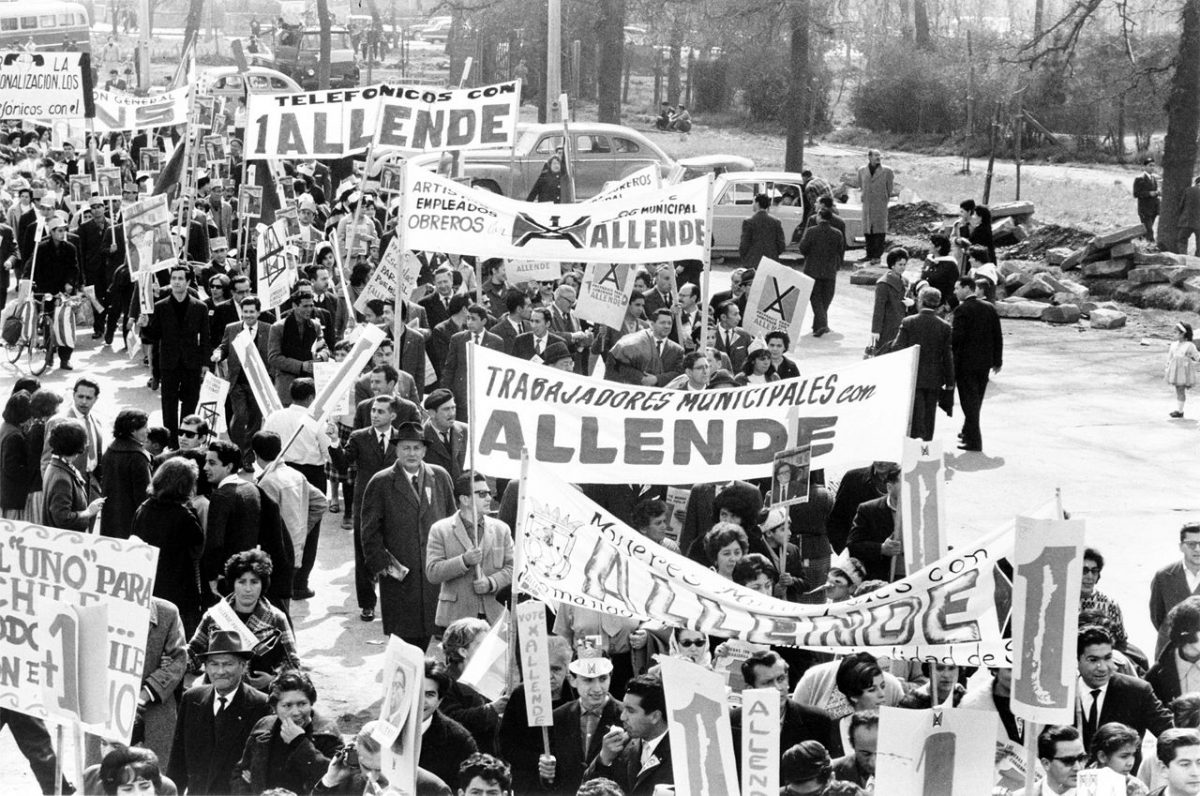
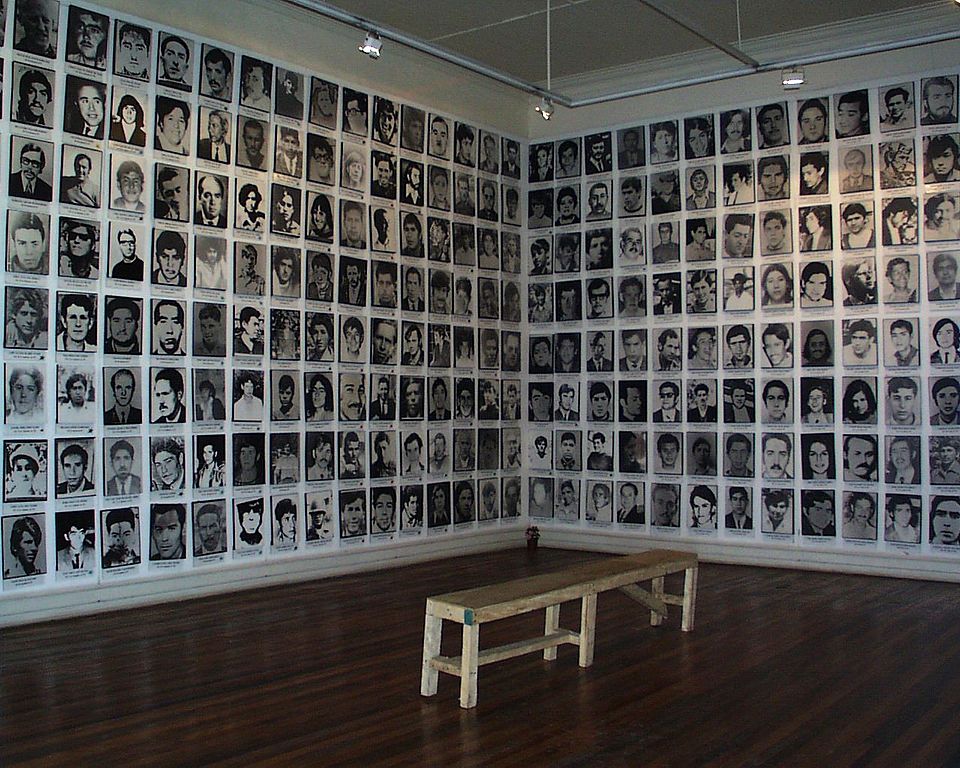
Pinochet wasted no time in establishing one of the most brutal and repressive regimes the Americas have ever seen. Members of Allende’s government were either driven into exile or voluntarily left the nation. Political parties, especially those that leaned left, were made to disband, while former members were heavily persecuted. Even those who initially supported the coup, such as the Christian Democrats, were eventually exiled or jailed. Worse than this was the execution and “disappearance” of tens of thousands of individuals from the streets of Chile. Some of these were political dissidents, but many more were just normal civilians like any other. People were abducted, brought to camps where they were tortured, and held prisoner while their families had no idea if their loved ones were still alive. One particularly ruthless band of soldiers was known as the Caravan of Death, and flew across the country via helicopter and executed at least 75 individuals mid-flight.
One of the unique hallmarks of the Pinochet regime, at least compared to many other military dictatorships, was the matter of the economy. While most other dictators tend to focus on ethnic purity, military supremacy, or simply the “greatness” of their nation, Pinochet’s focus was centered on creating a laissez-faire economic model, which would be similar to Ronald Reagan’s and Margaret Thatcher’s economic reforms of the 1980’s. He began privatizing as many services as he could while persecuting labor unions. The primary exception was Chile’s lucrative copper exports, which remained in government hands and had profits siphoned directly to the military. Chilean economists educated in the US, called the Chicago Boys, were brought in to lead this new economic model, which was the first of its kind. The effects of this model could clearly be seen by 1982, with Chile’s GDP having fallen by nearly 15% and unemployment rising to over 30%.
Despite the many human rights violations and clear fascism displayed by Pinochet, his regime maintained good relations with both the United States and Great Britain. When Argentina launched an invasion of the Falkland Islands in 1982, Chile used its radar stations to provide intelligence to British forces, and while Chile technically remained neutral in the armed conflict, keeping Argentine land forces on their toes along the Andean border. While the US theoretically condemned Pinochet’s human rights violations, he was seen by the various administrations as a better alternative to communist leadership, and he was assured that his position was secured by Henry Kissinger, the US Secretary of State under Presidents Nixon and Ford.
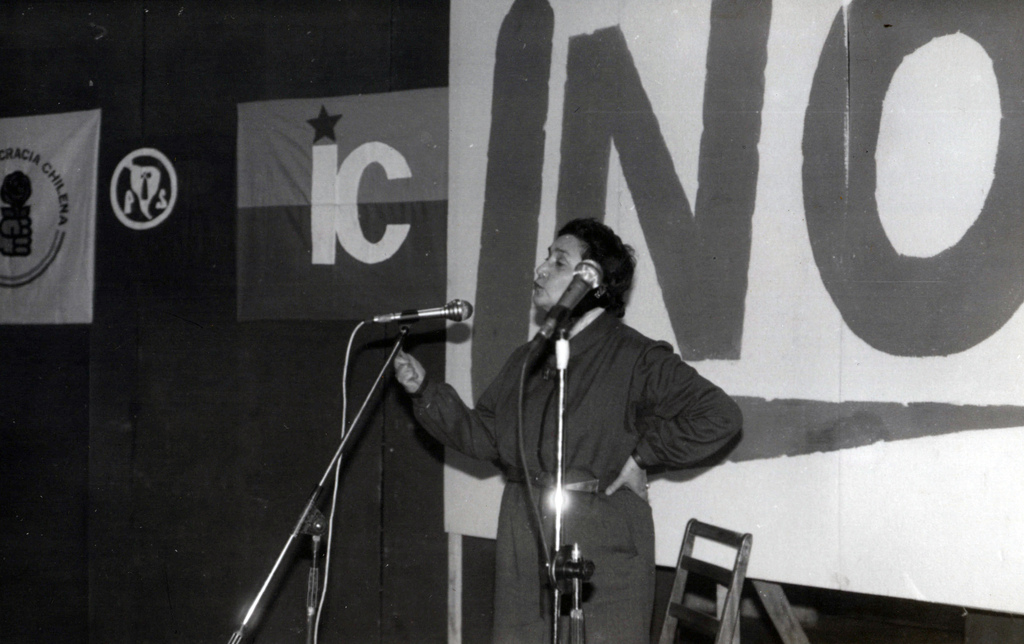
By 1988, the Cold War was rapidly declining. The General Secretary of the Soviet Union, Mikhail Gorbachev, was easing relations between the USSR and the USA, and the Soviet superpower had lost much of the strength it had in previous decades. The next year, the Berlin Wall would be torn down, and two years after that, the Soviet Union itself would dissolve. With the Cold War on the verge of ending, the US government lost interest in the problematic dictator, leading to increasing pressure to return to democratic rule. A plebiscite (a “yes/no” general election) was held to confirm Pinochet’s rule for eight more years, resulting in 55% of the population voting “no,” and his government was dismantled over the next year.
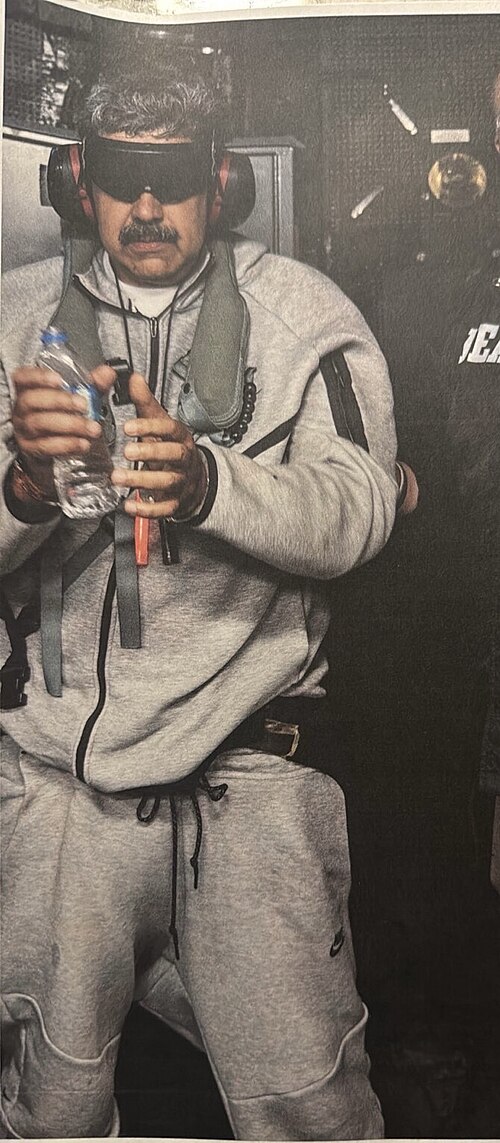
On Jan. 3, 2026, US forces were sent to Caracas, Venezuela, to abduct President Nicolás Maduro and his wife. Forty-seven Venezuelan troops were killed in the process, leaving Delcy Rodríguez as the interim President of Venezuela. This is a much more direct and overt attempt at influencing the geopolitical situation of South America. While the current administration has cited the humanitarian situation in Venezuela as a reason for detaining Maduro, President Donald Trump has not been subtle in his desire for the large offshore oil reserves of the region. At the time of writing this article, the United States Department of Energy has already sold $500 million of Venezuelan oil.
It does bear stating that the Maduro regime is not comparable to Allende’s government. This article is not meant to absolve or ignore the actions of the Venezuelan President. In many ways, his regime is more similar to Pinochet’s, with the suppression of dissenting political parties, economic crisis, human rights abuses, and governmental corruption. The crimes of the Maduro regime, however, do not give the United States the right to impose its jurisdiction on Venezuela. The kidnapping of the head of state bears a remarkable similarity to colonial tactics on the Native American populations in the 1600’s, and the comments of Donald Trump regarding the exploitation of Venezuelan oil make it sound like a colony is exactly what he intends to set up.
When the United States has historically intervened in Latin American politics, the result has never been for the benefit of the people. The US has elected to support fascist dictators over elected socialists, its own interests taking priority over the well-being of the general population. The images and videos that have surfaced of Venezuelans celebrating the US intervention are either taken from past, unrelated events or simply doctored with AI, as reported by multiple news sources, such as this NPR article. At this point in time, we cannot afford to believe everything we see, especially things that are posted on social media. It is so easy to create convincing fake images and videos with AI for almost any user. The reason for these fake videos is to give Americans a positive frame of reference to view the event—without this, the best thing to provide a reference is history, which clearly shows how this all will end. It’s up to us to remind people of what happened then, and what the ultimate result is.
South America is not the playground of the United States, but an entire continent of people who are trying to survive the incredibly messy world they live in. It’s up to us to speak out against the meddling in foreign politics, which has so far only ended in needless suffering. Not everyone has the luxury of being able to stand up to dictators without being silenced. We do.