
- Knoxville’s First Black Millionaire: The Story of Cal Johnson
By Lavender Belle Maynard, Special to the Journal, Additional Edits by Addison Chrivia
Knoxville is a city rich with culture and history, particularly Black history. However, most of Knoxville’s Black history and the important people who contributed to it aren’t generally well-known. A lot of this history isn’t well-known because it isn’t taught in schools at all, even though it’s definitely worth learning about. These stories deserve to be remembered. One inspiring individuals was a man known as Cal Johnson.
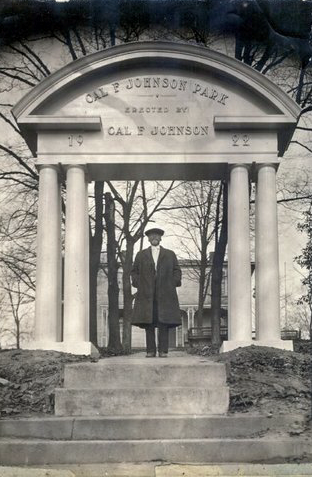
Cal Johnson was born enslaved in Knoxville in 1844 to one of Knoxville’s wealthiest white families at the time: the McClungs. His father, Cupid Johnson, trained horses for them and his love for horses seemed to rub off on Cal Johnson. Unfortunately, his father passed away when he was quite young, meaning that, by the time Cal was freed at the age of twenty-one, he only had his mother and older brother, John.
Instead of letting this get to him, Cal Johnson did the best thing he could have possibly done in that situation: getting a job and sticking with it. However, the job he found was quite a disturbing and grisly one. Johnson had to travel around digging up Civil War soldiers’ bodies so they could be properly buried at a cemetery. He worked this job for a long period of time, using the money he earned to invest in real estate properties with his mother and older brother.1
Cal Johnson’s love for horses stayed with him into adulthood, which led to him opening up a racetrack for horse-racing. His racetrack is the one thing he is best known for, probably because you can still visit it to this day. It no longer serves as a racetrack though; now it’s a circular road called “Speedway Circle” shockingly close to Pellissippi State Community College’s Magnolia Avenue campus. A lot of history took place at his racetrack – in fact, the first airplane that traveled to Knoxville landed on it!2
Cal Johnson’s saloons were also something he was well-known for. He owned several saloons, none of which remain standing today. He had a wide range of businesses and saloons in several different areas, mostly downtown, with his most popular location on Gay street.3 Interestingly, he even owned a few saloons that were in predominantly white areas of Knoxville.
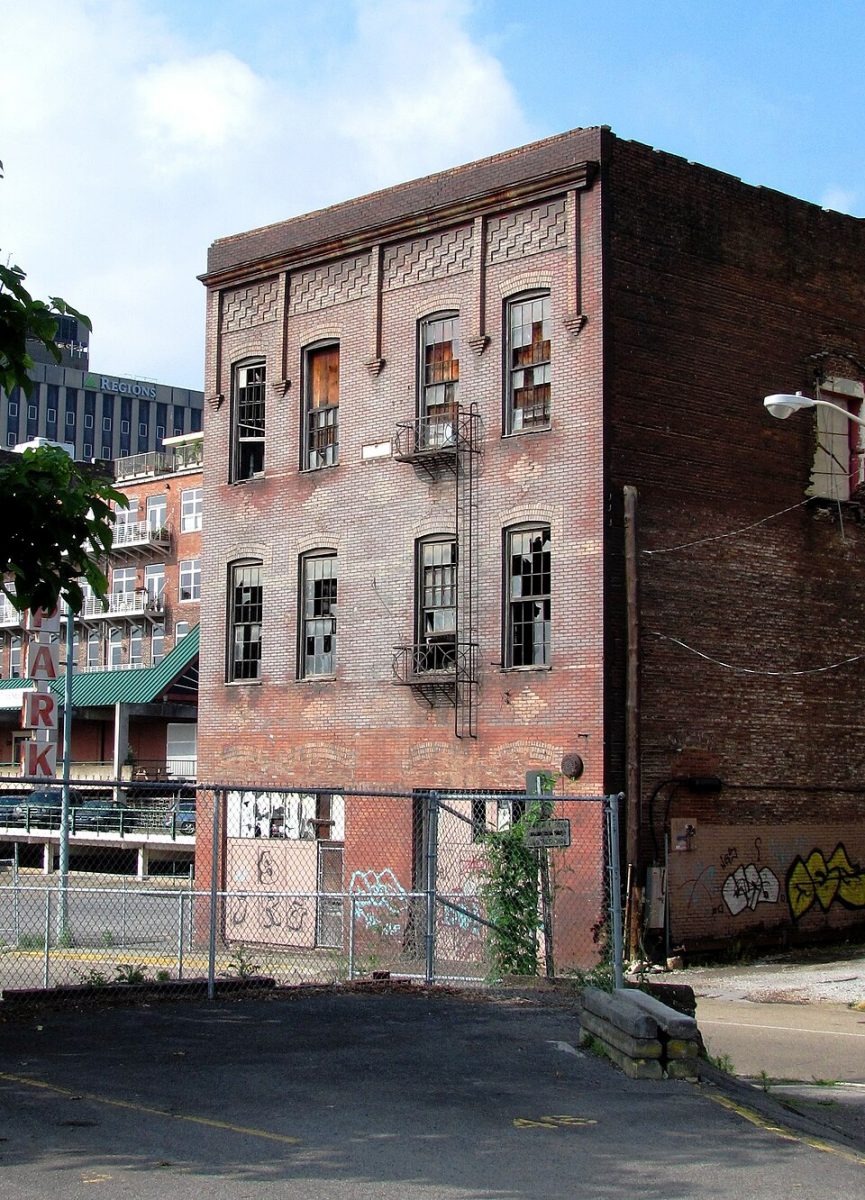
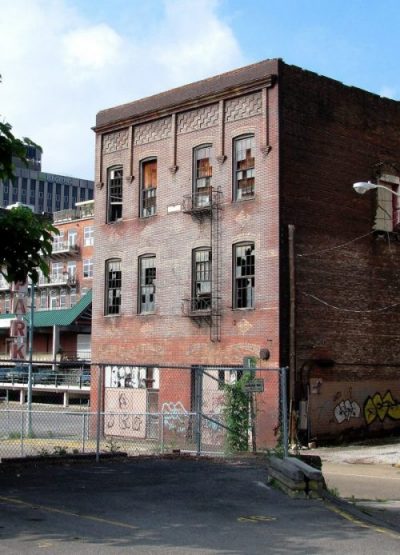
Located on 301 State Street in downtown Knoxville, only one of his buildings remains standing, a warehouse he constructed in 1898 known as the Cal Johnson building. He would allow companies to rent it out in order to produce their products.3 It has since been remodeled, but a lot of effort has been put forth to preserve it; the original bricks, as well as the original wooden beams and flooring have all been kept, which is honestly remarkable for such an old building. Some of the original flooring pieces were even used to make stairs in the building.2
One of Johnson’s last contributions was helping to build a park on Hall of Fame Drive, which ended up being named after him. This park was made to serve the local Black community, specifically Black families. He donated more than $1,250 to this park, more than $20,000 today. It was a major success for his community, funding things like sidewalks, water fountains and a flag pole.2
By the mid 1880’s, he had $150,000, worth nearly $5 million today, according to inflation. He started from nothing, and eventually became a famous figure in Knoxville’s history. His story of drive and perseverance is incredibly important and worth learning about. It is essential that we don’t forget to shine the spotlight on incredible people like Cal Johnson, because they deserve to be remembered.
Sources:
1 Booker, Robert. “Two Hundred Years in Black Knoxville.” The Donning Company Publishers, 1993.
2 “Cal Johnson.” City of Knoxville, Jul. 2020.
3 Neely, Jack. “Cal Johnson and History of the Cal Johnson Building on State Street.”Knoxville History Project, 8 May 2018.