By Chloe Ryerson, Special to the Journal
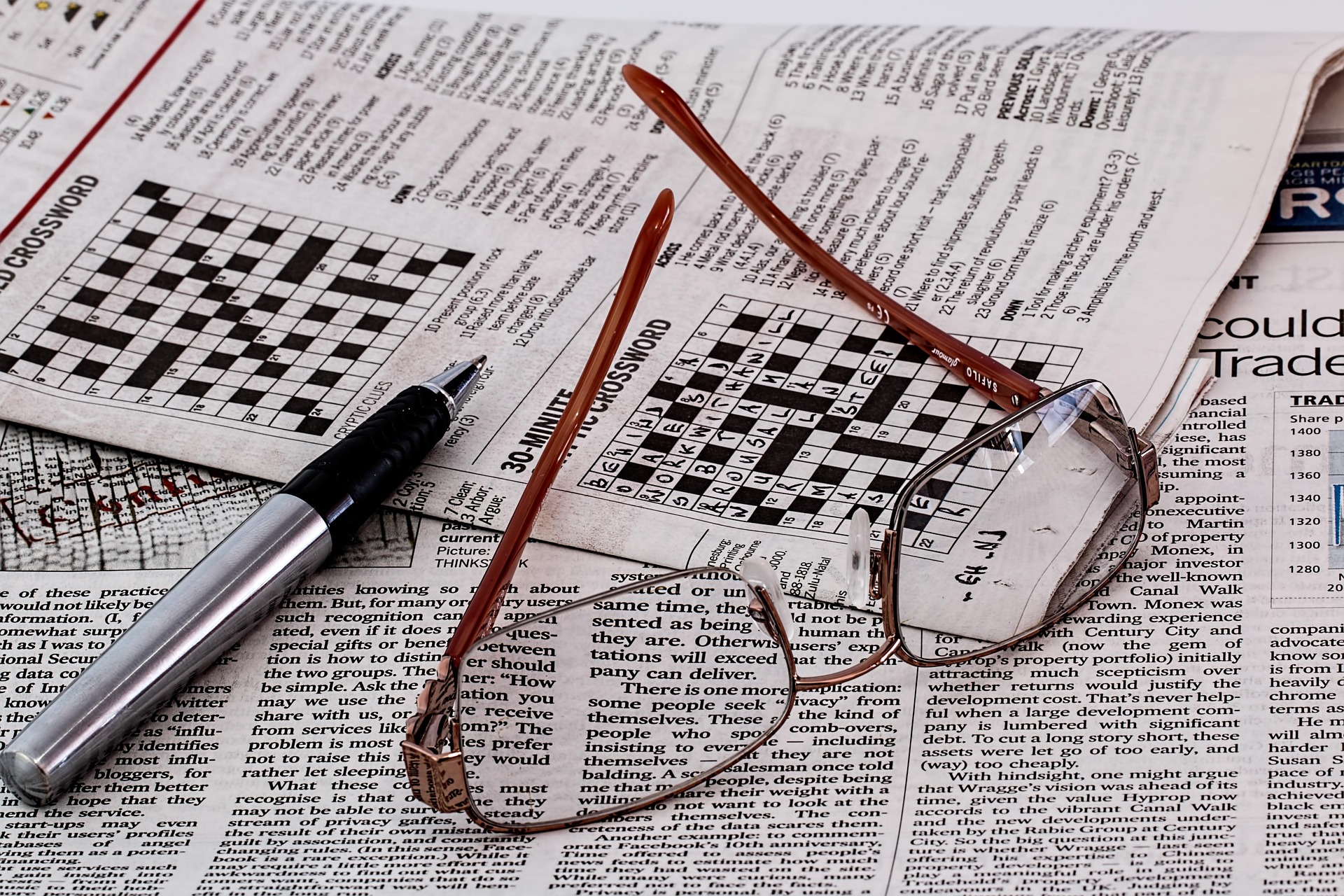
Crossword puzzles can be found everywhere: on the shelves near the grocery store checkout, the New York Times website, and even on assignments as a teacher’s last resort at getting creative with homework. It’s an easy way to engage an audience for a few minutes as they try to put words into the correct squares.
Personal Puzzles
Playing and competing with puzzles helps you connect with friends while also giving you an icebreaker to start conversation.
I personally enjoy doing puzzles such as Wordle, crosswords, and word searches to spend more time with people I care about. I message my friends asking if they’ve done the daily Wordle, and I’ve helped a friend with a word search that was due for their next class. Doing these brain games has allowed me to talk to people I don’t usually get to talk to, all while actively challenging my brain to think differently, formulate connections, and find patterns.
However, there is a greater benefit to crossword puzzles than simply being a boredom buster. They can also improve memory, critical thinking skills, and brain development while encouraging connections with others through shared interests.
The Science of Smart
Studies have shown that crossword puzzles can have long-term impacts on memory and can slow brain shrinkage. They activate large areas of the cortex to stimulate new connections and force the brain to arrange concepts in a way that it hasn’t before, literally exercising the brain to keep muscle.
A study performed by the New England Journal of Medicine had adults with mild cognitive impairments, like dementia, complete crosswords every day for 18 months. It proved that doing crossword puzzles regularly can be just as effective at building memory and problem-solving, if not more so in some cases, as prescribed medication.
Stop Scrolling, Start Puzzling
Most people who have phones can confirm that they doom-scroll, mindlessly staring at their phones for hours without being productive. Instead of getting straight on social media, try taking a moment to play a crossword puzzle or any sort of puzzle. Evidence shows that this can drastically change brain development.
In this new era of technology with its easy ability to watch short-form content, actions must be taken to ensure that attention spans, memory retention, and critical thinking skills are strengthened, not weakened. The benefits of doing a daily crossword puzzle are endless, from improving memory to forming connections socially. Why not give it a try?
Works Cited
Budson, Andrew E. “Have you done your crossword puzzle today?” Harvard Health Publishing, 29 Nov. 2022.
Devanand, D. P. et al. “Computerized Games versus Crosswords Training in Mild Cognitive Impairment.” NEJM Evid. DOI: 10.1056/EVIDoa2200121.