
By Patrick Dobyns, Editor
Over the summer of 2026, the United States celebrated its 250th anniversary… kind of. Most US Americans know that on 4 July, 1776, the Declaration of Independence was signed by members of the Second Continental Congress, severing the ties between Great Britain and the thirteen colonies, but this alone does not make a nation. The Declaration did not establish a government for the new nation; it simply broke away from an existing one. The document that truly came to define the nation was the United States Constitution, ratified in 1788, which sets the operation of the government and defines the rights of its citizens. This was five years after the end of the American Revolutionary War, however, and twelve years after the Founding Fathers sent the Declaration of Independence to King George III in Britain. How did a nation function for that long without a legal code, governing body, or national treasury?
The answer is simple, yet remains a largely obscure piece of trivia for most people. From 1777 to 1789, the law of the land was known as the Articles of Confederation and Perpetual Union (often shortened to just “the Articles of Confederation). While the document did establish the founding of the United States of America, this was a very different nation than the one established by the Constitution we are more familiar with today.
Background
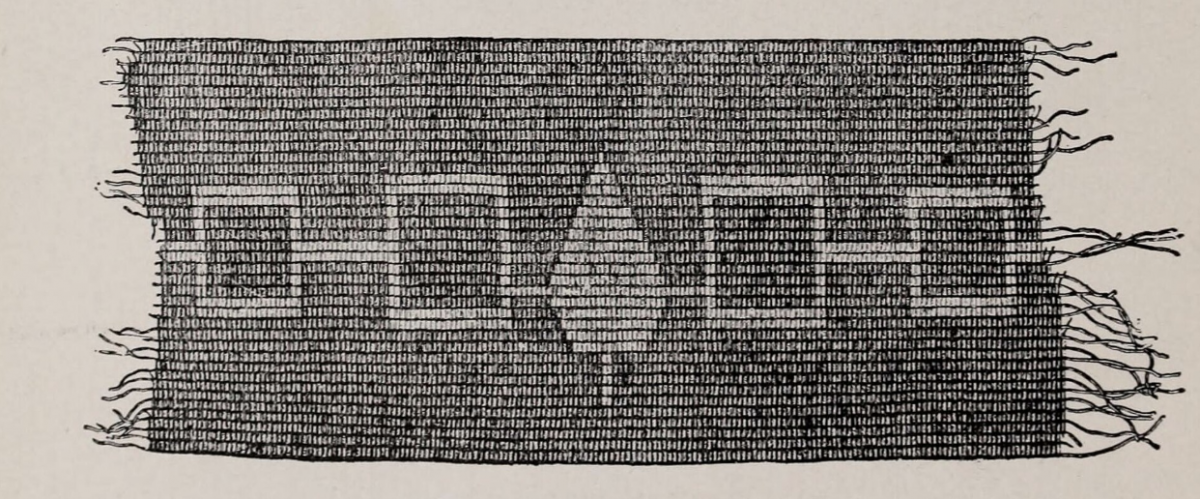
Certain members of the Continental Congress had seen the brewing revolution coming from a mile away and had begun preparations for an independent government as far back as 1754. Benjamin Franklin had prepared his Plans of Union by studying other successful governments, specifically modeling some aspects after the Haudenosaunee (Iroquois) Confederation, which brought together six nations under one banner. He added many aspects to give it a more European flair, and the people he had presented these plans to were eager to try and enact them. The reaction from the colonial governments was much less enthusiastic.
Each colony at that point pretty much answered directly to the crown, and many saw the introduction of a central governing body as replacing one master with another. Colonies wanted to decide their fate on their own, without any other body interfering in their foreign affairs. It wouldn’t be until 1775 that representatives would start to embrace the idea, but even this was still too early. Many in the Second Continental Congress still held out hope that the colonies’ relationship with Great Britain could be repaired. If King George could just be made to see reason, if their concerns could simply be addressed in a reasonable manner, then maybe this whole independence thing could be forgotten.
The writing was on the wall, however. British mistreatment of the colonies was plain for all to see. An author by the name of John Dickinson had taken up the task of writing out a legal code for the burgeoning nation, even though he was a staunch British loyalist. He opposed American independence, yet when the retribution of the British Parliament became too great to discount, he took up Benjamin Franklin’s initial proposal for a unified government and refined it. The “United Colonies of North America” became the “United States of America”; the rights of citizens would be guaranteed by a newly established confederation congress, which would also decide the foreign relations of the unified states.
There was just one problem. The Continental Congress was moving far too fast for Dickinson’s liking. The vote for independence was underway and receiving total support from all members. Dickinson argued with the delegates, saying that there needed to be an actual government before they could just break away. He was ignored and discovered the same thing that Franklin discovered when he first proposed his Plans of Union. The individual states were not concerned at all about establishing a central authority that they would all have to answer to. Each state wanted to determine its own course. They had been operating in that way for the past few decades anyway. When the vote for independence came, all other delegates, aside from Dickinson, voted in favor of signing the Declaration. Dickinson, wanting neither to recklessly vote for independence nor be the single dissenting voice preventing the vote, resigned.
The Revolution
After a year of revision, the Articles of Confederation were finalized, but not without some drastic modifications. The delegates did agree that, in order to effectively fight the war with Britain, a central governing body was necessary. They would debate and alter the Articles until they hardly looked anything like the original proposals laid out by Franklin or Dickinson. The strong central government had been stripped of its power, essentially becoming an advisory board for the individual states. They had no authority to collect taxes, which had to be voluntarily given by the states, or guarantee a citizen’s rights. They kept the ability to conduct foreign affairs but had no ability to ensure states played along with their agreements.
For many representatives, this worked just fine. They didn’t want interference from anyone in their states’ business; others were more worried. While most states ratified the Articles within 14 months, Maryland refused. The states’ borders were drawn from the Eastern Seaboard to the Appalachian Mountains, but when the colonial charters had first been granted by the British Crown, the colonial borders were set to go all the way to the West Coast, as Britain didn’t know exactly where that was. Many of the states argued during this time the claims still existed, which would lead to states with large western borders, such as Virginia, owning a truly massive piece of land, while those who had gotten unlucky would essentially be left in their shadow. Maryland wanted the western territories instead to go to Congress so that they would not be eclipsed by their southern neighbors. While Congress was in favor, they feared that allowing Maryland to make last-minute alterations would open the door for other states to do the same, and so refused their proposal.
Congress enacted the Articles for those states that did ratify them, and Maryland eventually gave in and signed them in February of 1781. Meanwhile, the weaknesses of the Articles were already showing. One of the few powers of the central government was the ability to print money, which they did enthusiastically. Money was printed at such a rate that it quickly became next to worthless. This proved disastrous for the Continental Army during the winter of 1777-78 while they were encamped at Valley Forge. While it was a harsh winter, there was not a lack of food. George Washington tried his hardest to purchase food for his soldiers, but the money that Congress had given him was refused by everyone selling. Conversely, British soldiers using the Pound Sterling were very well fed and had next to no difficulty getting through the winter.
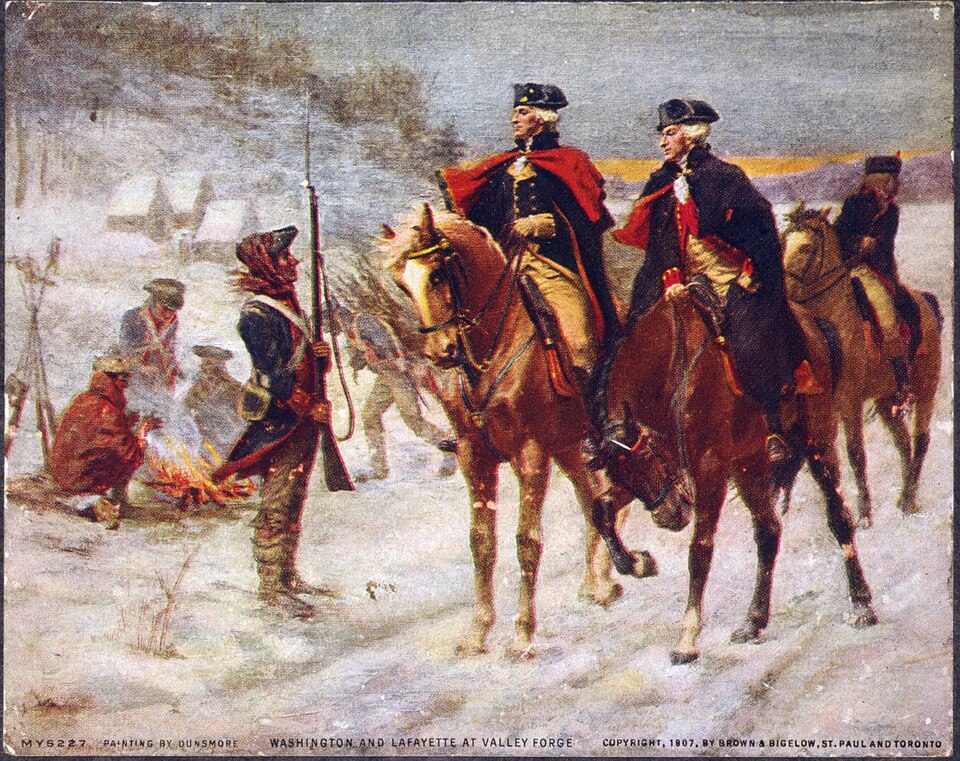
The lack of worthwhile money and food might have been solved by drawing from the money that was taxed from the states. The problem was that the states were not sending Congress money. The Articles of Confederation only allowed for voluntary taxes to be given by the states, rather than collected from them. With the ongoing war, states preferred to send these funds to their own state militias rather than give them to Congress and Washington’s army. In order for Washington to make it through that winter, he had to steal food from nearby farmers. He would give them IOUs as compensation, but these were just as worthless as the money being printed by Congress.
It became clear that Congress had no real power. The states gave only token amounts of tax money and often refused to follow along with the advice that was given. Delegates, seeing this futile attempt at directing the country, stopped convening, with session after session being cancelled as over half the delegates did not show up.
Robert Morris was elected as the Superintendent of Finance, and was tasked with finding a way to provide actual funding for Congress. He established a national bank which backed a stable currency with gold by using his own independent wealth. His plan to make the economy of the US sustainable was to enact a National Import Tax, a tax which, when it had been enacted by the British Parliament, had helped to set off the Revolution in the first place. This would require an amendment to the Articles, which needed unanimous approval from all thirteen states to enact. Although twelve initially agreed, Rhode Island voted no, and then Virginia switched its vote against. Once again, Congress was without money. Robert Morris began paying the Congressional army out of his own pocket, but when the fighting started to die down after the British surrender at Yorktown, troops stopped receiving their money.
Peace and Dissolution
While a Coup d’état was narrowly avoided due to the expert diplomacy of George Washington, a peace treaty was being penned in Paris by representatives of the former colonies and Great Britain. Under the Articles of Confederation, nine delegates were required to sign the treaty. Only seven delegates had even bothered to show up to the first session. A month later, Congress managed to gather just enough delegates to declare peace. Part of this treaty was that no action would be taken against those who had stayed loyal to Great Britain during the Revolution.
This proved to be a problem for the new states. Many of them, in direct defiance of Congress, kicked former Loyalists off their land or attacked British soldiers as they tried to vacate their forts out West. Because of this, the British felt that they did not need to uphold their end of the deal if the Americans would not uphold theirs. Soldiers stayed in their forts and prepared to retake the colonies when they inevitably fell apart. States even began fighting among themselves over border disputes and conflicting territorial claims. New regional confederations of states were proposed, though it was a more common sentiment for states to go it alone.
It was during a Congressional meeting about settling trade disputes (all states had their own trade policies, frequently conflicting) that Alexander Hamilton, a former soldier in the Continental Army and a representative in Congress, put forward the idea of a completely new Constitution. The Articles of Confederation were clearly far too weak to lead to a lasting nation and served only to cause further stress and conflict between states, the opposite of what a functioning constitution is supposed to do. However, he only managed to convince five delegates to attend.
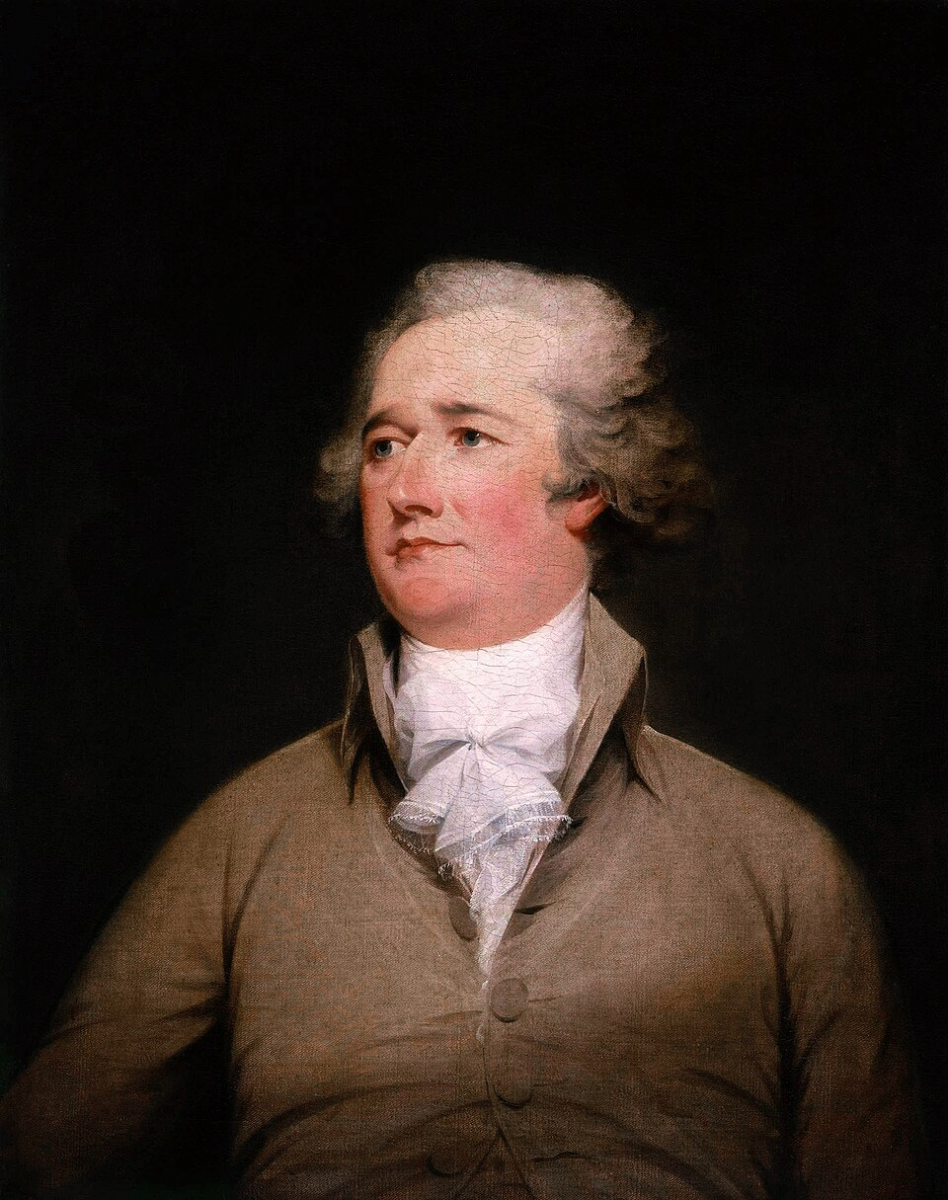
Hamilton and James Madison, a representative from Virginia, planned to get more delegates to show up and actually work on reform by convincing them that George Washington, who had retired to his estate in Virginia, was going to be there and work on creating a new Constitution. Later, they informed Washington of this plan and eventually convinced him to actually show up. Washington then led the Constitutional Convention, with delegates from all thirteen states showing up to participate. Over the next few months, they dismantled the Articles of Confederation and constructed the United States Constitution, which would be put into effect in 1789.
Conclusion
In political debates, I frequently hear people talk about “what the founders intended,” usually in regard to certain rights or state versus federal laws. It has always felt like a ridiculous argument to me. Why does the intent of a few landholders who didn’t want to pay taxes over two hundred years ago matter today? Of course, studying the history of the Revolution has made the argument silly for entirely new reasons. We saw what the founders originally intended for the country, and how it completely broke down in front of them. Their intent turned out to be completely unrealistic and unsustainable.
All this to say, the founding fathers of this nation were not perfect — very far from perfect, in fact. They saw the issues of the society they were in and had ideas on how to remedy them but had to stumble to find the right course of action. They threw ideas at the wall to see what would stick and what blew up in their faces. They had to adapt to evolving circumstances and try to pry people away from a self-serving mindset in order to do what was best for the entire nation. The founders’ intent, in 1776, was to separate from a government in which they were not represented and did not have their interests at heart. Their intent in 1789 was to dismantle the mistakes of their past — not deny them, nor pretend they were perfect, nor completely disregard them — and build something new, functional, and able to adjust and adapt to changing times.