By Haley Parker, Special to the Journal, with additional commentary by Patrick Doybns, Editor
In recent years, the argument about banning books has become more prevalent, with PEN America counting over 10,000 books banned in just the 2023-2024 school year. Parents and lawmakers supporting book bans believe that they’re shielding children’s innocence, who shouldn’t be exposed to controversial, political, or complex topics. But what impact do book bans have on child development?
Research shows that banning books negatively impacts child development by limiting access to the real world and diverse viewpoints that challenge children to think critically. When access to diverse literature is restricted, children suffer from emotional, moral, and cognitive hindrance, causing more harm than good to their developing minds.
Supporters of book bans argue that children should be shielded from content that is deemed inappropriate or too complex for their age. This argument asserts that parents should be able to control what their children read and that children do not fully understand the complexities of real-world issues. According to the Encyclopedia Britannica entry on book bans, advocates for the bans are concerned that introducing children prematurely to certain controversial or sensitive topics could negatively impact moral and emotional development.
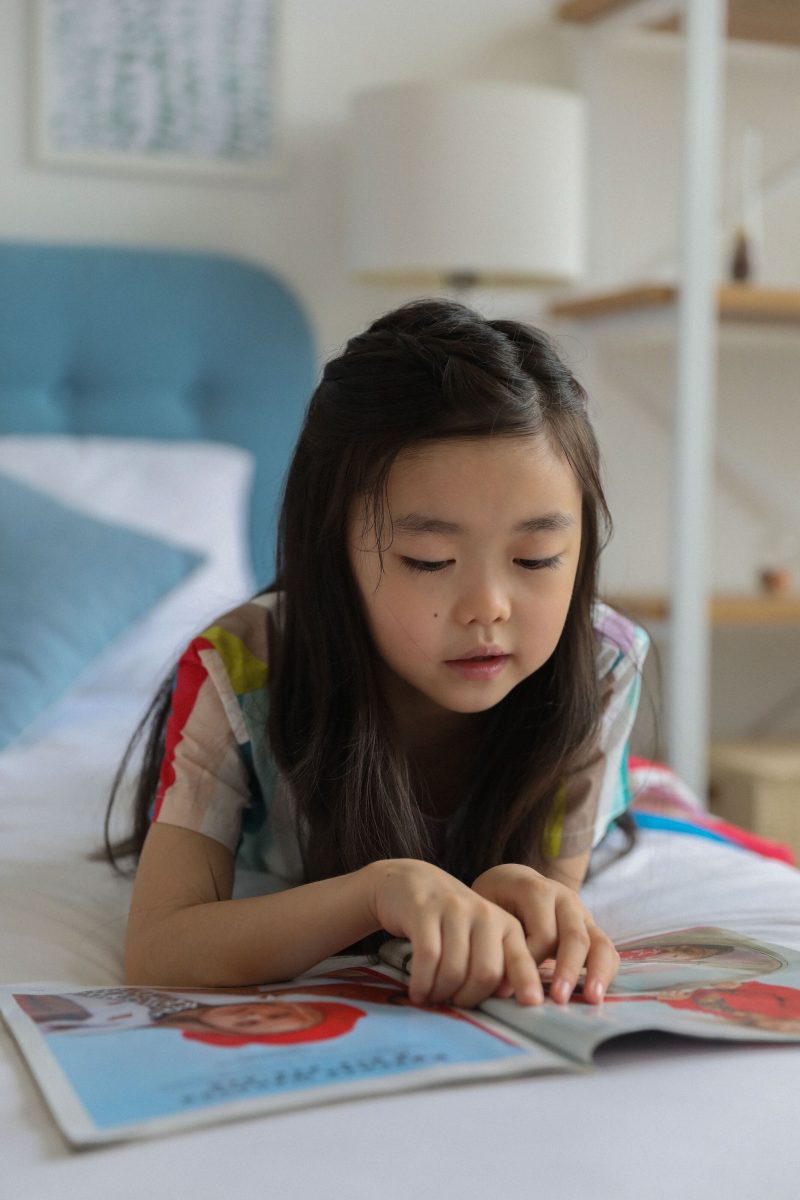
However, research shows that exposure to these complicated and diverse topics actually supports higher-level thinking development, rather than causing harm. Christopher Ferguson, in his article in Psychology of Aesthetics, Creativity, and the Arts, found that exposure to controversial literature allowed adolescents to safely explore complicated emotions that did not result in behavioral problems. In another example, Wintre Johnson et al. explain in the Reading Research Quarterly that when children are exposed to an array of literature, they display strong reading comprehension and show that they can think critically about the texts that they are reviewing.
According to Grace Pickering in Harmful to Minors’: How Book Bans Hurt Adolescent Development, restricting access to books that feature marginalized communities and minorities can lead to children from those social groups feeling alienated and ashamed of their identities, which could damage a child’s mental health more than exposure to that literature. Although arguments in favor of book bans come off as virtuous, there is a complete lack of evidence to support the claims being made.
One way that book bans cause harm to children is by restricting their ability to develop cognitively and deepen their critical thinking skills. Johnson writes, “Exposure to diverse literature not only enhances students’ reading comprehension but also fosters their ability to evaluate multiple perspectives and engage in higher-order thinking about complex social issues.” When students read about characters who face ethical dilemmas, they evaluate issues from multiple viewpoints. The ability to reason and problem-solve ties directly into cognitive development, as those are key characteristics of cognitive growth.
In one empirical study, Ferguson found that there is no link between behavioral problems and exposure to controversial reading material. In fact, his findings showed that children exposed to controversial readings were encouraged to reflect, which supports critical thinking through evaluation and analysis. This data shows that children are not harmed when they have access to this type of literature; instead, they experience quite the opposite effect — they promote growth. To take away access to literature is to hinder this development and promote a narrower view of the world.
In addition, access to diverse literature allows children to develop emotional intelligence and moral understanding due to exposure to other people’s struggles, which is limited by book bans. Pickering states that “Banning books hinders emotional growth because children miss opportunities to connect with characters facing moral and ethical dilemmas.” When children read about characters who face adversity, they engage in a form of emotional simulation, imagining the emotions that the characters experience, thus creating empathy by allowing themselves to feel what another might be feeling. Without these inclusive books, children will not be able to make such connections.
To further support this notion, Johnson et al. state that when students see identities and experiences that differ from their own, they get to explore moral reasoning by navigating ethical situations. Limiting access to diverse literature does not allow for these connections to be made; therefore, restricting growth.
Another benefit of diverse literature is that it allows students to create social awareness and inclusion, which is key to developing respect for others in society. According to Ruth Lowery in her article But These Are Our Stories!, “Banning books by marginalized authors narrows the perspectives children can access and may implicitly teach that some voices are less valuable.” Bans disproportionately affect authors of color and other minority groups, which means that children who come from those backgrounds may feel alienated due to a lack of representation.
Interestingly, Ferguson, in his study, found that “In regards to social outcomes, reading of banned books is associated with both increased civic behavior and little risk of antisocial behavior,” supporting the idea that access to banned books increases social awareness. Empirical evidence suggests that a lack of access to diverse literature negatively impacts social development and inclusivity, hindering development that goes beyond the child.
Stagnating children’s civic behavior could also hinder the communities that these children live in by reducing the interest that younger generations have in bettering their communities. By restricting access to literature, children are stunted in their ability to develop empathy and social awareness and, ultimately, ignorance and fear are reinforced through a lack of understanding.
Lastly, book bans can influence psychological well-being and identity formation, especially for students from marginalized social groups. When representation is removed from literature, children from the groups losing that representation can experience more than alienation. Pickering supports this claim: “Removing books featuring marginalized characters can leave students feeling isolated and ashamed of their identity.”
For instance, if a student from a minority group witnessed books relating to their individual experiences being banned, they are less likely to form bonds with their peers based on shared experiences. This could discourage them from seeking support for their personal struggles. Due to the lack of representation, children and adolescents do not get to experience the sense of belonging and psychological safety that is present with proper depictions of characters from similar backgrounds.
Similarly, controversial literature provides a safe place for adolescents to explore emotions and identity. While that safe place exists when children have a wide variety of books to choose from, the opposite effect takes place when they are barred from reading materials. Diverse literature better prepares children to navigate real-world issues, effectively making book bans superfluous.
Overall, research supports access to diverse and controversial literature for children on the grounds that it is overwhelmingly beneficial to developing minds. These benefits will leave an impression on children’s minds that will last into their adult years. Without access to these materials, students will face greater difficulties that will leave them more confused, fearful, and unsure of who they are as they begin to take on society. They will lack the empathy and moral understanding to connect with others, the representation to feel secure within themselves, and the ability to think critically and evaluate situations from multiple perspectives. In order to truly protect children, we must choose today to protect the literature that will shape them tomorrow.
Editor’s Note: It truly hurts my soul that the United States has gone so far down this rabbit hole. I have an intense love of history, and to see us repeating the mistakes of the past, especially a past we collectively so revile, is confusing and painful. I remember growing up and seeing that scene in Indiana Jones and the Last Crusade, where Indy had to infiltrate a book burning in Berlin to save his father’s journal. I was devastated to learn that these were real things that happened in 1930s Germany. I remember thinking that, for all the terrible things the Nazis did in that movie (specifically in that movie), that ceremony was the worst — destroying the voices of those they disagreed with to prevent people in Germany from agreeing with them was, in my mind, nothing short of the same brainwashing they accused the authors of. The same holds true today, and I can’t help but feel that those who advocate the banning of books are either ignorant of the evils they are inadvertently committing, or perhaps intentionally thinking along those same lines. It is so, so important that we let people read, children especially, and restricting that content only serves to hurt them and ourselves as a society.