
By Olyver LaGabed, Staff Writer
Campus safety is something that concerns everyone. Whether that be structural, interpersonal, or otherwise, students deserve to feel comfortable in their educational environments. This is especially important considering college party culture, with widespread cases of sexual assault during college parties. Not to mention that 40% of students have experienced sexual harassment during college, according to the National Sexual Violence Center.
Because of these troubling statistics, many students are hypervigilant of their surroundings. However, despite such vigilance, many students still don’t know basic information about what to do in these situations, such as:
Who are you supposed to tell if something happens?
How do you recognize a dangerous situation?
How are you meant to protect yourself and your peers if you don’t know where to start?
These questions and concerns are exactly why there is an annual Title IX training at Pellissippi State Community College.
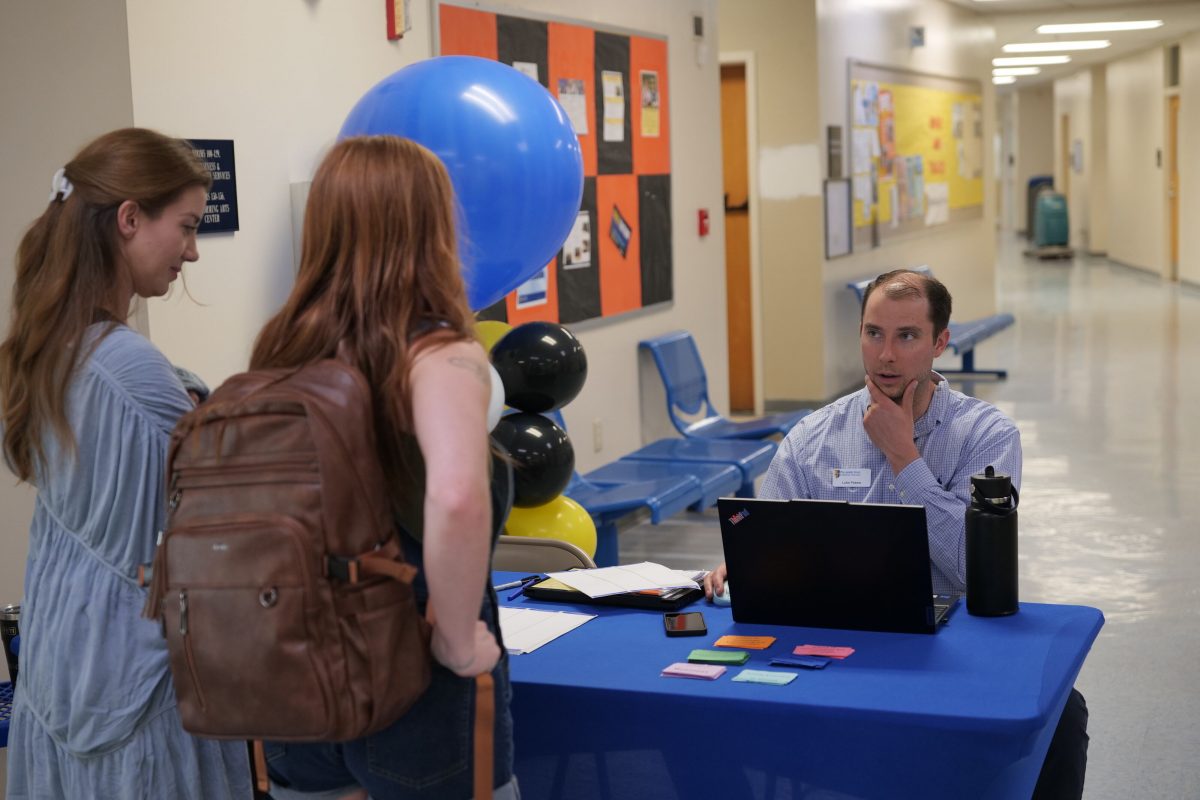
The Title IX training course is based on the Title IX Act, which prohibits sexual discrimination in professional/educational spaces. It goes over identifying harmful behavior, how to approach that behavior, and what options students have should they be the victim of said harmful behavior. It’s not a new concept to students who have worked professionally with Pellissippi State or other colleges in the area; most students have seen the training on their Brightspace home pages. Every educational institution is required to partake in it – despite this, many students don’t necessarily know why Pellissippi State does Title IX training.
When asked what the Title IX training meant to Pellissippi State, Meaghan Sullivan, the Deputy Title IX Coordinator & Investigator, had the following to say:
“I think, a lot of the time, students have this sense of ‘oh, these things aren’t going to happen to me’ – and I hope that these things don’t happen to them – but at the same time, the more educated our community is, the more we can recognize these things that are happening to other people.”

While completion rates for the Title IX training are high amongst employees of Pellissippi State (92%), the completion rates for students are much lower, resting at 58% for all students on campus. Of course, this number isn’t horrible, but it still reflects that 42% of Pellissippi State students haven’t had the proper training, leaving them unaware of what to do in a dangerous situation. Obviously, this is a problem for a multitude of reasons – specifically for the school, since the training must be done in order to keep the school funded.
However, there are some solutions being workshopped. Discussion with Sullivan brought up the possibility of moving Title IX training into the College Success course that is required for all students to take. The hope, as Sullivan describes it, is that students are more incentivised to view the training as a resource than a requirement:
“Because at the end of the day, we hope that these things don’t happen, but we want our community to be informed so that they know how to get help even if it’s not for them.”

Students should also feel encouraged to complete Title IX training to help both themselves and each other. As stated at the beginning of this article, the rate for students who have experienced assault during their time at college is much, much higher than it should be. Although that statistic does not belong to Pellissippi State specifically, it’s an issue that should concern everyone, especially college students. Not to mention, the Title IX training isn’t just for sexual assault or harassment; it also covers signs of domestic violence, which is something that can be incredibly difficult to spot unless one has the personal experience required to notice it.
Ultimately, with sexual assault being such a widespread issue at colleges, it is imperative that students understand their rights and how to protect themselves. If recognizing the signs is half the battle, then knowing the rules is the other. The Title IX training is important for that exact reason. Campus cannot be a safe place if students don’t know their own rights. It is the hope of our Administrative offices and the Title IX department that, in the next few years, students will have a better understanding of Title IX, the safety procedures, and that the completion rates amongst students will grow. As George Underwood, the Executive Title IX Coordinator, says:
“If we can make the students feel safe, then they can concentrate on the other things they need to be concentrating on as a student. Title IX is part of keeping the students safe.”
Doing the Title IX training isn’t just a means to keep your grades up or keep your scholarship – it’s a method of protection. It’s safety through knowledge.