By John Medina, Alumni Writer
Who is Lucki?
If you frequent social media like YouTube, Instagram, or especially TikTok, you may have come across songs featuring a rapper with a distinctly sleepy, nasal voice. After some time, you may have wondered, “Who is this guy anyway?” Despite receiving a growing amount of attention in recent years, Lucki, born “Lucki Camel Jr.”, is a rapper out of Chicago who has been slowly but steadily releasing music since he was 16, from 2013 to now, in 2026. Although Lucki has gradually become one of my favorite artists in general, I’ve always kind of struggled to recommend him to people. On the surface, his music’s subject matter does not have much variety from standard 2010s Trap music. Lucki’s music has a lyrical focus on wealth, cars, isolation, women, manifestation, and especially addiction — heavy consumption of prescription-grade cough syrup is scattered throughout many of his songs. It is really a constant theme throughout his music.
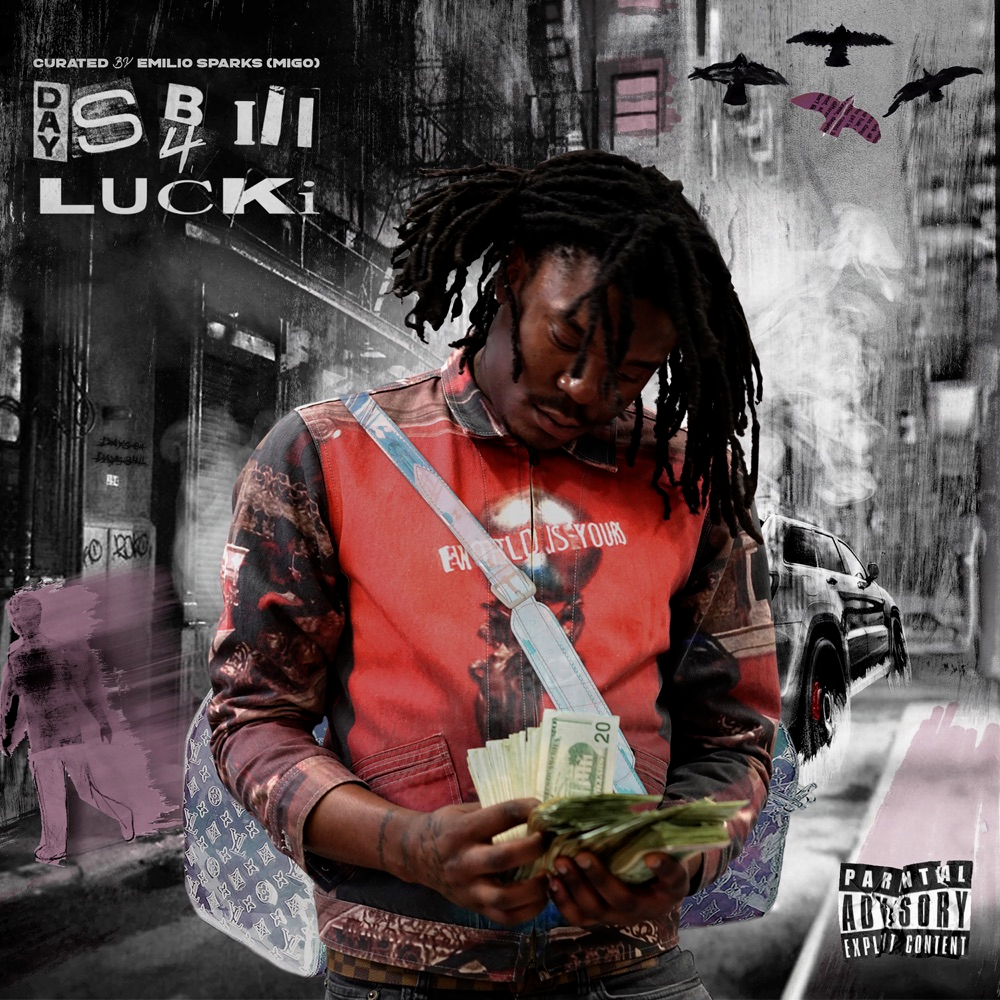
Despite being one of my favorite artists, at times I wonder if listening to his music is, in a way, supporting the behavior he portrays in his music. Some critics even argue that his music glorifies addiction and other toxic behavior. So why do I gravitate so much towards his music, and what are the ethics behind discussing addiction in music? The truth is much less black and white than it may appear at first.
What’s So Special About Him?
I mean, a rapper discussing addiction, relationships, and money isn’t exactly groundbreaking. To elaborate on what I appreciate in Lucki’s music, I’m pulling a quote from a recent interview he participated in with the music publication, “Pigeons and Planes.” A journalist, Eric Skelton, asked Lucki about his lyricism, and he responded:
“Since I was like a teenager, I haven’t been like metaphor heavy, simile heavy; I haven’t really been that. I learned how to grasp people… Our generation, they would rather hear stuff they relate to more, you know? The lyricism is always going to be there…”
Skelton continues, stating: “A lot of your fans have connected to you deeply because of your lyrics. And you can write all different kinds of songs; you can write songs that are just like vibey and not about much, but also you can write real shit about what you’re going through… When you write lyrics, do you ever feel the pressure… to be more vulnerable or does it just come naturally?”
Lucki replies, “With me, I can be vulnerable as ever in a song rapping about Maybacks… It’s the one line that’ll get somebody. It’s not the whole song. It be like one line.”
I partially agree with Lucki’s assessment here. Many of his songs have a chorus or quotable lyric that fans remember. This can especially be seen on TikToks that feature his music. But to dumb his music down to a single line does a huge disservice to his ability as a writer. Throughout his career, Lucki has displayed his ability to write a song with clear intention and poetic integrity, while still maintaining the catchiness that allows his music to appeal to a large audience.
Lyrical High Points
Not every song needs to be a lyrical masterpiece in order for it to be “good” or worth listening to. What I’ve noticed, especially in rap discourse, is the double standard that every song needs to be the second coming of Nas or Eminem in order for someone to enjoy it. In recent years, gatekeepers and long-standing standards around music have largely loosened, and people are able to enjoy songs for the energy and production. There are many more elements that a person should consider when determining if a song is good.
Can “complex” lyricism be a plus in songs? Yes! Should it be the only contributing factor as to why people enjoy a song? No. As an example, one of Lucki’s most talked-about songs, with one of the most unassuming yet profound opening lines to a song that I’ve ever heard in a rap song, is “Unlimited.”
The track “Unlimited” comes from his 2019 mixtape, Almost There. The mixtape is chock-full of some of my favorite tracks of his. Picking just one song from the tape was quite a challenge, but I believe the third song, “Unlimited,” does the best job of encapsulating what I admire about Lucki as a writer. The beat on the track features very prominent synths that sound like the listener is being dragged through a black hole or portal. The track builds up until the twelve-second mark when the beat drops and the artist delivers one of his most infamous opening lines — “We get high, we get fat.”
When I first heard this track, like many others, I was in complete shock and couldn’t help but laugh. How could someone open their song with such a direct and silly lyric? I was not the only person to be so flabbergasted by the lyric, as Lucki was asked about the line in 2023 on the “A Safe Place” podcast with fellow rapper and collaborator Lil Yachty. Lil Yachty shares his experience listening to the track for the first time:
“When I heard that line, that was before I was really listening to you, and he [Yachty’s friend] played that for me, and it blew my mind… I thought it was the most impressive opening line to a song.”
Lucki explains the inspirations behind the line further;
“Ya’ll don’t remember when they used to say ‘the gangsters get chubby and move to Miami?’ That’s where I get that from… Where we from… [People] used to be like ‘oh he getting fat, he getting money…’ [People] be in the streets not eating all day.”
An element of Lucki’s writing that I admire is how it can sneak up on you. You may hear a song or a lyric and find it to be random or out of place, then upon several relistens it suddenly snaps into place and is much more meaningfully potent than you originally thought. Through this unassuming six-word opening line, Lucki paints a picture of ambition, addiction, luxury, struggle, and triumph.
The ability to condense that level of personal meaning into a line that is quite simplistic on the surface is incredibly difficult, and Lucki really excels at it. While most get stuck on the opening line, I would like to give an equal amount of attention to the highlights in the following verse in the song. Lyrics like, “Proper for the white folks, I’m ignorant and classy/ God look right down on me, the ceiling is glassy,” illustrate an artist having to navigate a music industry that is not built to empower black art.
Lucki mentions having to code-switch “for the white folks”, balancing his “ignorant” side and “classy” side. The artist also plays off of the popular “glass ceiling” metaphor in the lyrics. A glass ceiling is a sort of unspoken barrier that prevents minority groups from gaining too much power, whether it be in a workplace or, in this case, the music industry. I enjoy how the line is still able to evoke a bittersweet feeling as he also claims to have God watching over and guiding him.
Another aspect that I appreciate in this song, as well as his writing as a whole, is his use of juxtaposition. In the same song, Lucki describes a relationship that is, frankly, very toxic. Throughout the song, Lucki can establish an extreme opening to a bar, only for the punchline to stray in an opposite mood or direction: “She tell that I’m Satan, she blessed that she had me/ This b*tch want more power, I’m letting her have it/ She’ll be the end of me, and I’m curious what happened”
I truly believe I’m only scratching the surface on this track, not even mentioning the mixtape this song comes from, but for brevity, we’ll move on to “BRAZY WEEKEND,” the fourteenth track of his first studio album, FLAWLESS LIKE ME. Now, from the title alone, you could assume this track is meant to be a fun party song about a said “crazy weekend”. While partly being correct, that doesn’t paint the full picture. The song is laid on top of a really serene and floaty trap instrumental. Lucki accompanies the track with laid-back vocals describing his toxic relationship troubles as a rapper. At around thirty-four seconds, Lucki drops one of the most gut-wrenching 8-line stretches I’ve frankly ever heard: “Can’t quit Lean baby girl, what’s best for me?/ I keep livin’ my fuckin’ rap.”
In the opening two lines, Lucki establishes his reliance on Sprite mixed with cough syrup,
known as Lean, and asks a rhetorical question to his girlfriend to highlight the issue. A sense of hopelessness exudes from the lyrics. Lucki has made a living off of his career, but he acknowledges that his lifestyle is self-destructive.
“I’m gettin’ geeked up like I never been, like it’ll bring my brother back/ SRTs might be the death of me, so I’m paintin’ that reaper black.” Lucki continues to up his dose as a way to cope with the loss of a friend. A darker interpretation of the line could also be implying that Lucki is trying to overdose to be with his “brother.” It is important to note that he only has a biological sister, so “brother” is most likely referring to a close friend. In the following line, Lucki mentions a Dodge model with “Street and Racing Technology” (SRT). While acknowledging the inherent risk driving an SRT car comes with, Lucki actually doubles down on his indulgence and specifies a preferred color. The color choice additionally emphasizes the theme of death. I appreciate this line as an illustration of luxury and tragedy.
“I’m in the mix baby girl, what’s best for me?/ Bet you couldn’t even read me that.” Lucki reaffirms that he is actively living like a rapper and asks the original rhetorical question to his partner again. Lucki claims that his partner wouldn’t be able to provide an answer to the question. Further stressing his dilemma, “Give me your all, and I’ll give you what’s left of me, that shit still don’t even out/ Livin’ the shit I was dreamin’ ‘bout.” Lucki expresses feeling broken and his inability to be fully present for his partner, likely in part due to his lifestyle. This, in turn, creates problems in his relationships, “not even out.” To end the lyrical stretch, Lucki sorrowfully reaffirms that the life he is living is what he dreamt of. Celebrating the fact he made it, while mourning the negative effects of how he lives.
YouTube comments on the official audio for this song have described it as an “ethereal melody,” “scripture,” and a “trauma dump on a beat.” Frankly, I’m inclined to agree with all three.
Despite the opinions of myself and others, one hard question remains. Is listening to music with such depressive and self-destructive themes ethically sound? While I don’t personally believe Lucki promotes or glorifies drugs, I’m not able to just change the perspective of people who believe he does. However, throughout music history, themes of toxic relationships, excess, and especially drug abuse have been commonplace. There’s a reason why tropes like the tortured artist are so prevalent.
While the subject matter is not always as out there and in your face as on Lucki’s music, it is a constant throughout larger music history. The members of Fleetwood Mac were snorting an absurd amount of cocaine during the recording of their album Rumours, which became one of the most culturally significant albums of the era and their best-selling album overall. Should that album not exist? Prince was one of the most celebrated artists and a documented drug user up until their death from an overdose; was their music detrimental to society at large? The Beatles were smoking weed while they were on top of the world; should Abbey Road or Sgt. Peppers be wiped from history for promoting their blasphemous ways? Of course not; that’s ridiculous! I bring up the musical comparisons not to liken the quality of music, but rather to shed light on a clear double standard. To pin the blame for a larger societal issue on a single genre or artist is honestly quite silly.
Concert Review & Conclusion
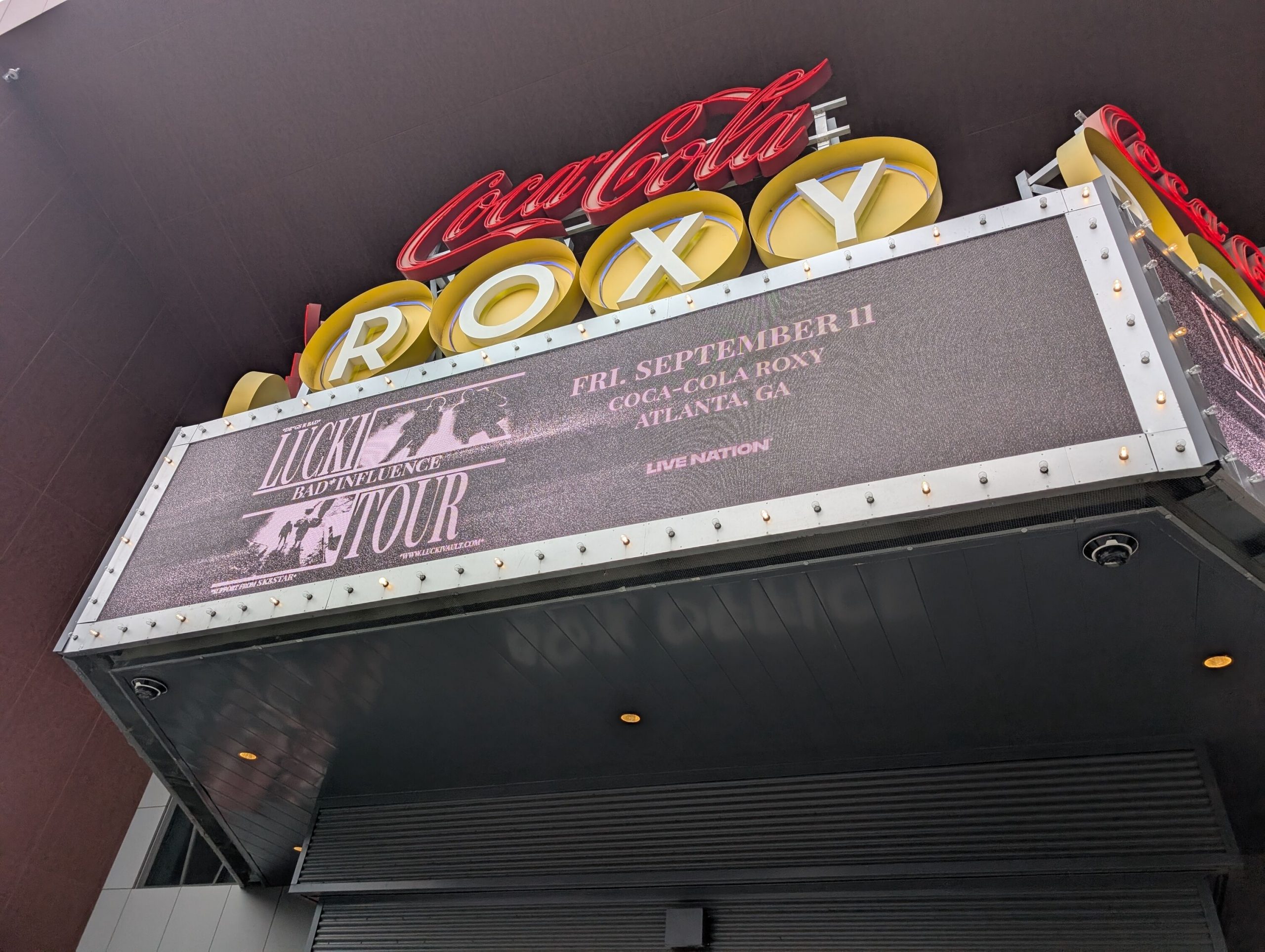
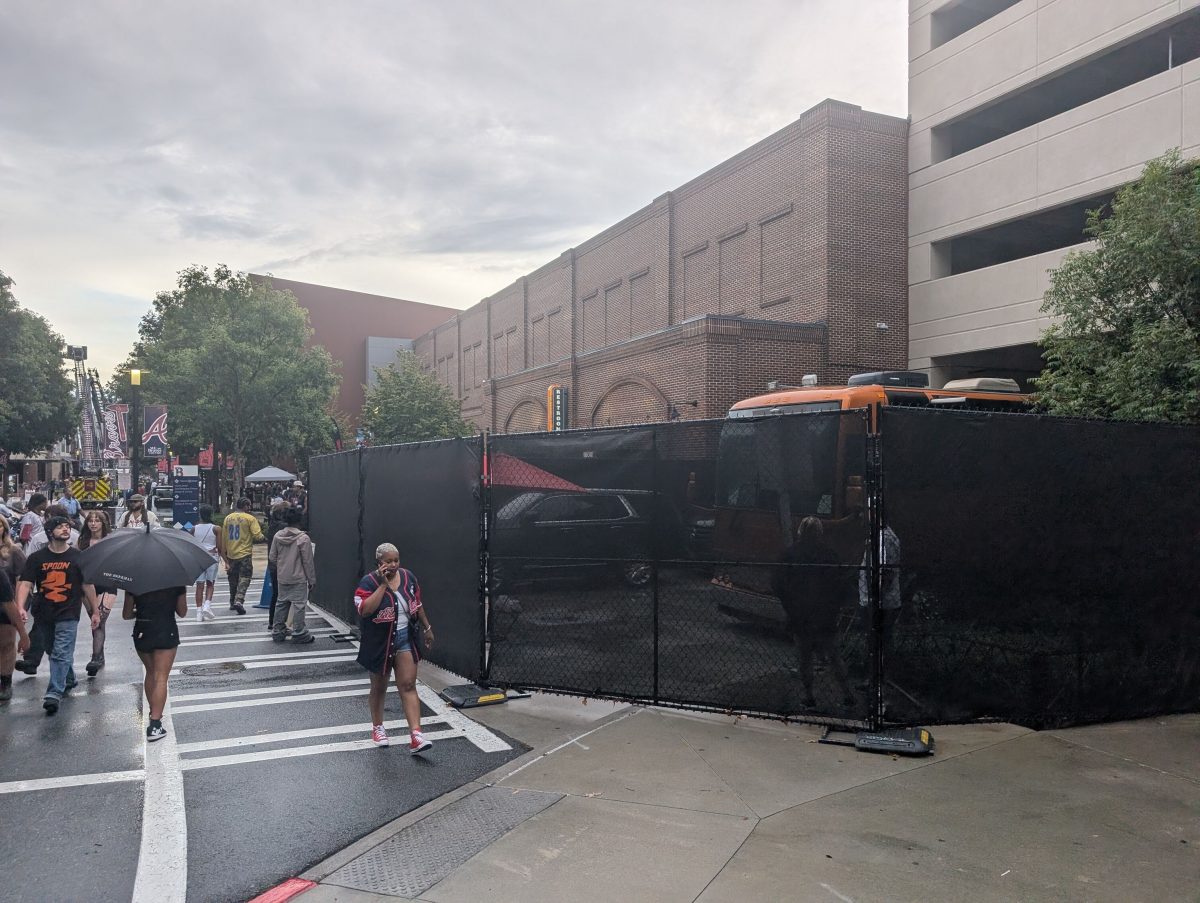
It is now 2026, and off the back of his most recent and most commercially successful release, dr*gs r bad, Lucki has started his “Bad Influence Tour.” Quite ironic. I was not originally planning to attend, but I was lucky enough to be surprised by my sister with a ticket to the Atlanta show at the Coca-Cola Roxy! It was such an amazing show. I had gotten there around three to four hours early to try and get a good spot in the pit. I had also brought my CD of the new album that I found at a local music store in Knoxville, in hopes that Lucki would sign it. As I was waiting in the general admission line, I kept catching glimpses of people going in and out of a fenced-off area. I thought surely that’s where I would have the best opportunity to get a signature. Eventually, I asked the people around me to save my spot in line, and walked over to the fence. Who would have guessed it, but the man himself was behind the fence, on a scooter. I yelled over to him and politely asked him for his signature. He was really nice about it, signed my CD, and I even got a photo with him.
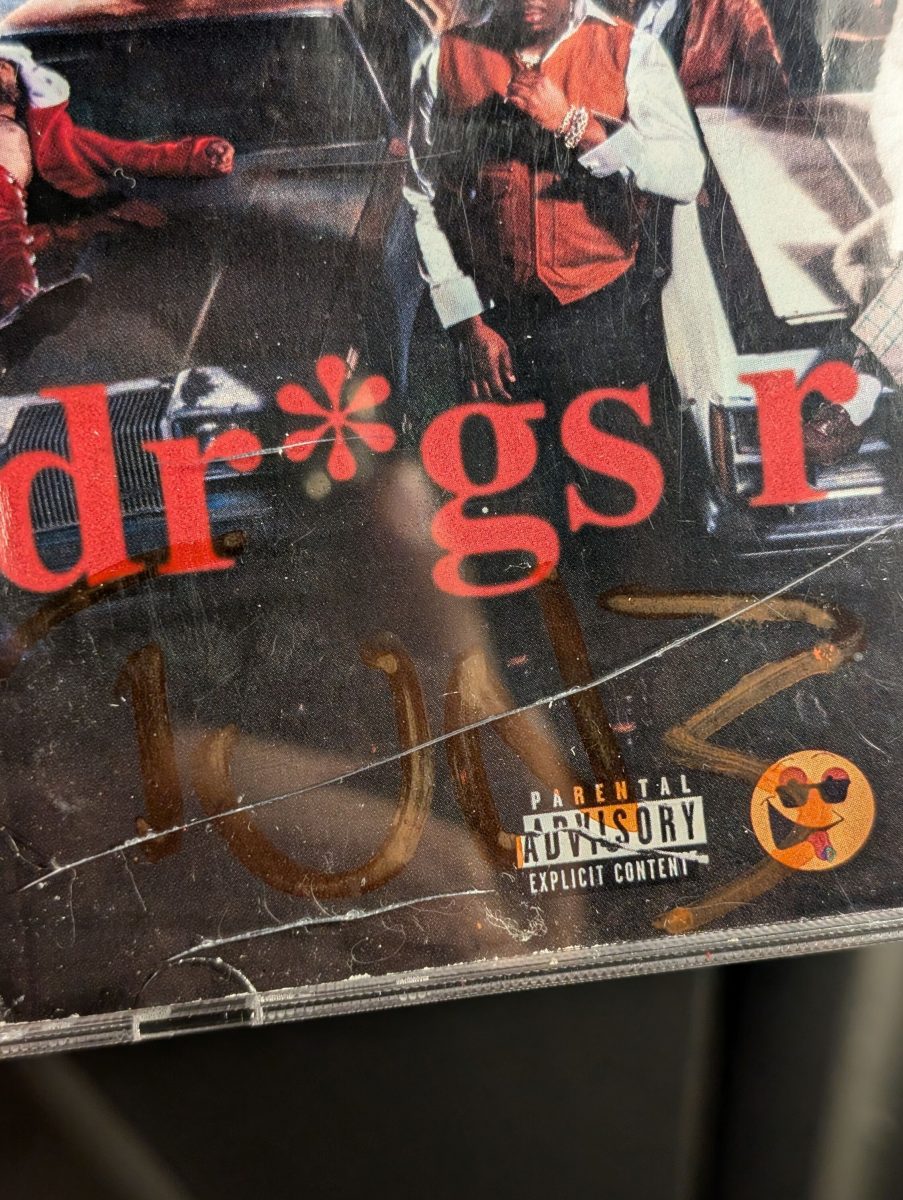
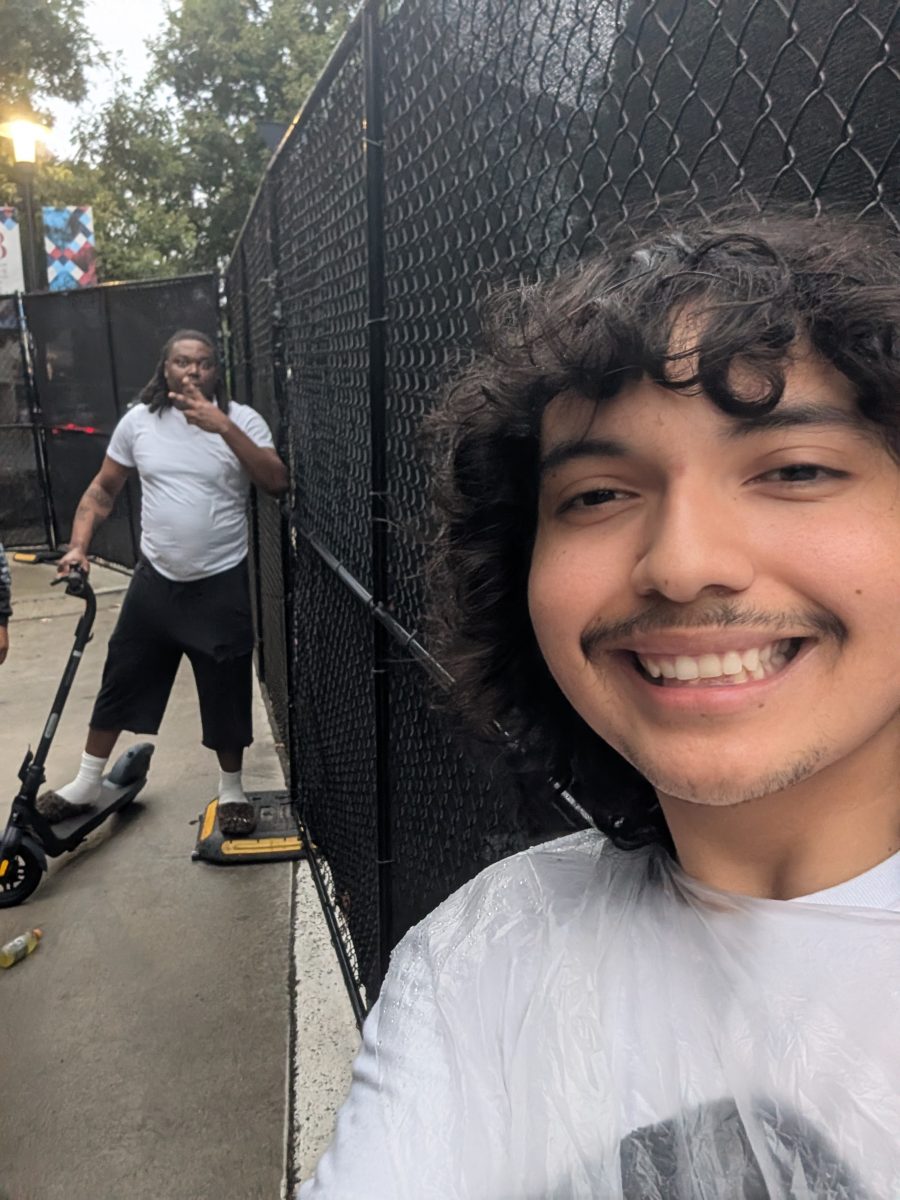
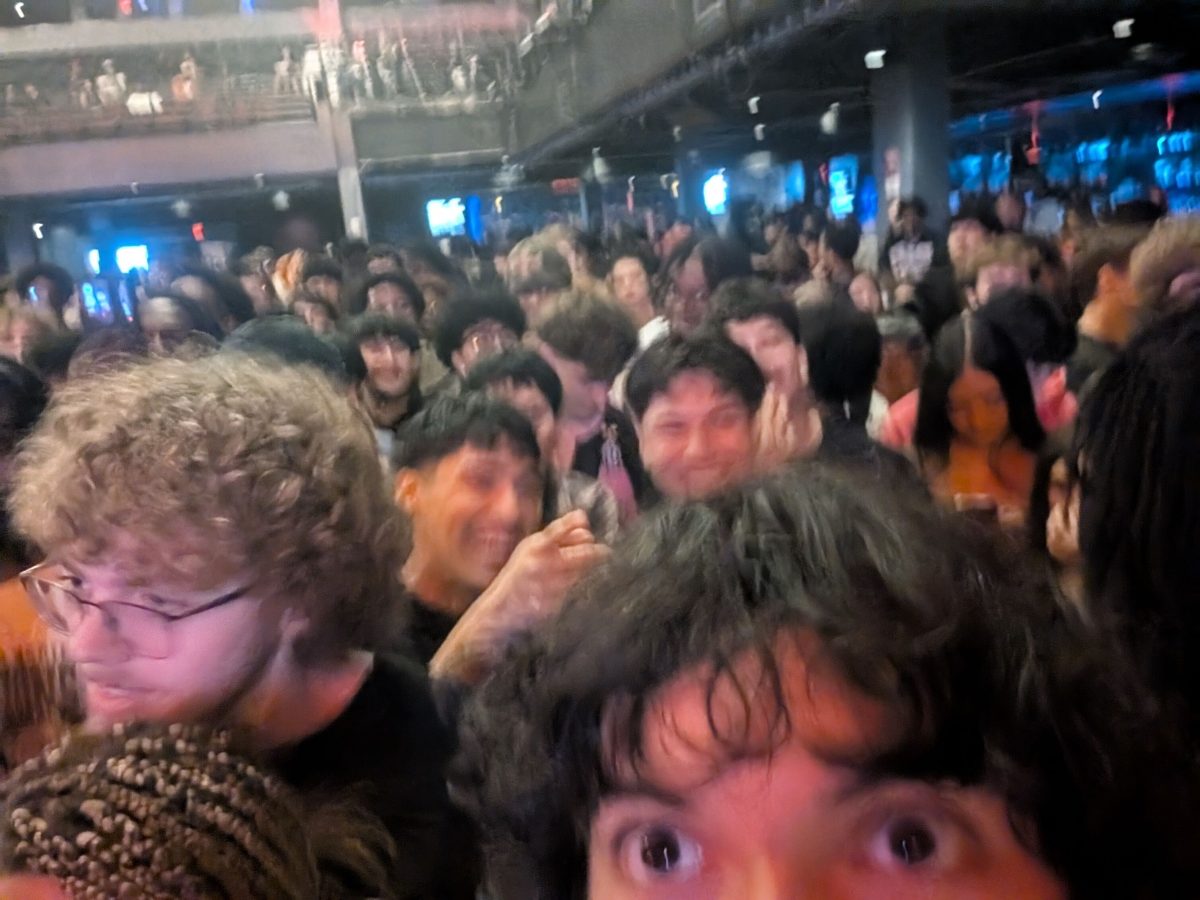
Beyond that, the show was really fun. The energy in the building was through the roof, and the setlist was great! It was a nice mix of songs from the new album in the beginning, then later branching off to some of his older and more popular songs. I also met some really cool people while there. 10/10 experience; I have no complaints other than it being a little bit “pushy and shovey”, but if I was concerned about that I should’ve just gotten balcony seats, and what’s the fun in that?
Lucki is known as a controversial artist; I can never really get a good grasp of what the larger general public thinks of him. From my discussion with other rap fans and friends, it either goes one of two ways. They either think he’s an underrated rap legend or a trash mumble rapper with no talent. Really a “you love it or you hate it” kind of artist. And to be honest, I like it that way: the people who get it, get it, and the ones who don’t are seriously missing out on some great music. I wouldn’t necessarily say his music is an “acquired taste,” but he definitely has a set musical style with set themes and topics; if they just don’t speak to you, you won’t like most of his music. Although much of the lyrical content in his music is pretty dark, I believe it goes much deeper than just sex, money, and drugs.