By Katherine Long, Cartoonist
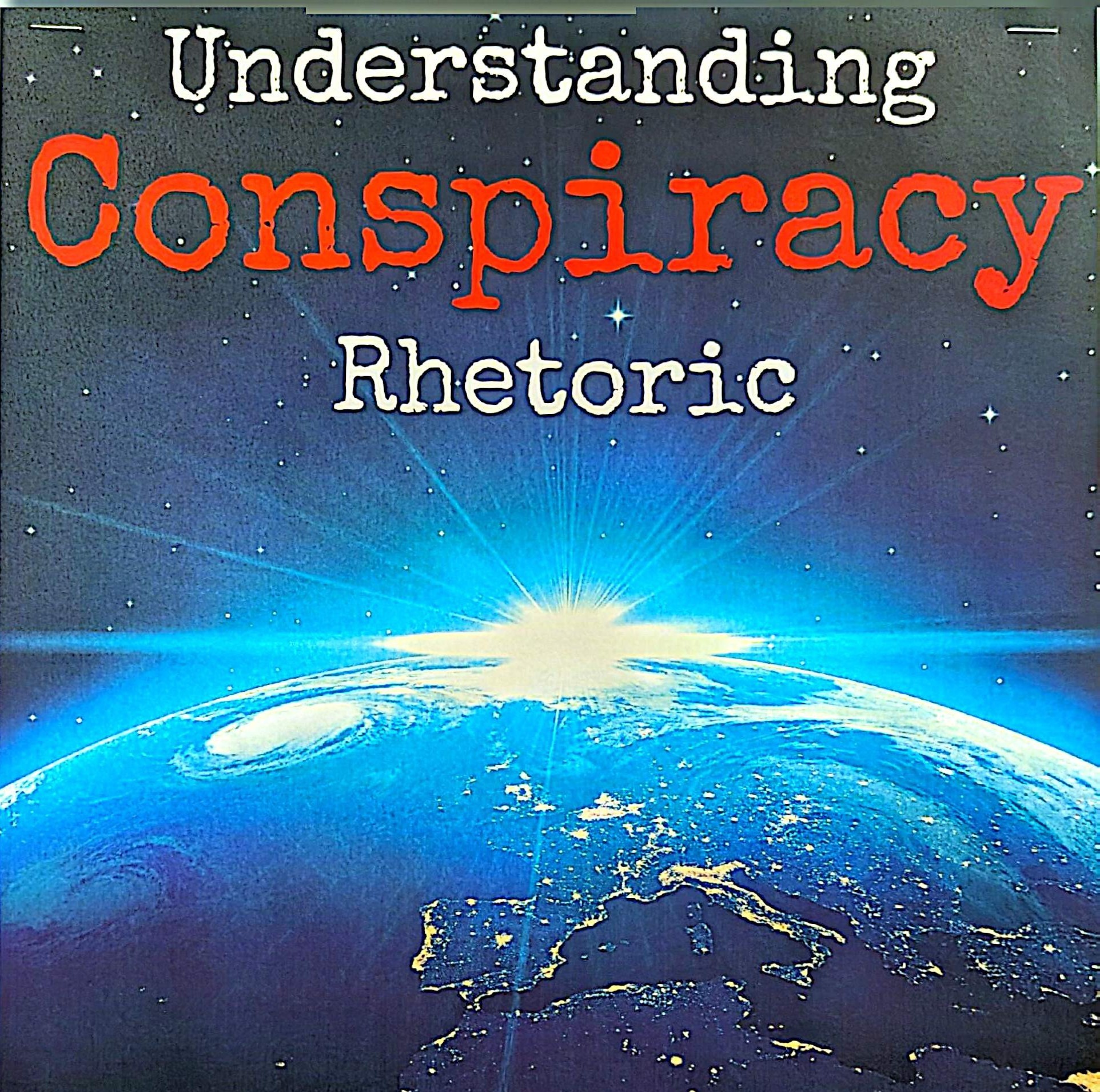
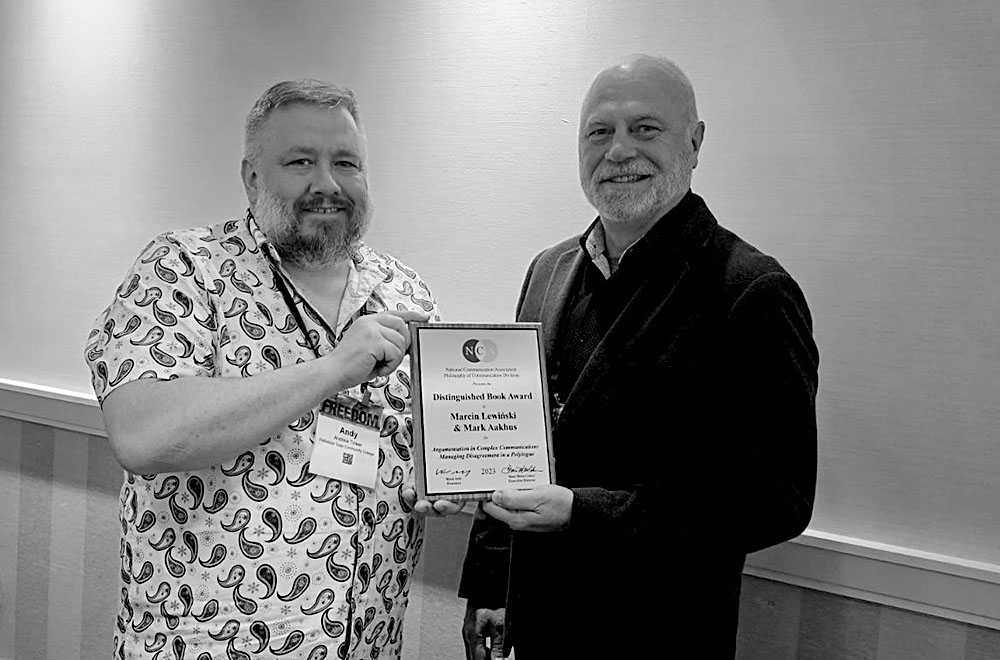
“Understanding Conspiracy Rhetoric” presented by Professor Andrew Tinker, the latest addition to the faculty lecture series, was an excellent follow-up to the semester’s first lecture about life lessons from Socrates. In many ways it continued the themes of its predecessor (of the importance of honest and constant questioning in search of truth), showing a specific application where these traits. Tinker gave his audience a brief introduction to the broad field of conspiracy rhetoric, while emphasizing the importance of critical thinking and source evaluation when dealing with it.
He drove home the point that information is incredibly valuable, but we must make sure that that information’s quality is sound. He demonstrated using sound resource in the sources he constantly referred to in the lecture, making sure the audience knew where his information was coming from. Tinker first carefully defined what is and is not a conspiracy theory, since the distinction is crucial to understanding the topic before diving into how conspiracy theories work, and how they draw people in, ending with some practical, applicable tips for how to handle conspiracy rhetoric in one’s own life, giving students practical tips that translate outside the realm of, well, theory.
To begin diving into the “theory, of conspiracy theories”, Tinker laid out precisely what a conspiracy theory is, and how it is different from conspiracies and theories as individual terms. Tinker saved conspiracy theories for last, first defining conspiracies and theories to demonstrate how a conspiracy theory is different from its two components. He defined a conspiracy as a group of people plotting in secret to benefit themselves and/or harm others, making sure to emphasize that professionals, using professional research and information standards, are the ones who should be searching for and examining conspiracies, not some random person with a podcast.
The second term, theories, Tinker explained, is also a very professional term that involves high standards for the quality of information. He defined theories as organized sets of concepts used to find knowledge and explain our existence, or in other words, theories are models humans create to make sense of the world. These models are only made after very careful research and vetting of information, and are subject to formal review. Science, psychology, and the humanities are some examples of fields where theories are used. Tinker finally moved to conspiracy theories, after demonstrating what they are not. Compared to conspiracies and psychology, a conspiracy theory is their polar opposite. The first two are professional fields with high standards and careful sourcing, based on facts and research, while a conspiracy theory is, at its core, a story without proper sources or research.
These stories prioritize maintaining their own narrative and will reject any contradictory evidence. There is little to no standard of proof for conspiracy theories, making them very different from proper theories, which must be very carefully formed using quality evidence. The quality, or lack thereof, of their sources is a major part of what makes conspiracy theories what they are: poorly supported stories, and one of the driving points of this lecture was the importance of verifying that our information originates from quality sources.
Digging deeper into what a conspiracy theory is, Tinker explored why we tell ourselves these stories. Humanity has always told stories to make sense of the world, and that may be why conspiracy theories can become so popular. Conspiracy theories can provide an explanation for a person’s distress. At their core, conspiracy theories revolve around the feeling of safety and its disruption. They provide explanations for why things are the way they are, and often paint the believers as righteous and important in a world that feels horribly out of their control. It comes down to a feeling of powerlessness, where conspiracy theories are then used, as Tinker said, “like intellectual duct tape,” to resolve that feeling of danger and powerlessness, or at least explain it.
All people want to feel safe and important, so everyone is susceptible to this mindset, Tinker warned, since it provides a feeling of security in a turbulent world. This is also why it is so hard to debate conspiracy theories, since they become foundations of a person’s world, and having those foundations challenged is uncomfortable, to put it lightly. Therefore, believers will often reject. Above all, Tinker explained that conspiracy theories are bad argumentation. They may be packaged in a way that seems legitimate, but they are comprised of a handful of cherry-picked facts and opinions. They are not scholarly or professionally researched, and their supporting evidence is weak to nonexistent. This is why critical thinking and source evaluation are so important when dealing with conspiracy theories: to examine the logic and see the story for what it is.
Worse, conspiracy theories can often be actively harmful, as Tinker pointed out, muddying the water and making it hard to recognize and point out true conspiracies, which are real and dangerous, since it is easy to dismiss them as just conspiracy theories. Furthermore, they can be actively offensive and cruel, often to minorities. A common target of conspiracy theories, in an example provided by Tinker, has been the Jews, seen in stark relief in the beliefs of Nazi Germany. Offensive conspiracy theories actually led Tinker to reach this topic, since when he had students present harmful conspiracy theories in class, he had to figure out how to deal with it. He explained this toward the beginning of his speech, and then elaborated a bit more when interviewed after the lecture.
As Tinker has explained, conspiracy theories can be incredibly harmful, especially when they push a narrative that one group is lesser than others. People go to conspiracy theories for the sense of security they provide, but they are actually dangerous, potentially destroying the security of others. That is why we must always carefully examine what we believe and how that belief was formed. As Tinker told his audience, “Think about your own sources, think about how you consume information… Think about how you find information.” He reminded his audience that every person is susceptible to misinformation, especially on the internet.
Having explained conspiracy theories, Tinker now offers his listeners advice for how to deal with conspiracy theorists in their lives. First, he made sure to differentiate between true believers, who have based their entire sense of self around conspiracy theories, and the casual conspiracist, who might believe an individual theory or two. When dealing with true believers, Tinker offers this sage advice for debating them: “Don’t.” He then elaborated, explaining that “all they’re trying to do is reinforce what they think,” meaning trying to convince them would be about as effective as arguing with the wall, so it is far better to simply, politely disengage and spare yourself the trouble.
When it comes to the casual conspiracist, Tinker again advised a simple approach. For the most part, all one needs to do is ask where they got their information, and leave it there. No more is really necessary, because, as Tinker advocated, “You are under no obligation to debate people just because they want you to.” It is important to be respectful to everyone, but no one is required to debate another person’s theory unless they want to. We have freedom of speech, and we are also free not to speak if we do not feel it is needed.
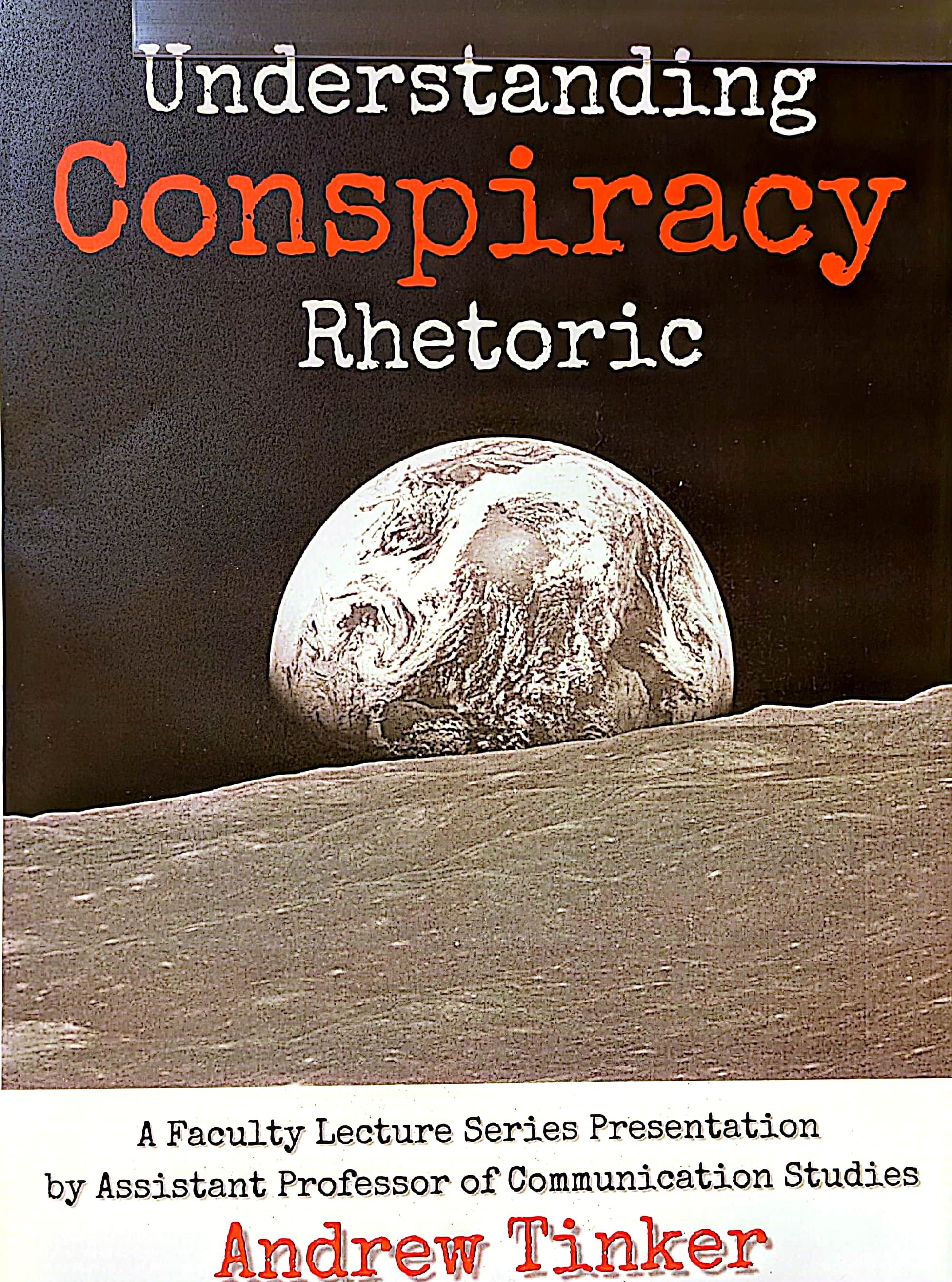
To conclude, the overall theme of this lecture was the importance of critical thinking and evaluating one’s sources of information. By explaining how conspiracy theories work and how they affect everyone, Tinker left his audience thinking about how information affects their own lives. He emphasized that conspiracy theories are not true academic theories. Instead, they are stories, formed from low-quality evidence that would not live up to academic standards. In a world where misinformation can be rampant, it is vitally important to be able to critically examine information and theories and determine whether they are true theories, well backed by professional research, or merely conspiracy theories, told to push a narrative and justify someone’s worldview.
Some of the worst actions in history, like the Holocaust, were justified on the basis of conspiracy theories, so it is imperative that every student be capable of critically examining and evaluating information and its sources, so they do not become believers in and supporters of truly monstrous actions. We all need to develop the skills to evaluate sources and truly think about the information we receive and determine its value. As Tinker powerfully concluded his speech, “Information, knowledge, and what we know is a professional process with methods that we want to protect.” We should all use the skills we learn in classes and lectures like this to evaluate our information, so that we can protect true academic and professional work and avoid falling victim to a conspiracy theory.
When asked what he hoped students would take away, Tinker replied that “Conspiracy theory is around us and we need to think of it critically… [and we need to] use solid ground to evaluate what is real and what is not.” So, everyone can combat conspiracy rhetoric by being open to new evidence, while thinking critically and protecting the value of our own information. And attend every lecture, since the value of the information they provide cannot be overstated.