By Jacqueline Ayala, Editor
February 13, 2026, marked the release of the new “Wuthering Heights” movie, starring Margot Robbie and Jacob Elordi. It’s said to be an adaptation of Emily Brontë’s 1847 novel Wuthering Heights, but the word “adaptation” can be used very loosely in this case. From the moment the first trailer was released, the movie was met with serious backlash regarding how it is comparable to the classic novel, and the criticism has only gotten more intense since the movie was released. (MAJOR spoiler warning for both the movie and novel!)
In summary, the Wuthering Heights novel is about the Earnshaw and Linton families as their paths intertwine and how every problem comes back to the servant of the Earnshaw’s: Heathcliff. The story is more than just Catherine and Heathcliff falling in love, something the new “Wuthering Heights” movie focuses on. Brontë’s book is too deep to discuss in a short paragraph in a movie review; it became one of the most controversial works of the 1800s due to its depth and themes. It’s not an easy job to turn this into something for a big screen.
Emerald Fennell, the director behind “Wuthering Heights,” attempted to bring to life one of gothic literature’s most famous novels. Brontë’s work is heavily themed on social and racial classes, obsession, and ruination, meaning that adapting a book as deep and complicated as Wuthering Heights is a challenge not many have managed to do. The question remains: Did Fennell succeed in this?
Why is it “Wuthering Heights”?
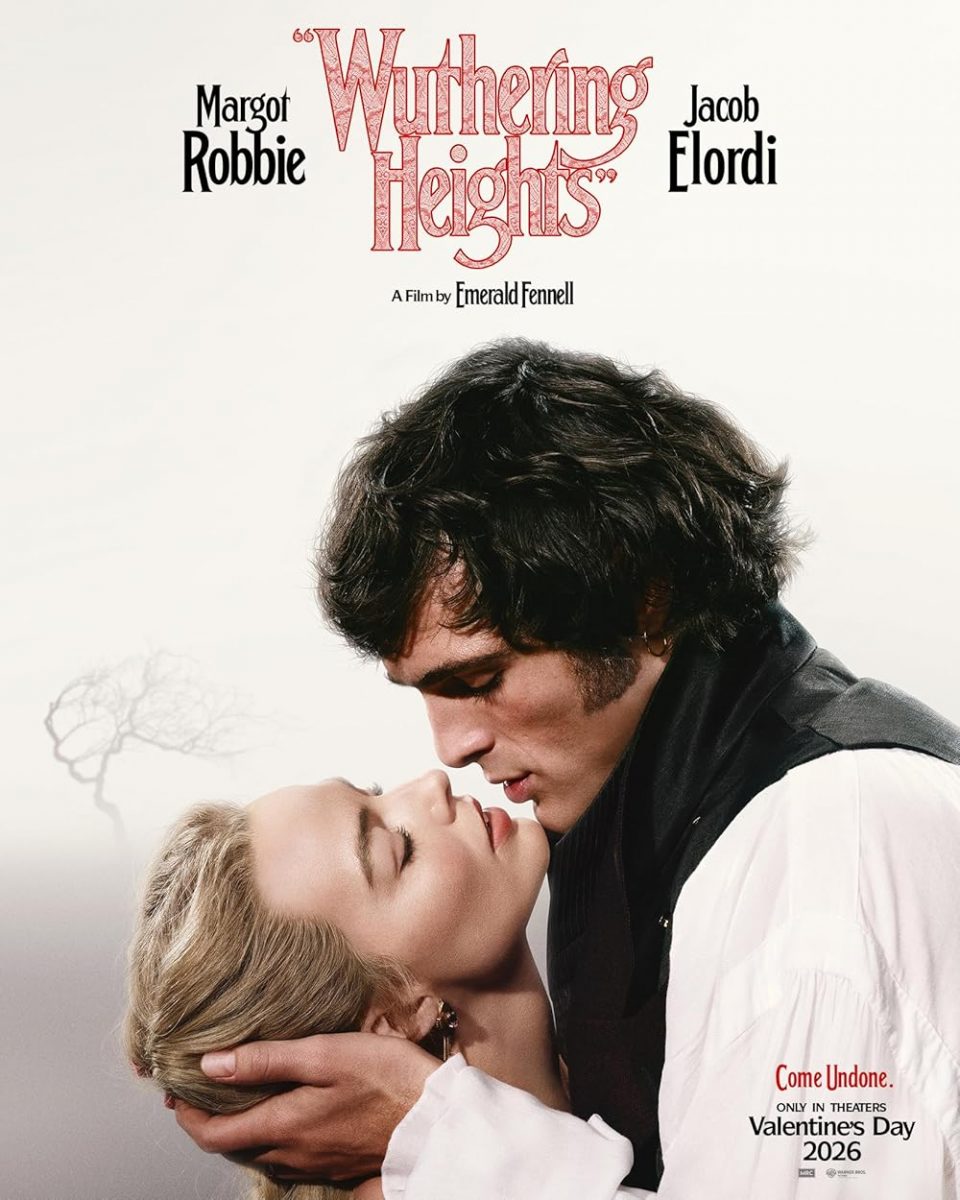
From when it was first announced the adaptation would be made, fans of the novel noticed quotations around the title, making the movie “Wuthering Heights” as opposed to Wuthering Heights. In the film industry, something as little as quotations means something in a movie title, as it’s what people first see when it comes to any movie – it’s the first impression. When a book title is changed, even with something as small as adding quotations, fans cannot help but speculate.
In an interview with Fandango, Fennell talks about how adapting a book as profound as Wuthering Heights is nearly impossible. “The thing for me is that you can’t adapt a book as dense and complicated and difficult as this book,” Fennell says. “I can’t say I’m making Wuthering Heights. It’s not possible. What I can say is I’m making a version of it.”
She emphasizes at the end of her explanation how, “There’s a version that I remembered reading that isn’t quite real. And there’s a version where I wanted stuff to happen that never happened.” To sum up Fennell’s answer to the quotations: Is this movie Wuthering Heights? Yes and no. While the movie is about the characters and says it is based off the novel, a true, word-for-word adaptation of Wuthering Heights cannot be made. Rather, this is only a version of the story.
My First Impression
Going into the movie theater, I expected the story to be inaccurate – but, every book-to-screen adaptation is inaccurate. Fennell does have a point in saying no one can say they are perfectly making a book into a movie. If people were to remake the same classic novel into a movie over and over again with no creative liberty… no one would want to create them. Although, that doesn’t mean they can’t make a good version of the story. Which was not done here.
“I think I’m gonna die in this house,” well, Charli XCX, I thought I was going to die in that movie theater. In all seriousness, this movie felt as if it had much more material than we saw and was cut down to the bare minimum. Scenes in the movie were short, as if they were rushing the development of Heathcliff and Catherine’s relationship to get to the sex scenes. Not to mention, the entire second half of the novel is cut out from the movie, leaving behind several vital moments to Heathcliff’s character, which would remove the romanticized aspects of his character that Fennell displays in the movie.
Yes, I am one of the “insufferable English majors” who read the book in high school and wanted a good adaptation. But that does not mean I didn’t go into the movie theater with an open mind. I have seen several classic adaptations which, while inaccurate, were well-directed and produced. And who can’t help but be captivated by a beautiful lead actor like Jacob Elordi? I, myself, was so interested that I went and watched the movie a second time.
Did I really watch a movie I hate for Jacob Elordi? Not entirely. My main reasoning for a second viewing was that you can’t grasp an entire movie just by watching it once. Details, witty lines, hidden meanings. All of these things can be missed. So, one more visit to the movie theater and… I still did not like it. If the movie title were different and the names of the characters were changed, it would be unrecognizable as Wuthering Heights.
I felt the entire movie was shallow. The characters lacked the depth they had in the novel and, in return, made the romance intolerable to watch. One moment they were kids and the next thing I knew, they were adults and he was holding her by the corset. No development was made between Heathcliff and Catherine to make you root for them – something any romance movie should have. Focusing on the romance in a story means the director should make the tension between them actually worth watching.
A Latex Dress
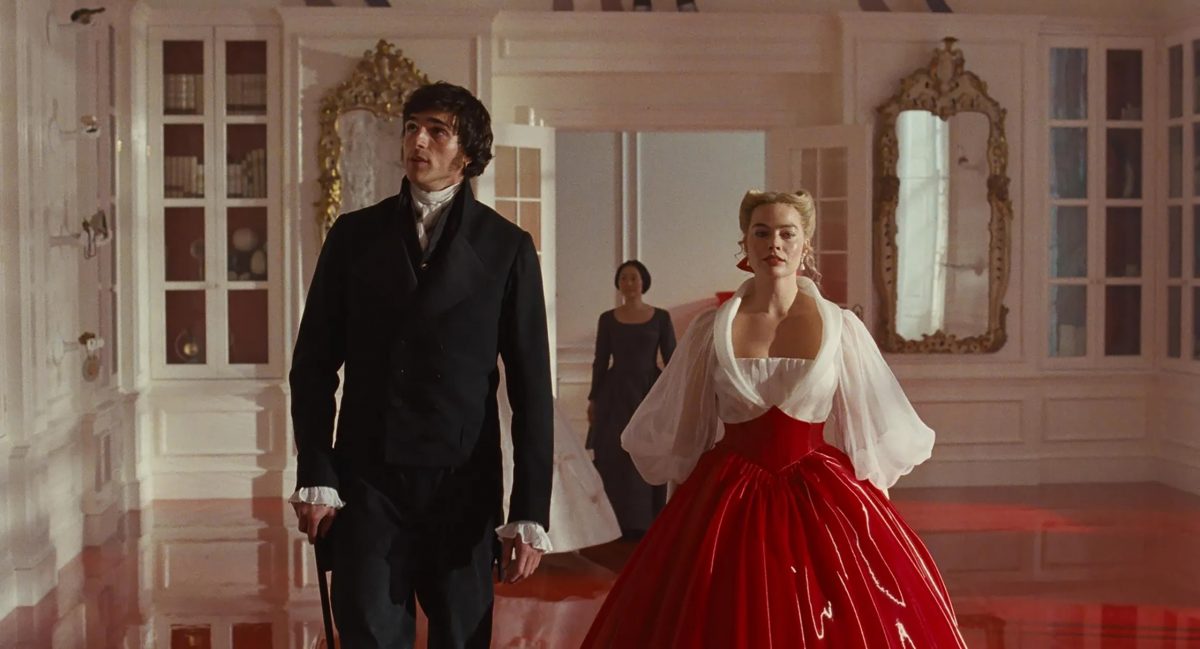
The “beautiful, well-crafted” dresses I was promised by Fennell were, in fact, not beautiful or well-crafted. With every period-piece in this day and age, it is expected that the fashion will be inaccurate, but they can still be good and somewhat depict the time period the characters are living in. Where does a holographic, off-the-shoulder, almost see-through dress fall in 19th-Century Yorkshire?
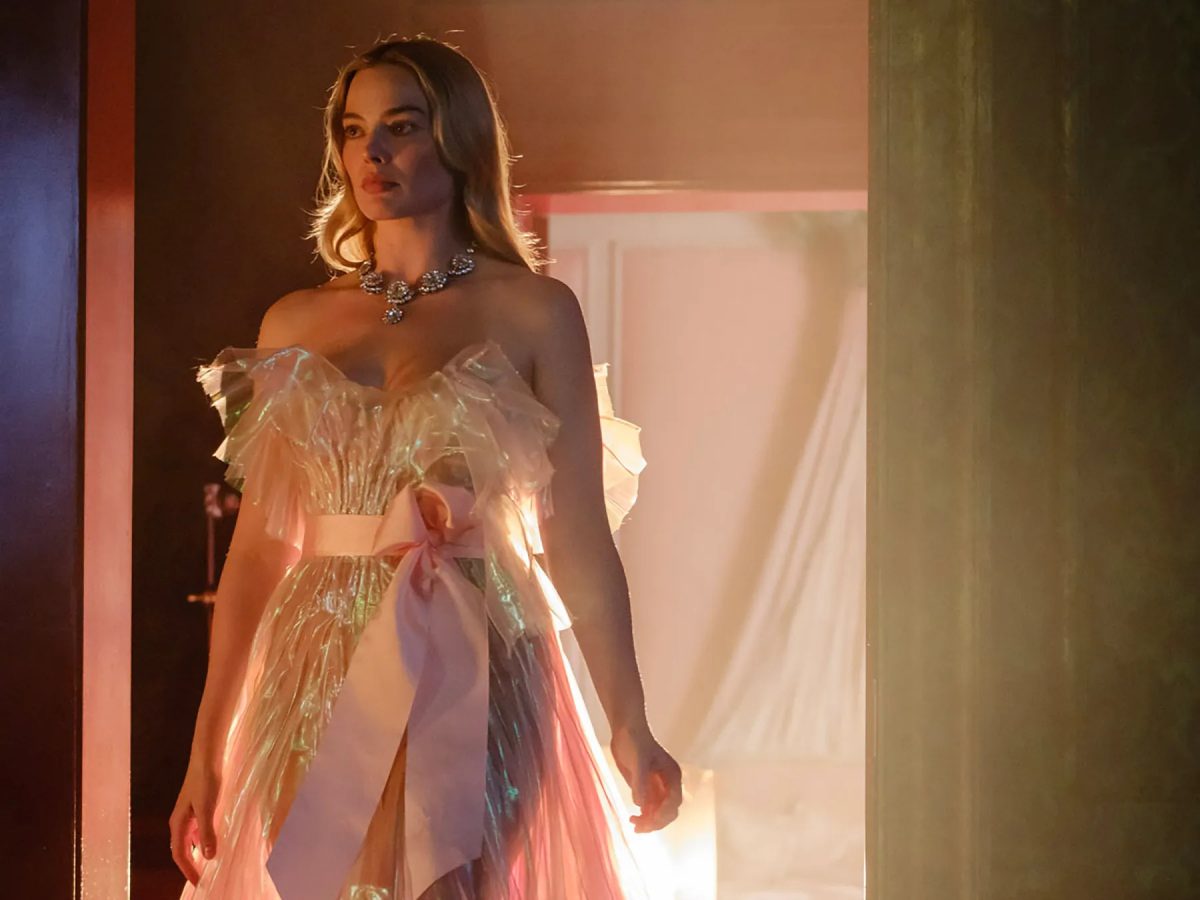
Exaggerated versions of old period clothing are not new. Bridgerton has been an example of this, even when these clothes are far out of the norm in that time period. But in what world would Catherine Earnshaw wear a holographic or a bright red latex dress? These unusual fabrics can sometimes be a carefully planned fashion choice to indicate emotions and thoughts of the characters.The holographic dress they claimed to be a costume resembled a trash bag instead of a romantic ensemble.
The jewelry especially clashed with the outfits. They weren’t made to blend in or complement the fashion of the characters, especially Catherine’s. Rather, they felt slapped on to make a statement. What statement? A statement on wealth? Catherine’s feelings about being out of place? Religious undertones? Slapping a giant cross on the front of a corset does not do much except make my main focus turn onto it and wonder why it is there.
Rose-Colored Glasses
I’m no Negative Nancy. So, let me break down the tolerable aspects of this movie. Aesthetically, the movie was full of beautiful gothic scenes and provided the right atmosphere for the story until Catherine moved in with the Lintons – but that is a negative, and I am here to talk about positives. There were clever scenes which I do have to give Fennell credit for, including one of the beginning shots where a river of blood was leading us to Wuthering Heights, and the film’s title sequence, where Heathcliff and Catherine’s hair intertwine to create “Wuthering Heights”. The only unsettling part about the title screen was finding out Fennell used Elordi and Robbie’s actual hair for the stop-motion creation of the title.
Still, so many beautiful little details… yet the whole movie was a mess. Though, it was admittedly entertaining. Jacob Elordi is a good-looking, talented actor with a wide range and Margot Robbie has brought a strong name for herself since the 2013 movie About Time. Her influence only got better as she starred in Greta Gerwig’s Barbie. Their acting was phenomenal, strong, and impactful – the only problem was the scripts, clothes, and everything else about the movie.
What About The Book?
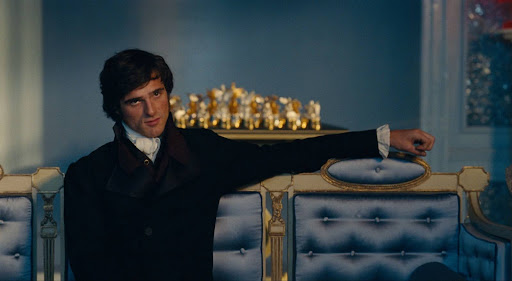
We cannot talk about the movie without discussing the book. Specifically, how major aspects from the novel were completely erased from the story. I am primarily talking about the casting of Heathcliff, changing him into a white man, which removes half of the point of the story. In Wuthering Heights, Brontë wrote, “He is a dark-skinned gypsy in aspect, in dress and manners a gentleman.” Throughout the novel, the color of his skin is constantly mentioned. Ah, yes, The Kissing Booth and Euphoria actor Jacob Elordi fits that exact description.
That is not to discredit Elordi’s talent or his work; he has been showing his range in acting, especially with the release of Frankenstein in 2025. But, if Elordi’s appearance is what Fennell saw in the novel… I’m starting to think she just read the blurb on the back of the book.
The erasure of Heathcliff’s race not only erases a major point of his character, but also of the novel. Apparently, it was possible for Mr. Linton to be a man of color but not have the male lead be one as well. And the one servant, Nelly, to also be a woman of color. But of course, Heathcliff couldn’t possibly be one. That makes sense, Fennell.
I could go into detail on Catherine’s age being different, the point of view change, Catherine’s brother, who was mentioned once and never again, the switch in Isabella’s marriage with Heathcliff, and every aspect that was removed from the novel. But, the main objective of the movie was to depict the relationship of Catherine and Heathcliff as an erotic, forbidden romance, when in reality, that is not what happens. They’re toxic, manipulative and damaging to those around them because they deny the fact that they could be together. And this follows Heathcliff after Catherine’s death in the novel.
And no, in the novel Catherine and Heathcliff did not do what they did in the movie. This movie tried to thrive on the idea of a heated romance between Heathcliff and Catherine, but all it managed to do was make me scared to meet my friend’s eye during these scenes. The sexual aspect of the story was severely amped up to fully market this as a romance – something the original Wuthering Heights was not. There was no sex, no affair, nothing more than silent romance between the two characters.“Wuthering Heights” feels as if it were made for Fennell to make the story into a creepy self-insert situation and disregard all valuable plot themes in the story.
Consensus From The Viewers
The audience for “Wuthering Heights” is split between two sides: love and hate. Those who love it see it was a heated romance featuring their favorite male actor… and the other side read and understood the book. The majority of the reviews are negative, generally stating that the movie simply had no substance, no other passion for creating it than Fennell wanting to create a smut-infested movie. It was an emotional rollercoaster for all sides of viewers regarding the movie – tears, anger, confusion – after all, the ending of “Wuthering Heights” is not a happy one for any of the characters.
The movie was turned into a joke even before its release. Of course, literature lovers will be upset when something as vital as Heathcliff’s race, something only one adaptation of Wuthering Heights in 2011 got right, is still forgotten even now in 2026. The first look of the fashion was picked apart and got harsher after the release of the movie. Overall, there were very few positive reviews on the movie outside of the actors and the romance-plot, which was still received negatively by people who were aware of how the characters actually are.
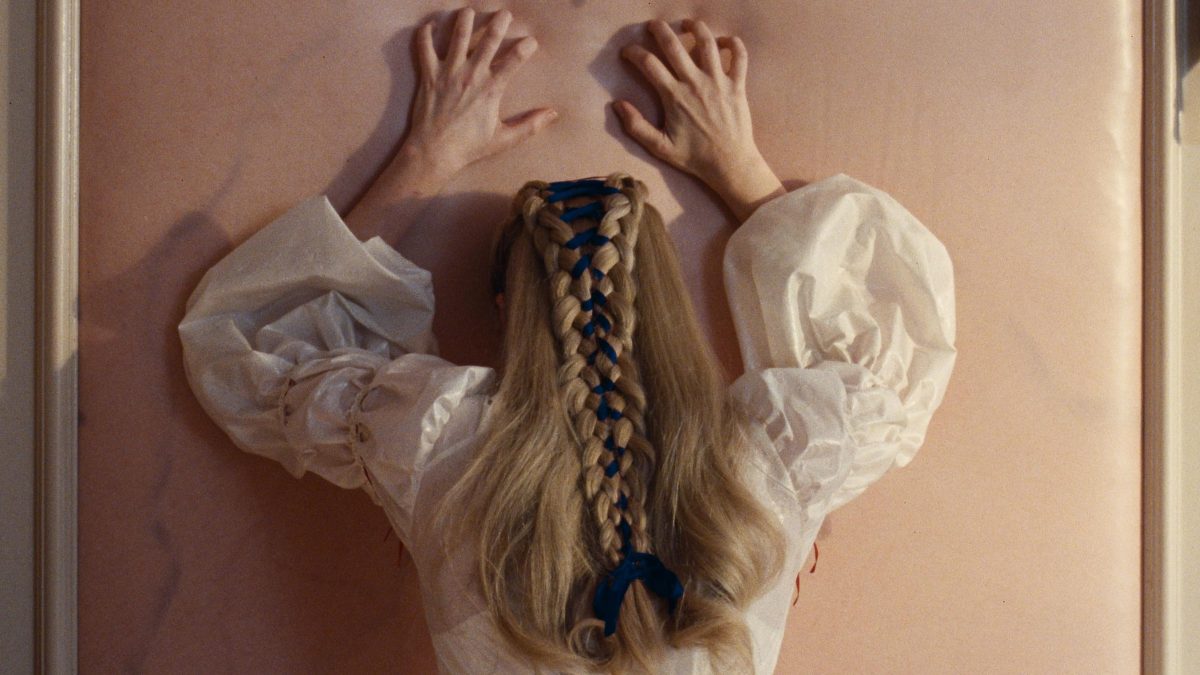
A big question people want answers to is: why was Catherine’s room done to be the exact color and details of her skin? There was no such thing in the novel nor was there any actual reason to create the bedroom to appear like her skin outside of trying to create an obscure metaphor.
Why Adapt a Classic?
Classics can be interpreted in many different ways; we saw it with Pride and Prejudice, Little Women, and Romeo and Juliet. And, while these different versions of classic novels can be different or leave out some parts, that is simply the creative process of adapting a book to a movie. These adaptations bring new perceptions and points of view that bring the stories back to life. But, this is usually done while keeping the author’s integrity in the storyline.
Stories are meant to grow and update as time goes by. It is prevalent in adaptations of Shakespeare’s works, as they are interpreted in different timelines and eras, and is also frequent in the several versions of Jane Austen’s stories. But, the storyline sticks with every single one of these productions, on stage and on screen. When an adaptation completely erases the morals and the important themes of classism and racism present in the original work, one can’t help but be upset, seeing as these themes make up the entire life of the writing.
There is no right or wrong way to perceive a novel. Interpretation is a part of the filmmaking and recreation process. But, that can be done while properly honoring the novel and its author. “Wuthering Heights” was not a failure because it had some inaccuracies. It was a failure because the initial point, the heart and soul of Brontë, was removed from the story.