By Fin Jump, Special to the Journal
Recently, Imaginary Gardens had the privilege to talk with Sean Chiplock to discuss his work.
Chiplock has been working as a full-time voice actor since 2013. His voice can be found in many places across animation, video games, and anime such as Murder Drowns, Danganronpa, Legend of Zelda, Bubsy 4D, Genshin Impact, Persona 5nRoyal, One Punch Man, Eden’s Zero, JoJo’s Bizarre Adventure, any many more.
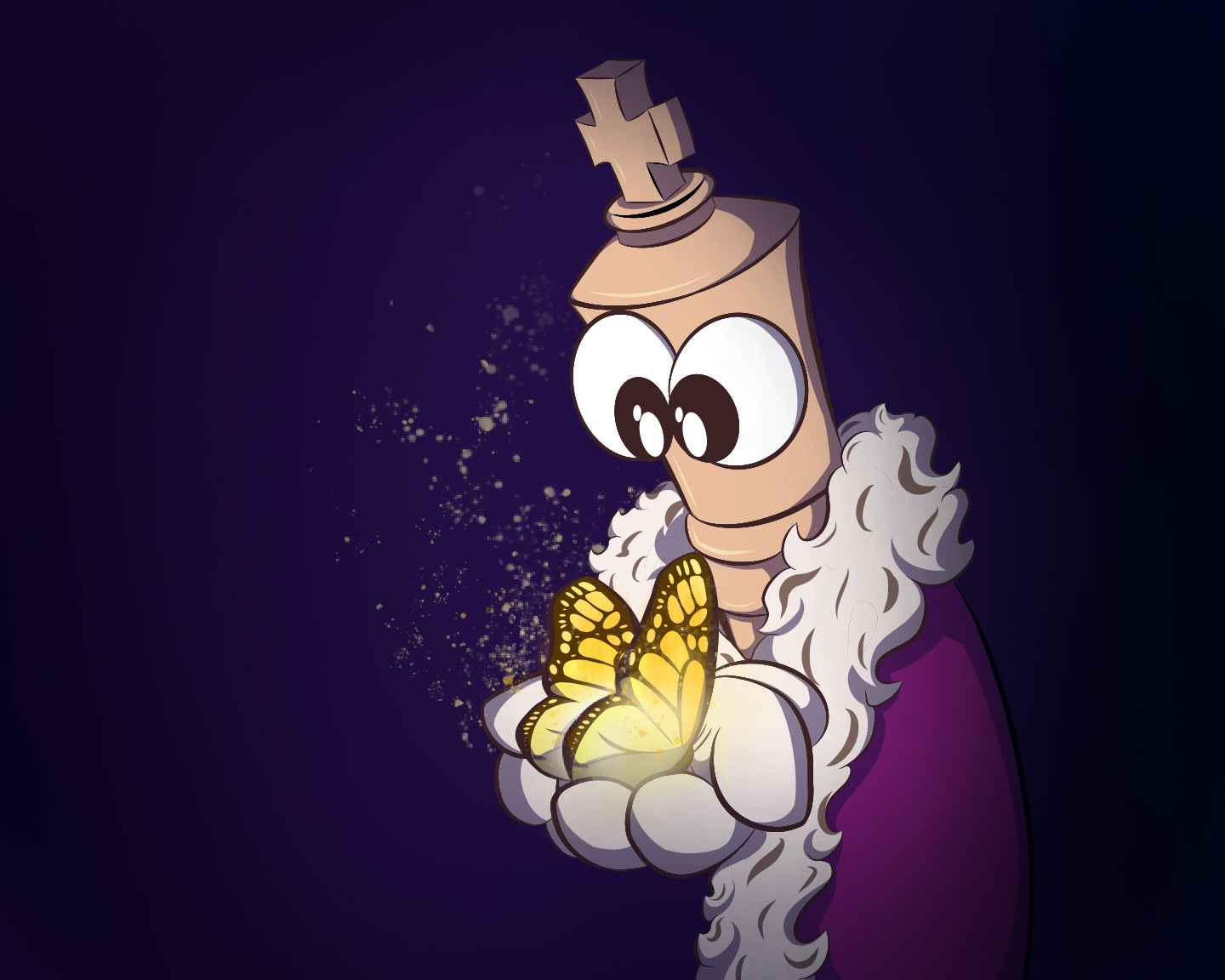
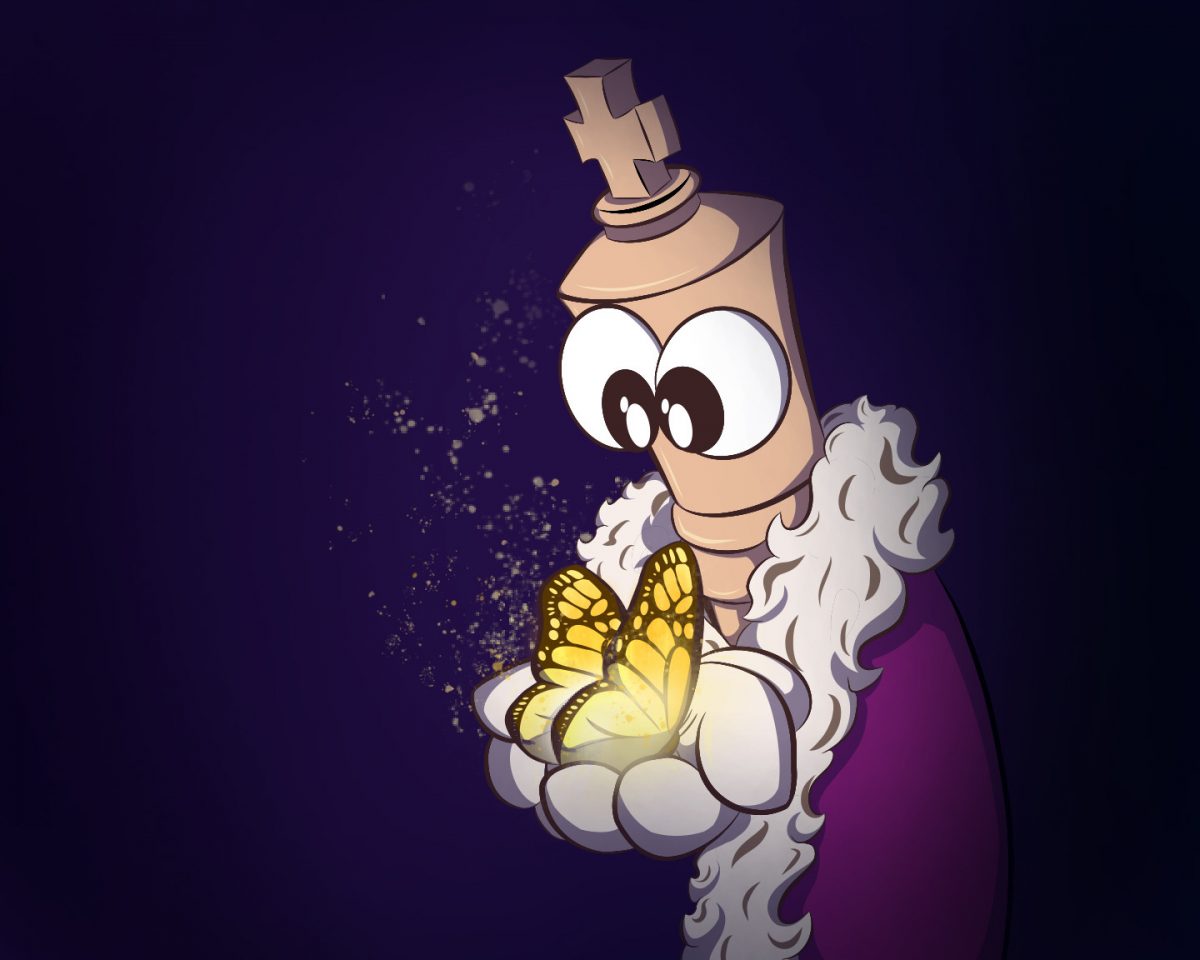
He is currently most renowned, however, for portraying the voice of Kinger in The Amazing Digital Circus. Created by Gooseworx and produced by Glitch Productions, this successful independent animation tells the story of six humans trapped in an abstract circus computer game run by a wacky AI ringmaster.
Chiplock also live-streams and can be found as sonicmega on Twitch and on Bluesky. With such diverse work as a voice actor and the way he connects with his fans, it is no wonder that he is a featured guest at this year’s Fanboy Expo: Anime, Toy, Gaming, and Comics on March 28th and 29th, at the Knoxville Convention Center in Downtown Knoxville. (For more information, go to the Celebrity Guests page on the Fanboy Expo website.)
This interview was composed before episode eight of The Amazing Digital Circus was released.

FIN JUMP: What got you into voice acting?
SEAN CHIPLOCK: When I was growing up through high school, I was paying attention in class, I was doing what I needed to do. Even if there were subjects that I wasn’t a big fan of, I still understood it was important to get good grades so I could get into college.
I’m sure we could have a whole discussion about how necessary college is in terms of the cost today and how important a degree is. I am glad I went to college because having the degree means I don’t have to worry about going back. I don’t know if voice-over (VO) requires a degree, but I didn’t know back then. I would say the most valuable aspect of college for me was that it helped me understand how I work as an individual.
I discovered voice over during Christmas break in my junior year of high school, and it really was just this sudden passionate fire of like, “I don’t know what the hell this is, but it is the first time that something spoke to me where it’s like, Oh, I want to learn more about this.”
Rather than it being subjects in school pushing stuff onto me and me having to figure out which of them I liked. So once I realized that this was something that had my interest, I just went full bore into it. I joke and call it Stockholm Syndrome, but it really was like, “I didn’t want to do anything else.”
Did you ever play games like Smash Brothers?
FJ: Oh yeah.
SC: So I’m sure you had a favorite character to play, and you probably heard about the meta and you know about which characters are better against which characters, and you’re like, “Ah, but I’m gonna play this character because it’s fun and I like playing as this character.”
That’s what voice over was for me, where it was like, “Maybe there’s better options for careers, but this is what I want to do.”
And that passion has really driven a lot of it, where as I’ve honed my experience and my skill set, I’ve gotten better at understanding my strengths and what sets me apart from other people.
But, at the very end of the day, there’s this golden retriever puppy energy when it comes to VO that, the reason I call it Stockholm Syndrome, is there is nothing forcing me to do VO, obviously. I am not employed by any company other than the jobs that I already have, so I could reach out to my agent and go, “Hey, life has changed. I’m taking a hiatus for like the next month or two. Don’t send me any auditions. I need to focus on other things.”
And I can tell you right now, within a week, maybe two, I would be going stir crazy because I’d be thinking to myself, “What opportunities am I missing out on? What characters could I have had a shot at that I missed the window on?”
Because for most auditions, you have maybe 24 to 48 hours between when they send the audition and when you need to send [the] reads back. So a lot can happen.
I’m willing to bet that there are Sonic characters who had less than a week of casting time before they made a decision. So, it’s one of those things that keeps me on my toes, and I love that it keeps my brain fresh.
I’m positive I probably have some form of adult ADHD, and so I do like that VO keeps me engaged, because it’s never the exact same thing twice. So you have something that, at its core, is fun enough that I want to do it, but is different enough that I don’t get bored of it and go, “Okay, I’m done with this now.”

FJ: Right, it’s definitely not monotonous at all.
SC: Right, for sure! And it’s not all good and not all bad, but it’s definitely unpredictable, and I will take what I can get from that.
FJ: Yeah, and I love the metaphor of Super Smash Bros. It’s like, “Well, you use this, and it’ll get you this.” But what’s the point if I don’t get to be a silly little frog thing?
(both laugh)
FJ: But yeah, you mentioned the window of time for auditions and how you could have just been like, “I’m done, I’m doing a hiatus.” And there’s this FOMO, and had you missed that 24-hour window, there could be this alternate universe where you missed out on so much.
SC: And it’s so weird because it requires such a commitment and drive because I’m sure that there’s plenty of folks who work a 9 to 5, five days a week, where Monday and Tuesday you’ve got the energy, Wednesday you’re still kind of plodding along, and then infamously by Thursday everyone’s kind of checked out mentally and waiting for Friday.
But you don’t get that opportunity in voice-over because they want you to bring your A-game. They want you to bring your full energy, your full creativity to every single audition because client E doesn’t know or care about projects A through D that you auditioned for. The one that they’re focused on is their project, and that matters to them.
And it both leads into what I was describing earlier about passion. There are so many times where I’m like, “I have no energy, I do not want to do auditions, I don’t know what the hell I’m doing.” And then I’ll see an audition in my inbox, and I’ll go, “Okay, I will go into my booth, and I will record for this audition because it’s due today, and then I’m done. I’m going to— I just don’t care right now.”
And I swear to God, Fin, every time I always end up doing all the auditions that are in my inbox because I’m already up. I’m already sitting in front of my microphone. I might as well get it done. And then I don’t have to think about it anymore because, I don’t know if you’re like me, but if I have a task that still needs to be done and I’m trying to game, my brain’s not even focused on the game. I’m going, “Hey, you gotta do that thing. Did you do that thing yet? That thing’s due tomorrow, you gotta take care of it.”
But the other reason is because it requires such a good work ethic from yourself. What are you studying right now, specifically?
FJ: I’m studying art.
SC: So you have staggered classes where you’d have a class on Monday, maybe a class on Tuesday and Thursday, stuff like that. But what ends up happening is you will often have overlapping assignments with different deadline dates like, “Oh, we got this assignment from this one class on Monday that’s not due until next Monday. And then the class on Tuesday gave me something that’s due on Thursday.”
And so technically, you don’t have to do stuff the exact day that you receive it. But there’s always the risk that if you wait to do the Monday assignment, you’re like, “I’ll take care of that this weekend.”
But then the Thursday and the Friday class throw some other big assignment on you. Now all of a sudden, you’ve got three different things you need to do over the weekend, and now you’re feeling overwhelmed when you didn’t have much going on on Tuesday and Wednesday. And if you’d taken care of the Monday assignment, that would have been one less thing you had to worry about.
So the same thing happens with auditions, where I may get a bunch of auditions and maybe only one of them is due tomorrow, and the other two aren’t due until Wednesday. But I gotta tell you, the number of times that I’m glad I did everything on Monday because Tuesday comes along and my agent sends me 4 more auditions and they’re all due the following day on Wednesday. And I’m just like, “I would not have had time. I would not have had time to do all of them if I waited until the last second.”
So, it is as breakneck as it is exciting, I would say, because it always feels like there’s a new opportunity, there’s something to look forward to, but man, I don’t know what my schedule looks like on any given week until [the] week of. I’m trying to think of an art analogy where they’re like, “Hey, we want you to do a personal drawing and something that means a lot to you, and we just need it by the end of the week.”
And then if your art history teacher was like, “I need you to recreate a part of the Sistine Chapel that I’ve assigned to you. And because this is such an important piece of art, I need it by tomorrow at 2 p.m.”
FJ: Oh. Yeah like, “By the way, this needs to be due by next week.”
SC: Yeah, like this assignment is the most important assignment and you’re like, “I have seven people who all told me this is the most important assignment. We are past the point of creativity. Now I’m just putting stuff on a canvas to be done with it.”
FJ: “I just need to make look good!”
(both laugh)
SC: I just need to make look good! It’s so funny! I’m glad you understand, but also – (whispers into the microphone ominously) I am so sorry.

FJ: How would you explain the Digital Circus and your role in it?
SC: People have made all sorts of allegories between “I Have No Mouth and I Must Scream,” probably Dante’s Inferno, because these folks are, as far as we know, trapped in this area with each other and they have to interact with each other.
I would say…, this is interesting. I mean, the most basic description is that it’s an adult kids cartoon, but I don’t think that does it justice. The message is often said that a sense of community is important and that people can’t live in isolation, but Digital Circus acts as proof that you can’t just shove a bunch of people into a space together and make them socialize and they’ll automatically get together. People had all sorts of theories about each member of the Digital Circus representing a different – I don’t want to say mental illness, but whether it’s depression or anxiety or schizophrenia or bipolar disorder or something like that. And how do all those things co-exist?
‘Cause you see people argue, Jax is irredeemable, I hate him. And you have just as many people go, “Jax is misunderstood, people need to give him a chance.” And you have people go, Jax is funny, I like how he points out how ridiculous things are when everyone else is just going along with it.
And when you have so many people with different personalities, you’re almost bound to identify with at least one of the characters. We all probably know somebody who tries — or acts as the big damn friend group mother, where it’s like, “I’m here to make sure everyone’s having a good time.”
We have someone who is the sarcastic prankster, who is very funny but sometimes says something that is a little bit over the line. People are like, Hey, maybe that’s a little bit too much.
But they’re like that in general. Maybe there’s the person who’s very introverted and likes working on their art or really likes anime, but doesn’t feel like they often get to share it. I see those kinds of people all the time at conventions where you and I would probably consider them to be socially awkward, whether it’s just the way that they communicate or the way that they handle themselves in public.
But there’s that understanding of, if I’m in the middle of rural Texas at an anime convention, chances are pretty high that in normal life, in downtown Texas, this person probably doesn’t get to exhibit their passions, hobbies and their favorites very often –because of the way society’s around them. So here they are at an anime con, and for one weekend, they get to be themselves, nerdy and passionate, and it’s much less likely that someone is gonna pick on them for it. So what we may see as social awkwardness may just be a person over-indulging in something before they have to close it back up – because they can’t be that way in their normal day-to-day life.
So I see Digital Circus as this example of everyone’s going to identify with someone in that cast. So once they’ve found the character that they’re attached to, what do they observe about how that character acts, how they treat others around them, how they feel about these other people? But unlike in real life, where we can very easily decide, “Oh, I don’t like this person, I don’t want to interact with them anymore. I’m going to just cut them out of my life, not talk to them on social media, not hang out where they are.”
In The Digital Circus, they don’t have that option. So we get to witness what those personalities are like when they’re in the same space, and we may learn some stuff not only about ourselves but about other people. And I think a major part of what Gooseworx was going after with the series is not everything is clean, not everything resolves well – things are messy, things are imperfect, but that is part of what makes life interesting.
FJ: Right. And it’s such a beautiful thing to see all these people that may never cross paths. Also, I feel like at its core Digital Circus is very much a show made by and for neurodivergent people __ whether intended not, it’s very much in the community and a lot of the characters and just sort of belonging.
SC: Feeling like you belong is a major aspect for sure. Are you all caught up on the show so far?
FJ: Oh yeah.
SC: I’m guessing you’re waiting with bated breath for episode eight?
FJ: For sure. My plan was actually to get you here. You must now spill all of the scripts verbatim – no, I’m kidding.
SC: Can I be honest with you?
So we’ve already recorded for episode eight and nine, and I know Gooseworx has already said that publicly, so I’m not spilling anything there. But often original animation generally has the voice over done as one of the earlier steps because they need time to animate it, unlike video games or especially anime dubs where most of the work has all been done, we’re just providing vocals towards the end of the process. They need all that stuff in advance.
To give you an idea, when episode three premiered, it was Kinger’s episode and I was at a con and my cast mates were like, “Sean, this is your episode, are you super excited?”
And people were coming up after the episode going, “Holy crap, you did so good!”
I would definitely say it’s a Kinger-centric episode, and I said a lot of stuff. [But] I did not remember a single god damn thing that I had recorded for that episode prior to it airing. There were moments during the episode where I heard a line and went, “Oh, yep, yep, I remember saying that.”
But sitting there in that chair waiting for the lights to dim, waiting for the episode to begin, I didn’t even remember what the premise was. I didn’t remember that it took place in a freaking haunted house. I hadn’t seen the trailer at that point in time. I still have a vague memory of what happens in episode 9 because, obviously, you know how it ends, ends. But episode 8 was even before that, and enough time has already passed between my other sessions and other auditions and my day-to-day work and my interviews and everything else I genuinely do not remember.
So it’s the greatest protection because I would be in deep trouble if I spilled stuff ahead of time and folks jokingly or seriously like, “Can you give me anything about episode eight? Just one, give me a vague hint that I wouldn’t understand until the episode’s out.”
And I lean in real close and I go, “I have no god damn idea. We’re gonna find out together.”
FJ: It’s kind of like being in theater as a stage hand and people are asking you about the plot, it’s like, “Dude, I was backstage the entire time. The main line I remember was my cue to push the thing out on the stage.” Like when people are typing in their passwords and they’re like, “Oh, don’t look.” It’s like, “Oh, don’t worry. It’s already out of my brain.”
SC: “I don’t know a damn thing.”
FJ: I’m saved by my goldfish memory.
FJ: What was your first impression of Kinger and how might that have changed as you’ve gotten to know him?
SC: When they sent the audition sides, the specs that they had given did suggest someone who was a little bit more mentally unstable. Where one of the references they had actually sent was the robot from Futurama.
So if you remember when Fry checks into his apartment in the year 3000, he has this very cramped closet space and then he has a roommate. He has this little robot guy who he recognizes. And he goes, “Oh, hey, it’s you!” And the robot goes, “It’s very nice to meet you. ” And Fry goes, “Actually, we met once before.” And then the robot goes, “What?!” And he explodes, ’cause he’s a robot with a very short fuse.
So that was one of the references that they used for Kinger. I went, “Okay, so he’s not completely crazy. He’s just someone who’s on like a very short fuse when it comes to being overwhelmed or overstimulated.”
And then obviously, as we learned over the course of the series, he’s only that way not because he’s mentally deficient. It’s because he’s gone through a trauma. And his coping mechanism is, when he’s in the dark, he’s calm like his wife was after she was abstracted. So he finds peace in the dark where most people would be nervous. I laugh with folks at cons because I go, “How ironic it is that Kinger is the most mentally unstable of the cast, and yet I would call him the most mentally stable of the cast.”
If you think about who has given the best advice, who has been, you know, the calming presence for other people. I think that’s such an interesting character development that the one we would consider to be the craziest is also the most reliable.
FJ: Yes, and I feel like that’s part of why I’ve latched onto a lot of these characters. They’re supposed to be these archetypes, but then you see them become more of a fleshed-out person – it itches a certain part of your brain. There’s a lot of humor to being like, “Put this man in the dark. Listen. He will turn into Mr. Rogers.”
SC: (laughing) You raise a good point.
FJ: But at the same time it’s like, “Oh man, what has he been through? Is he okay?”
SC: Is he okay? That’s a good question. That’s a really good question. I almost feel like Kinger, where a part of me is like, (Kinger voice) “Oh, that’s a really good question.”
And they’re like, “Do you have an answer?” And he goes, (Kinger voice) “What was that?“
Like when he goes, (Kinger voice) “You know, I’m starting to think…” And then he just never follows up on it after that.
FJ: I think the Kinger-contagion has reached me throughout this interview.
SC: Kinger contagion. What an answer. What a response.
FJ: If you, Sean, could say anything to Kinger, what would it be? You can do one for lucid and one for not lucid.
SC: For non-lucid Kinger, I would just ask, “Hey, what are you up to , What are you doing?”
Because whatever he’s engaged in, whether it’s counting bugs or whatever it was he was asking for help with, I would want to help him out with it, you know? He seems like he knows how to engage in things that keep you calm and peaceful.
For lucid Kinger, he gives such good advice already. That’s a really good question. It feels inappropriate to be like, “What’s your biggest fear, man?”
I would want to ask Kinger, “What scares you? What is something that means a lot more to you?”
I think I would ask him, “Hey, Kinger, you help people not be so scared. I want to ask, is there anything I can help you with?”
Because that actually makes a good point. We have people in our lives that feel like they have everything figured out and they provide advice to everyone else. But what often ends up happening is people use that as a crutch where they’re like, “Oh, this person’s got it.”
Like, as kids, we would always look at our parents as, “They can do nothing wrong. They’ve got it all figured out.”
And the older we get, the more we realize they’re human beings with their own struggles, fears, and worries. But they have to bury all that in order to look after us because we know even less than they do. So it’s important. I bet Kinger would be the first to say, “Hey, if there’s someone that you care about, reach out to them and make sure that they’re doing okay – because they may be shouldering not only their own burdens but everyone else’s at the same time.”
FJ: Right. And I find it funny that you’re like, “Well, I don’t want to just come up to him and be like, what scares you, man?” But at the same time, he literally asked Ragatha, “Do you hate yourself?”
SC: Right. It can be tough. You really need to have someone that you trust in order to ask those kinds of questions. But you know what, I poo-pooed myself earlier, but now I wonder if more folks want to be asked stuff like that because it shows that they exist in other people’s minds besides their own and that someone cares.
FJ: With episode 8 coming up very soon, what are your thoughts on coming close to the end? Obviously, you’ve already recorded it, but as you said, you’re gonna be experiencing it with us. What’s your thoughts on that?
SC: You can never really tell with this sort of thing because, for example, Danganronpa was a murder mystery game made by Spike Chunsoft with an anime art aesthetic, and when we first recorded it, a lot of us didn’t think much of it. Like, we were like, “This was really cool, it was really charming, but it’s a niche game, not a lot of people were gonna talk about it.” And even though Danganronpa has not had a new game in the better part of a decade, they did announce a new one in the last year or so. Even before then, this game had been out for 5, 6 years, and there wasn’t anything new on the pipeline. And yet it has such a lasting audience.
And there are modern games that have only recently finished their final update, where it feels like there was never much of an audience to begin with. So, I’m aware that Digital Circus is really, really big, but none of us can predict how much of a lasting power it’s going to have. Because, for example, Glitch isn’t going to just rest on their laurels. They’re already working on Gameverse, Knights of Guinevere, Gaslight District. I know that Murder Drones ended less than a year ago. And maybe I have it wrong, but it feels like, other than the youngest of the demographics, it feels like most people have already moved on because the show is over and they’ve got other Glitch shows to focus on and get hyped about..
So I would love it if myself and the rest of the cast could continue to enjoy the fandom creativity around Digital Circus for quite a while. But when you’ve got something that is one season, nine episodes long, and is part of a production house that has many properties still in progress, I would not be surprised if it’s active, active, active, hype, hype, hype until the finale drops, then there’s a couple months while everybody catches up, and then a year after the finale drops everyone’s moved on, you know? So you can never tell. You just gotta ride the wave that you’re given and see where it takes you.
FJ: Right. I totally get that. I do feel like there will definitely be a vast amount of people that won’t let it die. Like, I don’t know if you’ve ever watched Amphibia or The Owl House.
SC: Oh, Owl House. I knew about both those shows, but I especially knew that Owl House was particularly popular.
FJ: Yeah, and while I sort of became less active over time, the fandom is still doing stuff, they’re still going. That passion of, “This stuck with me, this changed my life” is something that I feel will be left forever.
SC: Yeah! I can see that for sure. In the same way that Danganronpa can continue to be popular, I think about Breath of the Wild. I hate to bring up the fact that Breath of the Wild is almost a decade old at this point – but there are people for whom Breath of the Wild was their first ever Zelda game when they were eight years old, and they are turning 18 this year or next year. That’s crazy to think about. So, Digital Circus has a very young demographic, and there is always the chance that they grow up and go, “Oh, Digital Circus was one of my first cartoons that I liked when I was growing up.”
Especially because now that we’ve lost networks like Cartoon Network, they’re not as easily accessible — well, it depends on streaming media versus television, but it feels like the means by which young folks access cartoons nowadays has changed significantly. As it feels like more cartoons are being accessed online rather than on cable television, that means stuff like Digital Circus and Knights of Guinevere are more easy to discover because people are using YouTube videos as opposed to a syndicated network schedule. Because you think of something like when Cartoon Network was still around and it had Teen Titans Go, or even Regular Schedule, you had to tune in at a specific time, versus now-a-days, where as long as you’ve got a subscription to some place that has the cartoon, it’s on your schedule. You can watch it at 9 a.m. ,8 p.m.,three in the afternoon or three o’clock in the morning – whatever works best for you.
FJ: Right. And I feel like once, streaming, especially when Disney Plus came out, while Amphibia and The Owl House had been out for awhile, I’d seen a couple of episodes, but not being able to see them sequentially messed with my brain.
So it’s making cartoons more accessible. Especially with YouTube and indie animation, more people are able to get into these shows and really dig into them. With cable, you can’t dig into every single frame, and be like, “There was blue, and there was red. It means something!”
SC: Yeah, I can see that.
FJ: What’s something you wish people knew more about you or any of your characters?
SC: A lot of people look at what I do and they’re like, “Oh my god, dude, I know you as a voice actor and you’re in all these different shows, How do you do it? How do you do this full-time? I want to get into voice acting.”
I think what a lot of people lose sight of is not only have I been doing this for almost two decades at this point. Where I’m sitting now in my industry is the result of six years of prep work. I started in 2007, but I didn’t move out to California until 2013, and there wasn’t really a professional VO market in Michigan back when I started.
So you’re talking about six years of community involvement, research, practice, indie projects, and then another 13 years of workshops, training, agency representation, sessions, auditions, working on my demos and updating stuff.
I consider myself extremely lucky to be part of, I think, 14-15 percent of actors who do it full time, who don’t have to do anything other than acting as their source of income. But it comes at the cost of, I have no free time.
I am looking at Pokopia, and Resident Evil Requiem coming out, and all these games that sound interesting that I want to play. But because I’m a dumb ass who decided he wanted to get involved in streaming during COVID, between sessions,auditions, convention travel and streaming (whenever I get a chance) – it is extremely rare that I have a true nothing day where my time is mine to use.
To give you an example, starting about March 25, the next day currently, I do not have con travel or VO sessions scheduled — so we’re not even going to include auditions or stream or anything else that I typically end up doing day-to-day. As of March 25, the next day that I don’t have anything scheduled, con travel or session or otherwise, is April 22.
Every other day in between has some form of travel or some form of voice over session, and I’m gonna be honest with you, on the days I’m traveling to cons, I won’t be able to do auditions, which means I’m gonna have to cram all the auditions in on the days that I’m home. If we just look at the con travel itself, I think between May kind of breaks up a little bit more. Ultimately, I am able to enjoy such a fulfilling career because of great personal sacrifice and expense.
And I still have to balance time to spend with my own wife. Part of why we’re able to afford the house and her tuition, because she’s studying for her master’s degree right now, and part of why she’s cool with me being away from the house so often to travel to cons is because that’s what makes the money to make these things possible. So it’s why I tell folks, “it’s like Stockholm Syndrome. If you want to get into this career, if you want to make it a full-time thing, understand that you need to not be willing to do anything else” because I am very much married to the work.
I wouldn’t say I’m the most efficient person when it comes to setting aside time for myself. You are, in fact, interview number three of four today. The first one started at 10 a.m., and this one started at 5 p.m., and I have one more at around seven o’clock that I have to do tonight. They’re all scheduled today because I didn’t have time during the week days. I had sessions, auditions, streams, and everything else.
So there’s choices that I could make where I could go, “Okay, I could free up that Saturday for myself if I said no to everyone who wanted an interview so that it wouldn’t take up my personal time. Or I could do the interviews during the weekday if I wanted to not stream anymore, but that’s something I like to do for my community.”
So trying to fit in a full-time career like this while also staying on top of industry trends, while also being proactive about getting my work done – there’s very few auditions that I skip. There’s some projects where it’s like, “I’m not a good fit for this and I’ll pass on it,” but I’m not the kind of person who’s like, “okay, I’ve got 10 auditions, I’ll do these 2, I’ll skip these 3, and then I’ll do this one, skip 2 and do this.” I’ll do as many of them as I can.
And if they’re auditions that have like 10 different characters to choose from, if I believe I can do a believable, competitive read for all 10 – I will submit 10 files to that audition. So it takes up a lot of time.
It’s a perfect allegory for art. How many artists do we know who go,“I’m so, so happy that I’m getting so much work and I’m able to make ends meet and pay my rent, but I haven’t drawn something for myself in over half a year.”
FJ: Right. And on one hand, it speaks so much to how much you care about your craft, and enjoy it, with the amount of things like, “I don’t need to do that, but I’m gonna do that because I wanna do that.” But on the other hand, you need to be a human being sometimes, maybe.
SC. Right. Maybe. No promises.
(both laughing)
FJ: But I guess it’s just the thing of art. It’s capitalism, man. You always gotta make money in order to sustain your meat suit and your art.
SC: (laughing) Sustain your meat suit. What a horribly accurate way of describing it. I feel it. I understand. Ugh, you’re right. I hate you for it, but you’re right.
FJ: With the con coming up on March 28thand 29th in Knoxville, would you like to say a bit about that and how you’re feeling about that since Imaginary Gardens is local to Knoxville?
SC: Yes. So part of my career that I get to enjoy is, if there are pop culture or anime events that are being held, sometimes they’ll invite special guests that help represent it. And voice over has definitely grown as a craft that is more audience aware nowadays.
I would say most people growing up in the ’90s probably didn’t know who the voice of Ash Ketchum was, but now everybody knows who the voice of every Pokémon character ever is. A huge difference right there. And for Knoxville in particular, I just enjoy the opportunity to get to travel to these events because, for one, I’m a big foodie. I love trying food from different places. And it’s so fun because I get to travel to these areas and the flight is covered, the hotel is covered, I get a per diem for food, and that is my personal vacation. I know some people don’t see cons as work and I know I have to work at the table, but any time that I get to enjoy a meal and it’s not my money paying for it, it tastes that much better.
Imagine if artists got a food budget to go to college for art – like, if you get $30 to $50 a day to spend on food so that you don’t have to worry about feeding yourself while you’re working on your classes. Wouldn’t the world just be a better place?
FJ: Right! And even though you’re working, you’re still at this event with all the nerds.
SC: Right, and it’s also a chance to get to talk with people because, outside of interview settings, I’m not usually having chit-chats with random folks for 5 to 10 to 30 minutes at a time. So it’s a good experience with going, “Hey, now that you’ve had a chance to enjoy the game or the show that I’m in, now you can come up and tell me what your favorite part was or ask me questions about the process, and you get a little bit more in sight into something that you’ve already enjoyed.”
I’m sure you can think of plenty of examples of media that you’ve liked, and maybe you go to the TV Tropes page afterwards, or you talk to someone else who has seen it, and they go, “Oh yeah, what did you think about this part?“
And now that you’ve enjoyed the core content, you get to enjoy the post-content community. You get to be part of this larger space where you can talk about what you experience with other people.
FJ: What’s your experience with cons and how long have you been going as a guest and a fan?
SC: I will say around the time that I started going to cons as a guest is about the same time that I stopped going to cons as a fan. Part of it was just because of the overlap of the events. If I’m already going to this number of cons per year as a guest, and then I’m also taking off weekends to go to stuff as a fan, that’s even less time for all the things that I described earlier. The other difference is just because my tastes have changed as I’ve grown as an adult. I don’t get to watch anime as often as I used to because I’m usually working it rather than watching it. So it’s hard to go to an anime con as a fan when you haven’t really been caught up on the most recent seasons of anime. For example, there are different demographics and different vibes to anime conventions versus something like furry conventions.
And I think for me it helps to separate the work from the personal stuff where I’m already involved in anime and work stuff. I don’t want to entrench myself even more into that as a fan. Versus I have a lot of friends and a lot of furry conventions that I like going to because, on the artistic side, it’s incredibly creative.
That’s another big example for me, and this is not to poo-poo on anime, but a lot of anime and pop culture cons are focused around franchises owned by companies.
And yes, you have artist alleys, or maybe exhibit halls, but artist alleys, I’m sure you’ve noticed, tend to be tucked into a corner or on to a different floor because they want to focus the exhibit hall and all the exhibitors that have tables there.
At a lot of the bigger cons, it’s the big companies that can afford a lot of table space. Versus at furry conventions, I find a lot of it is independent artists, independent creators, suit makers, musicians, table top creators.
You do not see a lot of corporate influence, if any, at those types of cons, and for me, that means I get to actually step away from the work and the industry and just hang out with people who like making cool stuff because it looks cool or cute, or it allows them to express themselves. And also because furry spaces are very LGBT friendly and well-attended. Not to say that anime conventions are not, it’s just that it’s much easier to surround yourself with folks who fall into that demographic if you go to one con versus the other.
FJ: Right, that makes sense. I’ve only really been to Momo Con, and I guess there are so many different cons, so that’s a complicated question because there’s so many different environments. and maybe at some of them, it’s kind of like, “Well, I don’t want to eat at the restaurant I work at.”
SC: Yeah, I mean, for the most part I agree, but also there’s restaurants that have since closed down in LA that I wish were still around because, if I worked there, I would definitely still eat there every day. Do you have a favorite food?
FJ: I really enjoy pasta, noodles.
SC: Mine is definitely a good Japanese curry. There was a place we used to have called Curry House, and I’m not joking with you, my wife and I, one particular week, we had it for lunch and for dinner all 7 days of the week. That’s just the way that it worked out. And we still weren’t sick of it by the end of the week. It was so good every single time.
FJ: (laughing) That is beautiful. You know you found a comfort food when it’s like, “Oh, oopsie.”
SC: I know, I know.
FJ: What has your experience been with The Amazing Digital Circus fandom?
SC: Well, it’s divided in half, because I know that now, Blue Sky is kind of an alternative for people who don’t wanna be on the Nazi hell hole site. But a lot of folks still use X or Twitter because, I guess, that’s where most of their audience is. Even now you can see when Glitch made the post about the Episode 8 trailer. It almost immediately hit like 200,000-300,000 likes on Twitter – versus Blue Sky, where I think it still hasn’t cracked even 100,000. I left Twitter over a year ago because as soon as certain people came into ownership of the site, I’m not giving them my info, I don’t want to subject myself to the kinds of people that use that site now.
So, in my experience, it feels like most of the Digital Circus fandom is fine? I haven’t seen a lot of toxicity, it seems they like theory crafting, like, “Oh my god, everything we thought that was gonna happen was wrong, we have no idea what episode 8 is gonna have.”
You see them having fun with the posts that Gooseworx makes, like when Gooseworx was like, “Hey, just confirming that after Episode 9, I’m gonna kill everyone! I’m gonna kill all the animators, all the voice actors!“
And I think there was a proposed community note that said, “While this is true, it fails to include that all the fans are going to be killed as well.” Yeah, Goose is such a goofy show runner and I absolutely love it.
FJ: Just like the absolute chaos and the thing where Goose is like, “Oh yeah, Jax is gay,” like so many show runners did. But then going back and being like, Jax is actually this. Jax is actually that. Jax is a microwave.
SC: That’s the nature of the internet. You could post something like, “Jax is absolutely 100% undeniably gay,” and someone on the internet will go, “I can fix him!”
(both laughing)
FJ: I love how Goosworx was given the word of God.
SC: They’re the creator! They’re allowed to do what they want to do!
FJ: Yeah! It’s like, this is what happens when you take the show runners’ every tweet as gospel.
SC: I like that people are being silly and chaotic and having fun. Of course, people in real life are fine. Like, even with fandoms where I have found a lot of toxicity, it seems to only ever exist online as opposed to real life spaces.
But I will be honest, I tend to keep to myself a lot. Like, when I’m with the cast at events, we’re ripping it up, we’re, you know, having fun and interacting with all sorts of folks. But — and I’m sorry to sound like a broken record — when I’m by myself, I got a lot of shit to do. I got streams and auditions and sessions and interviews and my wife and my cats and the online fandom of Digital Circus doesn’t really contribute a lot to my day-to-day mental well-being, for better or for worse.
FJ: Oh yeah, that makes perfect sense.
FJ: What are some good experiences you’ve had with the fandom?
SC: There’s too many to name. I’ve seen kids come up with their parents and they’re like, “Yeah, this is Jason’s favorite show to watch, so we’ve all been watching it together as a family.”
I’ve seen people in really cool cosplays. You know, I’ve had folks say, “Kinger has been like a surrogate dad for me because the advice that he’s given other people I’ve really taken to heart.” That’s part of the beauty of a career like this – whether it was anime or video game roles, I’ve heard plenty of cases of people being like, “This was my comfort character, this character got me through a really tough time,” or, “The way this character, the lessons that they taught were things that really hit me at a time when I needed to hear that.”
So I could go on and on and on about those events, but in a broader sense, that’s part of why I like this career. Even if I don’t know you as a person, if there’s a shared project or character or show that we can find kinship in – well, now we’ve already built a little bit of a friendship.
FJ: Is there anything else you want to mention? Like, any words you want to preach?
SC: It seems obvious, but be good to each other. The thing that I often tell people that I think was a major turning point in my involvement in online spaces, and especially how I handled drama and toxicity is, at the end of the day, we only have a finite amount of time and energy.
You might [have] X number of spoons – and once those spoons are gone, that’s it. You might be someone who recharges through social events, or has a social battery that can rise and fall throughout the day. But again, you have to choose how and who you’re spending that time and energy with.
When you are given a choice between [spending time and energy] on communities and people who want to make you suffer, make you feel worse, and bring that toxicity – or spending it lifting up others you enjoy being with and participating in communities that bring you joy. I feel like it’s such an easy answer to decide between.
So I try to tell people, whenever you feel inspired to push back against some troll online — and now I need to mention that is different than if you’re making a statement against transphobia or, you know, fascism or stuff like that. But if you’re sitting there being like, “I’m about to get into an argument with someone online who I’ve never even met.”
You can go the empathy route of trying to remind yourself that there’s a human being on the other side of the computer and trying to reason why they might be the way that they are. But it’s also just as easy to go, “You know what, I do not have to dedicate my time and energy to this. I have other things that I need to do.”
We are not obligated to give our time and energy to every single person who asks for it. But I know that a lot of us want to assume the best of people, and that’s why some folks who may be narcissistic or entitled or who believe that they should get a response feel like they deserve one. And we are inclined to give it because we want to be helpful, to give people what they’re asking for. That’s in our nature to be kind human beings.
So it’s just important to remind ourselves that we’re allowed to have limits, and that especially when it comes to online strangers, they don’t owe us anything and we don’t owe them anything.
I’m sure we’ve all had cases where we think back and just go, “Why? I mean, it was important to me in that moment, clearly, but was it actually worth anything in the long run?” I think the big difference is in being able to have that conversation with yourself before you have already committed the time and energy to something that you later regret.
FJ: Is there anything you’d like to plug? Where folks can follow and where folks can find you convention-wise?
SC: The two easiest places to find me would either be on Twitch and on Bluesky, which are the same username, sonicmega. In terms of if folks want to see me in person or find me elsewhere, I always say reach out to your local convention event and request me.
FJ: Right, and you’re coming here to Knoxville.
SC: Yeah, I’m glad that worked out. Originally I thought I wasn’t going to be able to make it work because I was also being invited to PAX East, which is in Boston, that same weekend. But then it turned out that they were only looking for a 2-day table so we were able to make it work out where I go to Pax Easton Thursday and Friday, and then I fly out Friday evening.
I want you to imagine this because this ties back into being busy. Imagine going to a completely different state and setting up your art table, selling for 2 days, sitting at the table and talking to people all day long. And at the end of the second day, you pack everything up, go on a plane, go to a completely different state that still isn’t home, and then do the same thing for 2 more days.
FJ: You were like, “Okay, I guess we’re doing this now.”
SC: Yep. So you gotta be a little crazy. You gotta be a little mental up here because I’ve had people go like, “Sean, where do you find the energy?” And like Kinger, I’m just like, (Kinger voice) “I don’t know. I just make it.” Like an energy butterfly!
FJ: I feel like that’s a very Kinger quality about you, just like saying “yes and,” and being like, “Okay, I guess we’re doing this now.” And you get to experience so much in life just by going yes, and. That’s actually part of how I ended up here. It was a crazy string of events. My substitute happened to be one of the professors leading Imaginary Gardens. She was like “we do cartoons” And I was like, “Cartoons, you say? Yeah, okay, I’ll do this.”
And when we were coming up with stories, I brought up FanboyExpo and the voice actors who were attending. And they said, “Oh yeah, and you could reach out for an interview.” Like, “What do you mean that’s a thing you can do?”
It’s crazy how it’s that similar theme of, “I’m not gonna say no to this,” and then you end up doing crazy things!
SC: Yeah, like I said – sometimes you don’t know which wave is gonna come your way, you just gotta do your best to ride it.
FJ: Yeah! As you said that, I had a very clear mental image of Kinger. Just being like, “Oh, okay.” On a surfboard now, completely killing it.
SC: There you go!