

- Pellissippi Perspectives: Surviving School with Schizophrenia
- Pellissippi Perspectives: Naive to Worldly
- Pellissippi Perspectives: How Has Self Diagnosing Affected The Lives Of People With ADHD?
- Balancing Motherhood, Business, and College: One Student’s Journey
By Jaime Branch, Special to the Journal
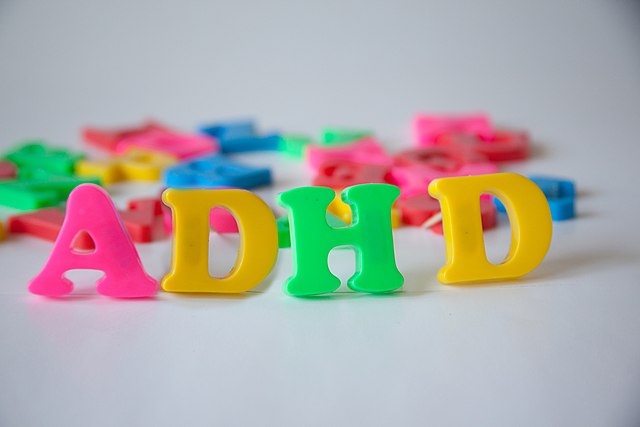
Since I was old enough to attend school, the majority of people around me have suspected me of having Attention-Deficit/Hyperactivity Disorder (ADHD), even before my official diagnosis. I would act out in my classes to the point of having “shadows,” which were essentially adults who would follow me around to observe and mediate my behavior. By the time I was able to convince my mother to actually get me evaluated and diagnosed for ADHD, I was 16, and my academic performance was practically at rock bottom. Following my diagnosis, I worked with administrators at my high school to develop a 504 plan for accommodations and began taking new medications in an attempt to conquer this “newfound” disability. Receiving accommodations for ADHD can be difficult, due to the fact that many people see it as a quirky little brain tick; practically the opposite of what many others and I experience.
I have noticed quite a few individuals take their inability to focus and deem it as “their ADHD coming through,” without an actual diagnosis. So, when people without any kind of diagnosis utilize disorders as an excuse for some kind of reason, it can be extremely harmful to those who actually have been medically diagnosed and deal with it every day. ADHD is never as simple as a hyperactive child acting out or a teen struggling academically; it can be so much worse, and all of these stereotypes surrounding it do much more harm than good.
ADHD has always seemed to be a running joke in society to excuse certain outbursting behaviors. For example, I have seen where some take their inability to handle things seriously and excuse it by throwing the possibility that they have ADHD, as if it is no big deal. Because of this, many disorders, like ADHD, have now been tainted with an unreliable image because many utilize them as an oasis for comedy or merely a way to stand out. As far as ADHD goes, some of the stereotypes can be accurate, yes, but many do not care to take a look beneath the superficial surface, which causes people to not take it seriously. I do, in fact, have trouble focusing and sitting still, as many would assume, but I also struggle with darker things like hyperfixating on many minor issues that lead to anxiety attacks, as well as severe struggles in social environments and more.

To combat some of these issues, I am on medication for my ADHD, but that also brings many of its own struggles, something that people without ADHD will never experience. For example, since I’ve started taking my dosage more regularly for school, I have developed severe OCD habits, extreme loss of appetite and weight, as well as a lot of anger and emotional issues. And while I rely on my medication to get me through my school days, it impacts my already handicapped ability to regulate myself, something that only people with ADHD or similar disorders will understand.
So when people joke about or “claim” certain disabilities/disorders, it is almost as if they forget these are real issues that require medication in lots of cases. Moreover, there is this stigma where society views medication as an answer for neurological problems, but in truth, it can never really be enough.
When people with these disorders’ needs are not being fulfilled, it is important for them to be able to advocate for more resources in order to follow their success pathway. As I discussed earlier, in high school I was able to utilize a few disability services during my junior and senior years after an oddly tedious process. Some of these accommodations included expanded testing time and advanced teacher-student tutoring, but since I’ve come to college, I am rather hesitant to reach back out for said accommodations. My hesitancy has a lot to do with the fault of self-diagnosing and the misconceptions about ADHD.
Furthermore, I feel as if ADHD is something that can be easily “faked” in a sense. Because of this, I have stopped discussing my issues with ADHD out of fear of not being taken seriously or believed. While this hasn’t necessarily affected my academic performance negatively, I hate that I no longer feel comfortable advocating for myself and my needs.
During the first semester of my freshman year at Pellissippi State Community College, I remember taking one of my first Lab Practicals for Anatomy and Physiology. We all entered the classroom to begin our exam, which was fashioned in a way of walking around the room from question to question, in order to observe specific models. I was already incredibly nervous because the course is notoriously challenging, and the anxiety spike from my meds that day was not exactly helping.
Once we began, my professor began playing music, which threw me off by a mile. All of a sudden, it was as if half my senses were dialed to one hundred. I felt as if I could hear every single noise in that room all at once, and I became quickly overwhelmed and unfocused; I wanted to cry and give up right then and there. My professor, who was aware that I was already afraid of failing his class, picked up on this and let me stay thirty minutes past the given exam time despite my not having any accommodations.
In this situation, I was quite lucky to have such a good and sympathetic instructor in such a challenging course, but that will not always be the case. No one should ever feel discouraged to speak up about their struggles because society has downplayed their diagnosis and turned it into a “trend” of quirkiness — it’s important for people to think before they speak, out of acknowledgement for those who are actually diagnosed with a disorder.

I think we all need to take a step back and address the reality from the fiction. It is extremely crucial for people to see how these actions are harming entire communities of real struggling people by simply putting on a fake persona. Just because you occasionally bounce your leg up and down in class, choose not to pay attention, or like to goof off more than others, does not mean that you have Attention Deficit Disorder/Hyperactivity Disorder. Unfortunately, I have observed many more severe disorders suffer the same fate, such as severe anxiety, autism, and even DID (Dissociative Identity Disorder).
Society has now gone from a safe place of acceptance and growth to a place where anyone can have several issues they’ve diagnosed themselves with to explain the craziest of behaviors, and no one bats an eye. And if you feel as if I’m being overly dramatic on this issue, then you must not have to go through life feeling like your brain is the punch line of a poorly written Saturday Night Live skit. Disabilities and disorders need to be acknowledged and treated as the real struggle that they are, and not someone’s chosen identity/personality trait.
The truth is that almost anyone with a disability or disorder would get rid of it if they could, but we can’t. This is something that people like me have to learn to live with, and I hope that others can also speak up about the harm one can do when using specific disabilities to excuse their own poor behavior and decisions.