
By Patrick Dobyns, Editor
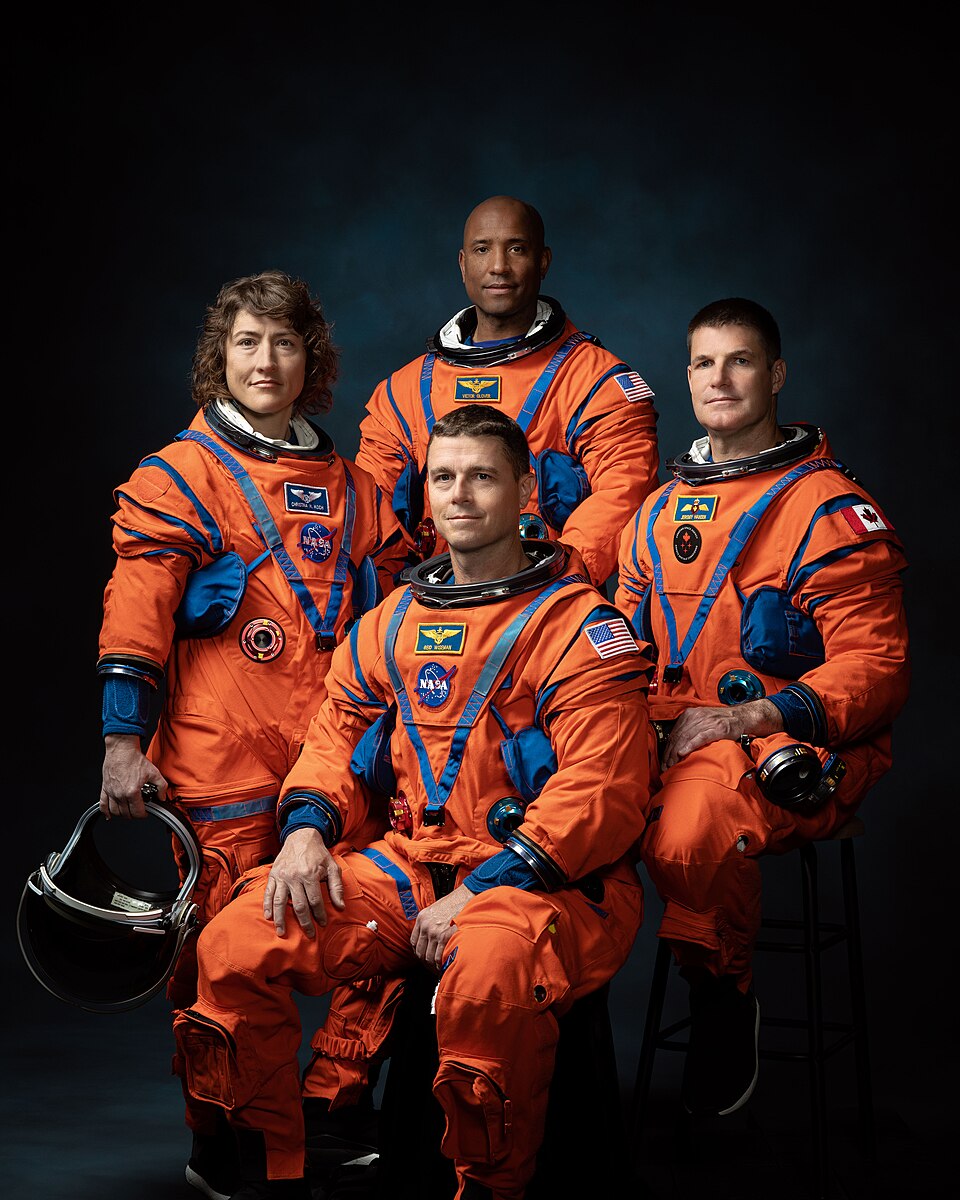
On April 11, 2026, we saw four people come back from a mission unlike anything we’ve seen in 54 years. Astronauts Christina Koch, Victor Glover, Jeremy Hansen, and Commander Gregory Wiseman were the first people to exit low Earth orbit since the Apollo 17 mission in 1972. Their nine-day mission also marked the biggest leap in space exploration since Neil Armstrong and Buzz Aldrin took their small steps in 1969.
Of course, there are some who are questioning the significance of this event. After all, we’ve already landed on the moon once; what’s the big deal about an orbital mission? Why is simply going around the Moon so important? We’ll get around to answering that question once I’ve gushed about space exploration we’ve delved into the history of space flight and what it means to us, then and now.
Early Days
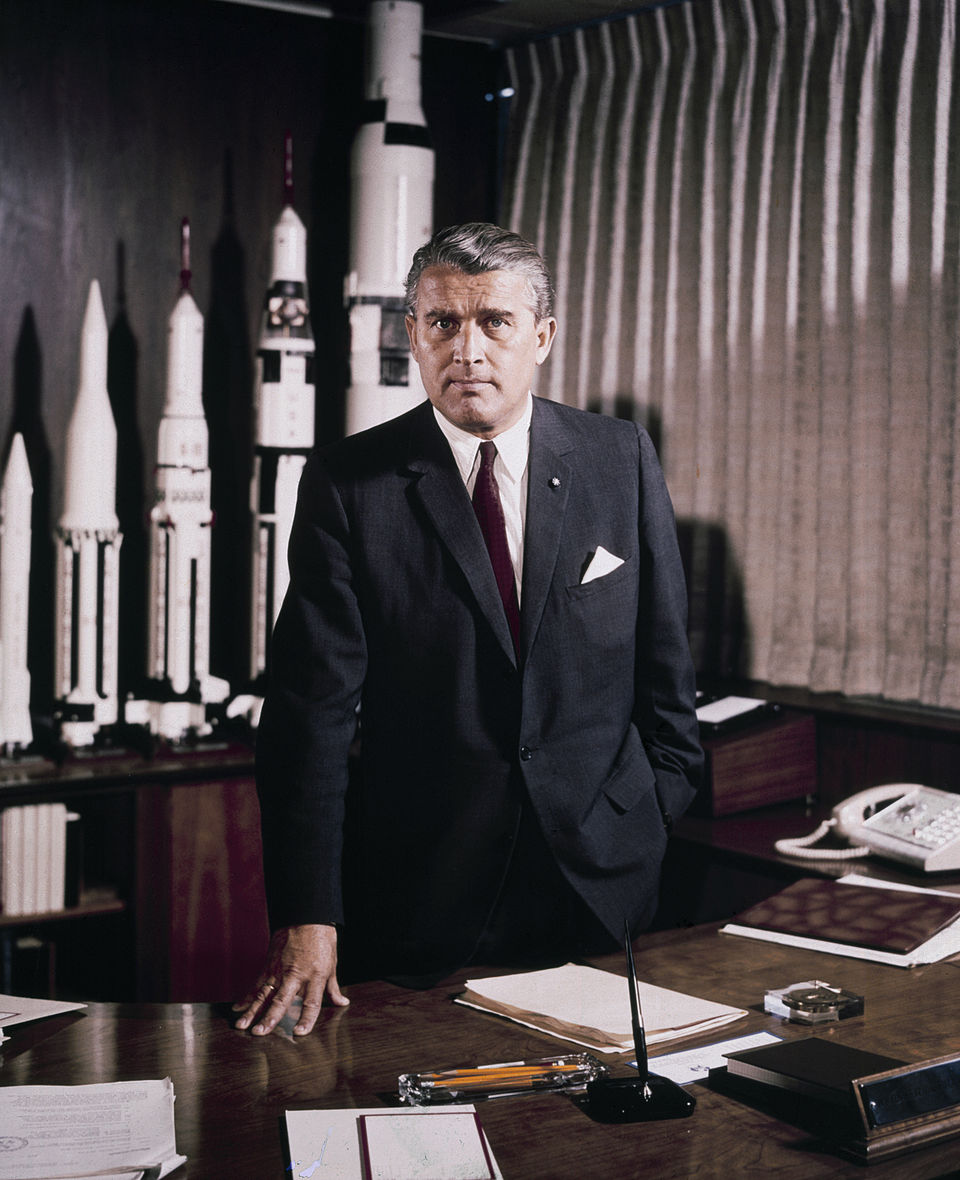
As with many technical achievements in the modern age, space exploration has its roots in the aftermath of the Second World War. When the war had ended, Operation Paperclip was enacted to forgive certain scientists in the Nazi Party for their war crimes on the condition that they aid the United States in their research. Of these individuals, one standout was Dr. Wernher von Braun, who was focused on rocketry. While the Nazi rocket program turned out less fruitful than hoped for (thankfully for the Allies), his research would see the invention of the first two-stage rocket in the White Sands Missile Range, Nevada, in February of 1949.
By 1957, the Cold War between the United States and the Soviet Union had been quietly raging for over a decade, but advances in rocketry and the death of Joseph Stalin four years earlier led the scientific community to believe that the time was right for international cooperation, and the International Geophysical Year was declared.
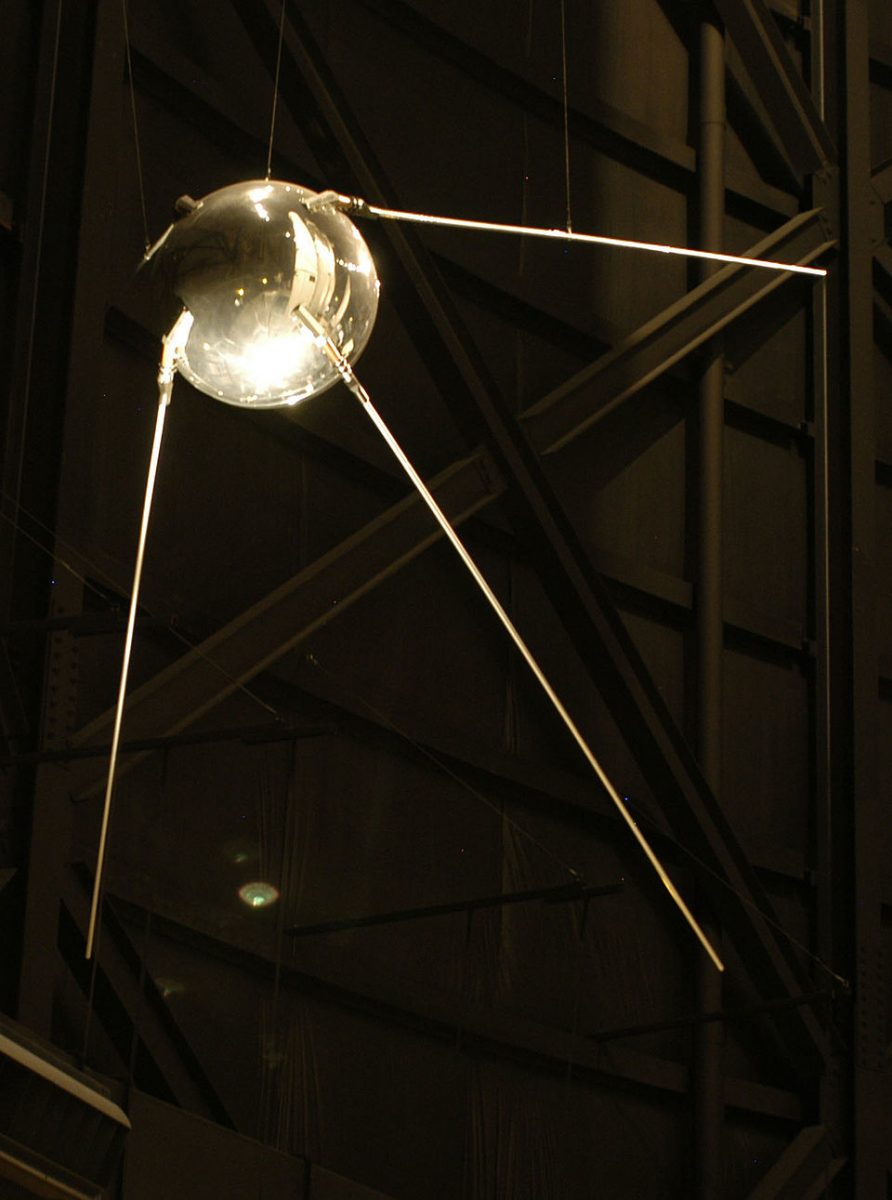
The Soviet Union and the United States both announced that they would be launching satellites into space for scientific study, and on October 7, 1957, the Soviets were the first to fulfill that promise. Sputnik (literally “Satellite”) was launched by the Soviets into low Earth orbit, the first manmade vessel to do so. One month later, Sputnik 2 followed with a passenger, a dog named Laika, proving that life could be sustained in space.
The United States tried to follow up with the U.S. Navy’s Vanguard rocket that December; however, the rocket failed to gain enough speed and crashed on the pad. In February of 1958, Explorer 1 managed to become the first American satellite in orbit, but it wasn’t good enough for the Americans when compared to the Soviets getting the first two. With the lackluster performance of the U.S. Armed Forces in the burgeoning Space Race, a new civilian organization dedicated to the objective of space exploration was formed: the National Aeronautics and Space Administration, or NASA.
The Messenger
NASA announced Project Mercury on October 7, 1958, exactly one year after Sputnik was released into orbit. The goal was to advance from sustaining animals in orbit to humans. Once again, however, the Soviet Union made the first move, as cosmonaut Yuri Gagarin became the first man in space on April 12, 1961, in the Russians’ newly minted Vostok program.
Three weeks later, Alan Shepard became the first American in space, but the victory was once again hollow. In addition to being beaten by the Russians again, Gagarin’s craft took a whole orbit of the planet before coming back down, lasting almost an hour and a half; Shepard, by contrast, never entered orbit and splashed down 15 minutes after launch.
What followed was a number of attempts to achieve something, anything, before the Soviets could, and being beaten to the punch each time. Astronaut John Glenn was the first American to achieve orbit, but by that point, cosmonaut Gherman Titov had been the first person to spend over a day in space. Valentina Tereshkova became the first woman in space on Vostok 6 in 1963, a milestone Americans wouldn’t reach for two decades, with the seventh launch of the Space Shuttle.

The Twins
In April of 1964, NASA made the first launch of Project Gemini, moving from the one-man crews of Mercury to two-man crews. The project was mostly conceived as a transition phase between Mercury and the planned Apollo program, which would launch three people at a time. During this time, a number of systems vital to a moon landing were to be tested – namely, sustaining life support systems for more extended periods of time (eight days to two weeks), the docking and rendezvous systems which would be able to connect pieces of the ship mid-flight, and the ability of astronauts to move outside the confines of the space-craft, or Extra-Vehicular Activity (EVA).
This is where America saw some of its first true successes. While the Russian space program had launched two pairs of Vostok rockets in 1962 and 1963, neither were able to rendezvous due to the vehicle’s poor maneuverability. In December of 1965, Gemini VI and VII were able to dock, making them the first vehicles to do so. This was largely in part to understandings of orbital mechanics gained from the failed docking attempt of Gemini IV.
While the Soviets technically did complete the first EVA, it was a bad experience for cosmonaut Alexei Leonov aboard Voskhod 2. The suit was not rigid enough for the lack of atmosphere, causing it to swell from the air inside. This decreased Leonov’s mobility and made re-entering the capsule difficult and uncomfortable. He was forced to depressurize his suit, risking his health and safety, adding twelve minutes of time to the spacewalk, and raising the temperature inside his suit significantly due to exertion.
Aboard Gemini IV, however, astronaut Ed White only had difficulty entering and exiting the hatch – a serious problem, to be sure, but something that was easily fixed and ended up only delaying the spacewalk. Only short excursions were possible for the next few flights, as astronauts became exhausted. Gemini XII was the first to have a successful EVA for any significant amount of time, with Edwin “Buzz” Aldrin staying out for over two hours.

The Charioteer
While the Apollo program began in 1961 to test the Saturn rocket, the first manned attempt wasn’t until February 21, 1967, and what resulted remains one of the most infamous failures in NASA history. There were two fatal flaws that resulted in the untimely demise of astronauts Ed White, Roger Chaffee, and Gus Grissom. The first was the use of 100% pure oxygen for cabin atmosphere, and the second was the hatch opening inwards instead of outwards. A surge of voltage in one of the systems caused a spark, which in the pure oxygen environment quickly became a raging fire. All three astronauts were lost in the inferno.
Apollo would not attempt another manned launch until October of the next year, with the Apollo VII launch, 21 months later. The mission was largely a confidence effort and, thankfully for the program, everything went off without a hitch. It also hosted the first live television feed from space, hosting six 10-minute broadcasts.
The real excitement for the program came two months later with Apollo VIII, which marked the first time in human history that anyone had left low Earth orbit. Over the course of a little over six days, Frank Borman, Jim Lovell, and William Anders watched the Earth shrink away as the capsule was launched into Lunar orbit. The first full images of the Earth reached a global audience, and on Christmas Eve, the crew watched the Earth rise above the Lunar horizon. During their broadcast, in which they described their impressions of the Lunar surface, they each read passages of Genesis recounting the Biblical creation of the Earth.

The next missions tested several of the Lunar lander’s functions, with Apollo IX testing the ascent/descent propulsion systems within Earth’s orbit and Apollo X being a trial run of the lander itself. NASA had already perfected the math and physics of what would be required for landing on the moon – all that was left was the equipment. Once the Apollo 10 lander reattached to the Command Module and the capsule splashed down on May 26, 1969, the rehearsals were over, the stage was set, and Apollo XI was underway.
You don’t need me to tell you what happened next. On July 16, three American astronauts were sent into space on a Saturn V rocket, and astronauts Neil Armstrong and “Buzz” Aldrin were the first humans to set foot on the Moon on July 20. The words broadcast around the entire world to a live audience of over 650 million people on Earth, “That’s one small step for man, one giant leap for mankind,” seared themselves into the human psyche as a motto for extraordinary collective achievement.
All three astronauts safely splashed down on July 24. A total of six missions ultimately landed on the moon, the only one failing to do so being Apollo XIII, itself a monumental occurrence because of how critically damaged the flight systems were and how, due to their determination and ingenuity, all three astronauts were able to return safely.
Apollo XVII was the last lunar landing in human history. Despite their enormous starting lead, the Soviet Space Program never managed to land a cosmonaut on the moon, and none of the myriad number of space programs that have been established across the world since then have accomplished the feat. After December 19, 1972, humanity would not leave Earth orbit again… not for another 54 years, at least.
The Huntress
Over the next half-century, space was not wholly abandoned. The Space Shuttle Program ran from 1972 to 2011, with over 130 launches achieved with six returnable craft named Space Shuttles, each capable of carrying 7 crewmembers. The program had an almost completely successful track record, save for the 1986 Challenger explosion and the 2003 Columbia’s failed reentry. The missions exclusively took place in low Earth orbit, many of them involving the International Space Station (ISS), a collaborative project between five international space agencies. In 2011, STS-135 was launched and landed, ending America’s shuttle program.
On December 11, 2017, President Donald Trump issued “Space Policy Directive-1,” which amended a previous Obama administration directive. The line “Set far-reaching exploration milestones…” in President Barack Obama’s directive was replaced with a paragraph: “Lead an innovative and sustainable program of exploration with commercial and international partners to enable human expansion across the Solar System and to bring back to Earth new knowledge and opportunities. Beginning with missions beyond low-Earth orbit, the United States will lead the return of humans to the Moon for long-term exploration and utilization, followed by human missions to Mars and other destinations.” Thus, the Artemis program was formally established.
The first mission in November 2022 was unmanned and served as a test of multiple components, including the Orion Spacecraft, the Space Launch System (SLS), and the European Service Module (ESM). Despite the capsule experiencing greater than expected stress from re-entry, the six-day mission was a success. It took approximately three-and-a-half years for the next stage of the program to be ready, Artemis II.
Four astronauts went up on April 1, 2026, and each one set a new record when they left low Earth orbit and entered the gravitational field of the moon. Commander Reid Wiseman became the oldest person to do so, Captain Victor Glover the first person of color, Engineer Christina Koch the first woman, and Colonel Jeremy Hanson of the Royal Canadian Air Force the first non-American to do so. A new record was set for the furthest humanity has travelled from the Earth while the astronauts tested Orion’s systems and crew operations. They successfully splashed down on April 11, the projected time being accurate to the second.
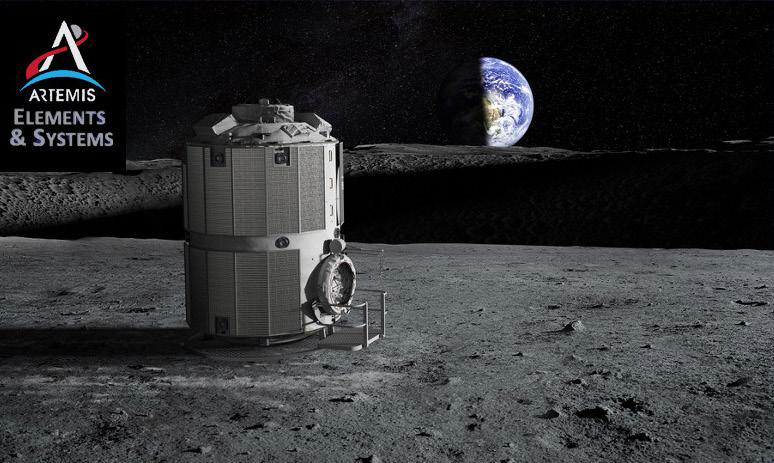
The Artemis Program has three more flight plans announced so far. In mid-2027, Artemis III plans to send another crew to test the Human Landing System (HLS) much as Apollo 10 did. In mid-2028, Artemis IV is expected to land humans on the moon for the first time since 1972, and in late 2028, Artemis V is planned to begin construction of a permanent moon base. This will be the first time NASA will be reaching a completely new milestone rather than retreading an old one.
Conclusion
Why is this important then? Why go to the moon again, and why is a fly-by such an important step? There are many answers to the first question, ranging from pure self-interest to a collective good. Resource prospecting on Earth is getting harder and more complicated every day, and while we are unlikely to find oil on the Moon or Mars, there are other valuable resources that can be acquired, such as Helium-3, important for clean fusion energy.
Other resources that could be collected from extraterrestrial deposits would simply be so much easier to collect using the Moon as a base of operations, due to the extremely low amount of energy required to exit its gravitational field. This also makes it ideal for further space exploration in general.
The success of the Artemis II mission is the next great step in space exploration. As a species, we stagnated for over 50 years with the shuttle program. Before its collapse, the Soviet Union gave up on sending a cosmonaut to the Moon, and the lack of competition (not to mention financial worries) made many Americans lose interest in the Moon.
There are some who still look at space exploration with trepidation, perhaps looking back at the Challenger disaster or worrying that the nation could be using its resources for more meaningful projects closer to home. I can’t assuage those fears or counter those arguments, but what I can say is that there is infinite opportunity for human discovery and expansion in the vastness of space, and there are people who are willing to risk everything in order to take us there. We are at the cusp of an amazing leap forward… we just need to make a few more small steps.