By Olyver LaGabed, Staff Writer, with additional reporting by Addison Chrivia, Managing Editor
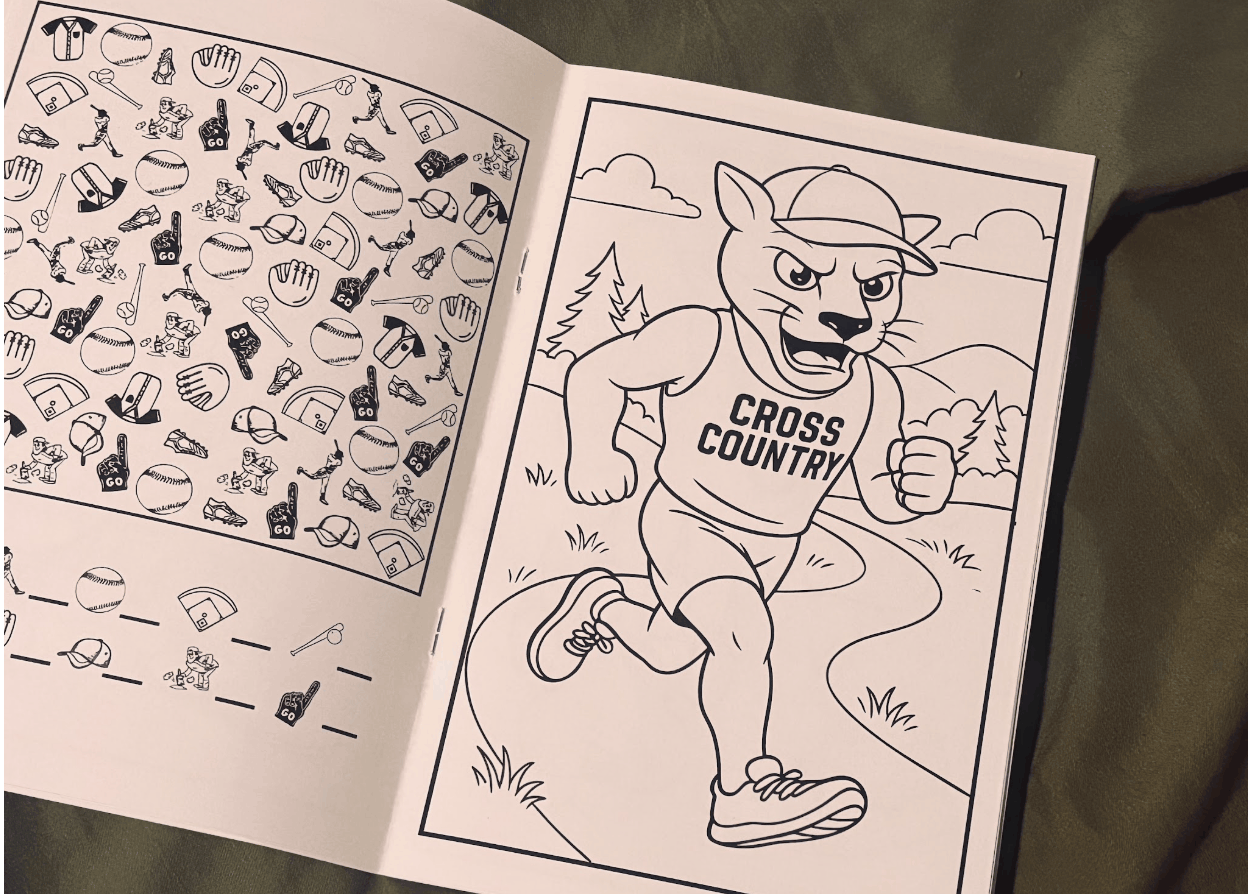
Generative AI has been occasionally featured around Hardin Valley campus, being seen on posters for events and, most recently, in a coloring book released by the marketing and communications department. Regardless of individual feelings on AI, a common expectation at the college level is the communication of a clear campus policy regarding its use.
In many syllabi used by students here at Pellissippi State Community College, and likely at many other colleges, one section details a strict no-tolerance policy for using AI. This policy is fairly widespread among professors and is used to prevent cheating and other academic dishonesty.
Do students feel the school’s use of generative AI is unfair, given that it’s banned from their use in the classroom? Or is AI a cheap alternative that allows the school to allocate resources to more important student needs?
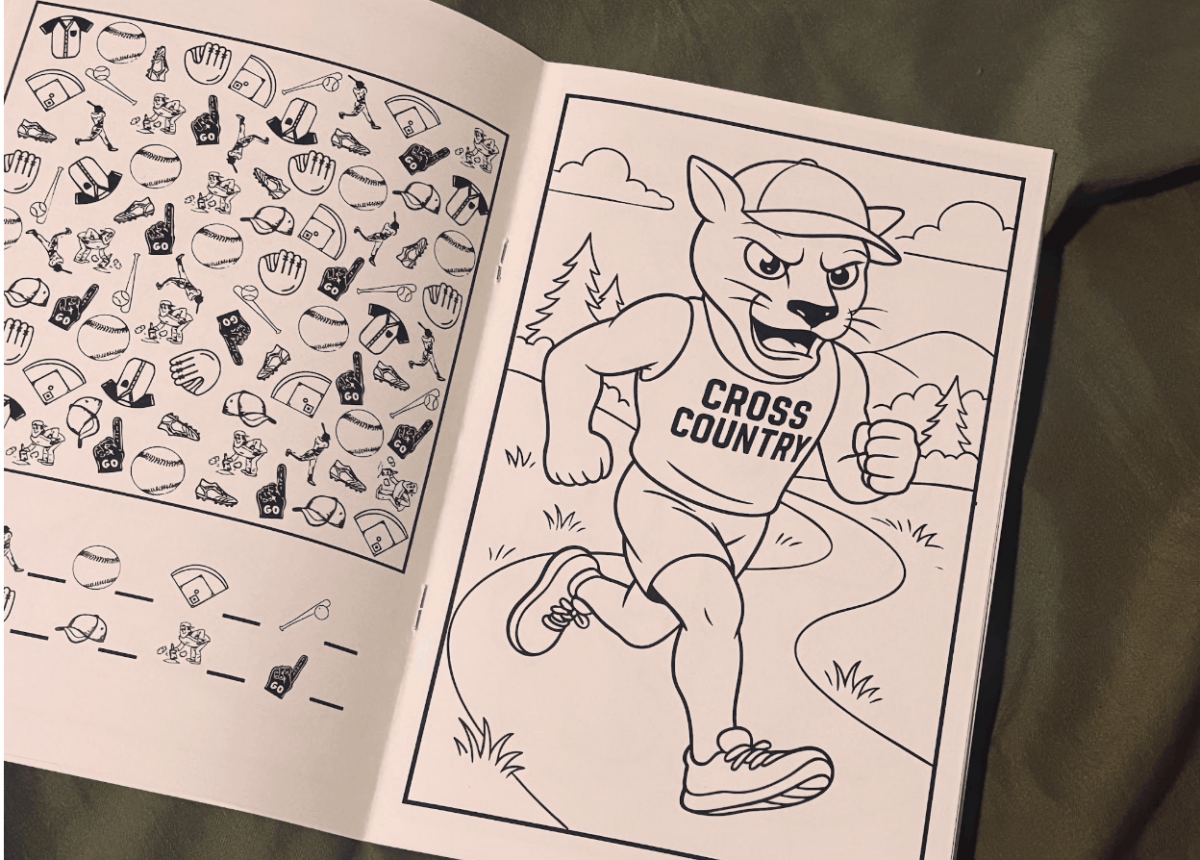
In a since-deleted Reddit post, a concerned Pellissippi State graphic design student posted a picture of the coloring book they found after an appointment with an advisor. Pax the Panther was featured with differing numbers of digits, along with other inconsistencies that pointed to AI use.
Executive Director of Marketing and Communications Rachel McClelland confirmed the use of Generative AI when asked about this marketing material.
“Yes, my office used AI in June 2025 to create some of the content for the coloring book,” she said in an email. “The Dean of Students Office requested the project as something to give children of student parents to use while their parents attended advising or other important appointments at the college. We printed 600 copies, and AI allowed us to meet that need within the available timeline and resources.”
The student who posted on Reddit expressed disappointment with the school and got a response directly from the Pellissippi State marketing team, which they then posted on the Reddit thread.
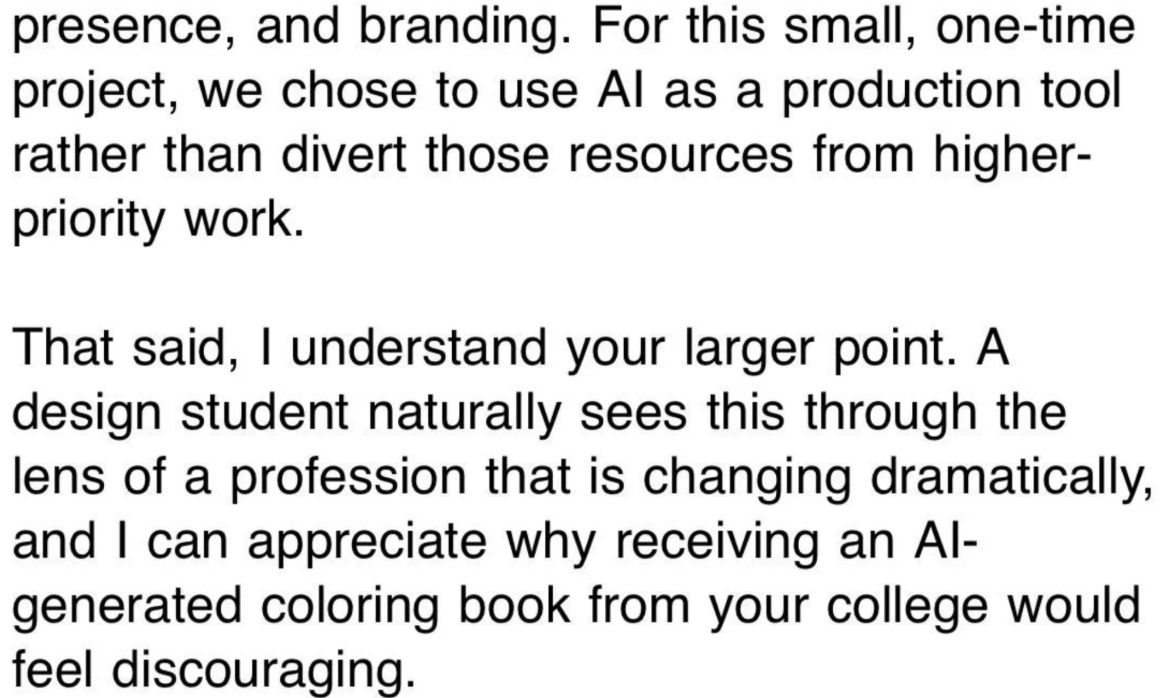
“For this small, one-time project, we chose to use AI as a production tool rather than divert those resources from higher-priority work,” the email from the marketing and communications department said. “That said, I understand your larger point. A design student naturally sees this through the lens of a profession that is changing dramatically, and I can appreciate why receiving an AI-generated coloring book from your college would feel discouraging.”
One Reddit user, BirdsAreCameras, commented, “I have a fine arts degree from Pellissippi, and I hate that they are using AI for something like this, but I will say that I really enjoyed the art department and all of my classes. They do have a good arts program. This is truly a shame.”
In an interview with Faculty President and Associate Professor Grant Mincy, he said he felt that the decision to use AI while also advertising for the career development of students at Pellissippi State is inherently hypocritical.
“AI-generated content shows up around campus more than it should,” Mincy said. “Students notice. And they comment when they see it. Plus, many students are very environmentally concerned with AI use.”
McClelland asserts that the coloring book was a task that needed to be done, yet also required funding, time, and workers to complete. From the college’s perspective, AI provided a simple solution for creating the coloring book, saving those resources for other matters. However, for a lot of students, the use of AI to create art normally created by humans poses a deeper issue than that.
“A lot of art students are coming to our school with the mentality that they are seeking out opportunities, that this will give them an opportunity,” Anya Edwardson, a graphic designer who has worked with Imaginary Gardens, said. “It [the usage of AI] feels so tone deaf. This is supposed to be a representation of the student body, and it has no touch from a student.”
The coloring book was a chance to connect with students, creating artwork representing Pellissippi State. Instead, students opposed to AI felt distanced from the school, and those pursuing art-related fields felt discouraged.
“All of this connects directly to our focus on career immersion,” McClelland said in an email interview. “Students need authentic professional experiences, but they also need to be prepared to enter a workplace being transformed by AI. That’s why I’ve suggested a future coloring book could become a student illustration competition, giving students an opportunity to create work for a real client and build their portfolios.”
According to a study by Christos Makridis on the effect of generative AI on the labor market for artists, while there was no evidence of a loss in earnings, there was a decrease in career growth. The use of AI increased earnings for established artists, but for young and upcoming artists, they were unable to gain a foothold in the market.
A competition among students for publication, if it were implemented, could be a boon for art students at Pellissippi State, not only giving them work experience for their resume but also a chance to connect with the school, sharing their art with other students and building community on campus. In addition, this kind of work experience, especially for career artists, is very important nowadays in a world overwhelmed with generative AI.
Young artists need better opportunities to showcase their work, since established artists are able to use AI to boost their output to their already broad customer base. Additionally, the amount of generative AI flooding the market causes art customers and others opposed to its use to be suspicious and gravitate towards already successful artists. In essence, emerging artists experience disproportionate struggles to succeed in a visual market increasingly dominated by AI use.
As an example, an article by Augustine C. Aritz et al. states that “Recently, Clarkesworld, a popular science fiction magazine, temporarily closed open submissions after being overwhelmed by the number of ChatGPT-generated submissions they received.”
Instead, the magazine left submissions open only to established artists – preferring to close the door of opportunity to new artists, those needing experience the most, rather than risk choosing an AI-created submission for publication.
This is why creating opportunities for emerging artists at Pellissippi is so important – and why a student competition for the creation of marketing materials is a potentially powerful avenue for student career development. McClelland was unable to offer a timeline for her proposed student art competition; however, having a competition for art students to create the coloring book would offer career-focused pathways for students, particularly since Pellissippi State has recently rebranded itself as a career-oriented school, helping students get experience and find jobs in fields they’re passionate about.
“This is a career immersion college,” Mincy said. “We have people chasing a career in the arts. In my opinion, it is not a good look for the college when marketing or anything official is clearly made with AI.”