By Patrick Dobyns, Editor
It’s that time of year again! There’s a chill in the air, the leaves are falling, and empty shopping centers are being taken over by Spirit Halloween stores. Halloween is here, just a few short days away, and so I have to come and nerd out over all things spooky. Because I’ve already covered the history of the holiday (you can read that article here), I figured this year I would narrow in on one particular spooky theme, and I’ve arbitrarily chosen witches.
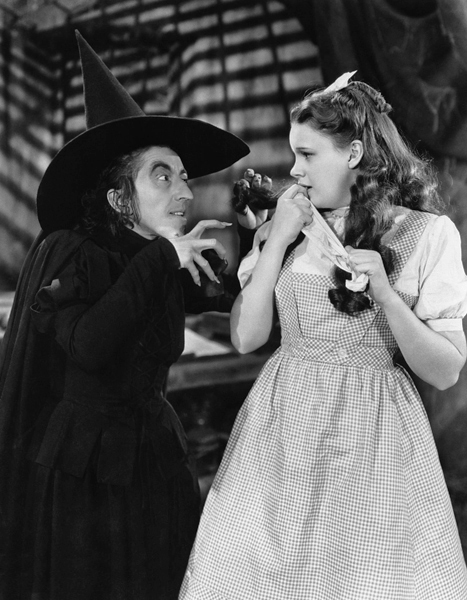
Obviously, most people will imagine an ugly, green-skinned, hook-nosed hag dressed in black who rides around on a broomstick when thinking of witches — something along the lines of the Wicked Witch of the West from The Wizard of Oz. I’m not going to be touching on these fictional depictions, as much as I adore the Sanderson Sisters. We’re going to be looking at actual witches… or, rather, people who were accused of being witches, caught up in one of the many hysterias which overtook the western world in the seventeenth century. And yes, there was more than the one.
Salem
The most well-known witch craze was the one which put Salem, Massachusetts, on the map. Salem was founded by a group of Puritan colonists, and from its onset, faced many hardships. There were numerous conflicts with the Native Americans, competition with French settlers in the same region, and poor harvests brought on by the Little Ice Age. The winter of 1691-92 was particularly harsh, and the Puritans’ strict and spartan lifestyle did not exactly encourage an understanding or forgiving relationship with their neighbors.
In January of 1692, four girls in the village began acting strangely. Two of them, Abigail Williams and Betty Parris, were relatives of the local pastor, Samuel Parris. Some of their behaviors included holding their heads in pain, twisting and contorting their bodies, low-grade fevers, and barking like dogs. Samuel called for a doctor, whose diagnosis for both girls was bewitchment.
The Puritans believed that the Devil and demons were very active forces in the world, acting through people who voluntarily worked with the forces of evil. These forces would prey upon the weak of will and body, which naturally meant women, children, and people who weren’t white male Europeans. How convenient for the patriarchal Puritans. This religious belief caused the diagnosis of bewitchment to be treated with the utmost severity, and suddenly the strain on society began to show.
The four girls afflicted were asked to point out those who had bewitched them. They accused three people — Sarah Good, a woman of lower social standing who was forced to beg for charity; Sarah Osborne, who was not a regular church-goer and was in a longstanding legal dispute with the Putnam family (Ann Putnam being one of the girls making the accusation); and Tituba, an Indigenous slave owned by the Parris family. All of those accused were, in some way or another, social outcasts to the people of Salem, and when accused of witchcraft, were directed to either confess and condemn the other women, or hang from the noose.
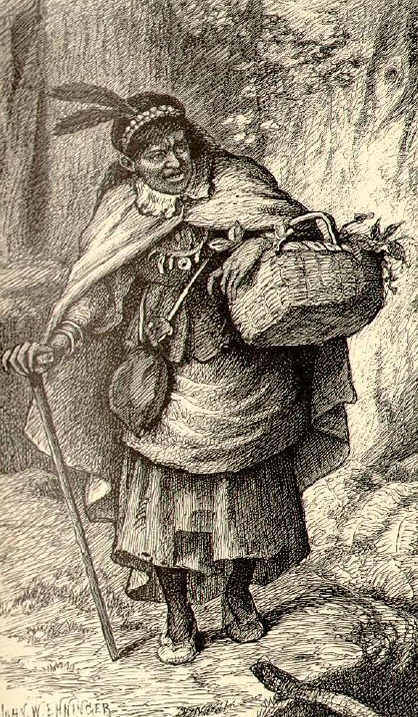
Tituba was the only one of the three to take the Puritan courts up on their offer, admitting to making witch cakes for the girls and praising the Devil, who ordered her to harm the children of Salem. But this admission only came after she was beaten by Samuel Parris. She also claimed that the Devil had made her sign her name in a great black book, and that while she did not want to, she was forced to by Sarah Good and Sarah Osborne. Sarah Good maintained her innocence, accusing the other two of witchcraft, while Sarah Osborne denied any witchcraft without accusing the others.
Of the three, Tituba was the only one to escape execution. Sarah Good became the first person executed during the Salem Witch Trials. In the next month, two other Salem women would be accused of witchcraft, and nearby Ipswich would see its first accusation. Martha Corey had spoken out against the girls’ accusations, and thus became a target herself. This would be a common occurrence — some doubt is expressed at a frankly unbelievable story, and the person who speaks out has their turn on trial.
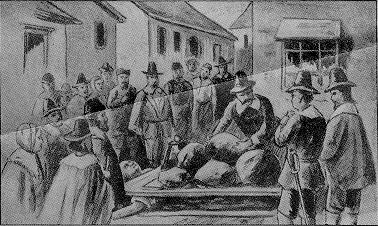
One of the most famous victims of the hysteria was Giles Corey. From the records of the time, he did not lead an innocent life, having been accused of sleeping on the watch, theft of food and small items, and the murder of one of his indentured servants. While these charges didn’t stick, they gave the man a certain reputation. When his wife, Martha, was accused of witchcraft, he believed she was guilty as well… though he changed his tune when the accusations turned to him as well. While he denied the accusations, he refused to plead at all, so rather than a formal execution by hanging, the courts tortured him to try and get him to confess. For three days, Giles was crushed, increasingly heavy rocks being piled on top of him, until he died. According to legend, his ghost appears when disasters are about to strike Salem, and it’s said that he cursed the position of the Sheriff of Salem with his dying breath — every sheriff since Corey’s execution has died or been forced to retire due to heart or blood conditions.
The trials in Salem would continue, with a special court being formed in order to process the large number of cases coming in from the Massachusetts area. Governor William Phips appointed William Stoughton to oversee these proceedings, but was displeased by how ruthless Stoughton was in his judgment. It was only after Phips’ own wife was accused of witchcraft that he personally stepped in and ended the witch trials. By the end of it, over 200 people in the Massachusetts Bay Colony had been accused of witchcraft, with thirty being found guilty and executed.
Merrymount
Salem was not the first town to suffer the wrath of the Puritans and their view on witchcraft and paganism. Decades before the first accusations of witchcraft were hurled in Salem, another New England community was being led by what one Puritan leader called a “lord of misrule.” While dubbed by its original founders as Wollaston’s Hill (named after the founder), many of the original settlers left for Virginia. Those who remained, including their de facto leader, Thomas Morton, dubbed it Ma-Re Mount, later shortened to Merrymount.
From its foundation, Merrymount was different from other English colonies in New England. Most colonies at the time were founded to be self-sufficient — farms and plantations were established, cash crops were grown, and what the colony produced would be how it made money. Trade was usually considered a pleasant after-effect. The Merrymount colony, however, was too small to be entirely self-sufficient like that. So they turned to their neighbors, the Native Americans.
Thomas Morton thought of Merrymount as a New Canaan, a veritable paradise on Earth with natural resources aplenty and abundant natural beauty. He wrote later, “if this land be not rich, then is the whole world poore.” This was part of the reason that the settlement eventually had good relations with the Native Americans — actual good relations, rather than the propaganda spouted by the Pilgrims of Plymouth. While most settlements focused only on themselves, Merrymount looked outward, trading firearms and alcohol to their neighbors.
It is important to understand that Morton was also unlike many of the other English colonists who came to America, especially those who came to New England. He was not a Puritan and was from the English countryside. The neighboring colonies were almost all entirely founded by Puritan exiles from England, who were more austere and reserved, believing themselves to be a purer form of Christian worship. Not only was the sale of guns and alcohol ot native people banned in most colonies, but it was expected of people to live a spartan life without many of the celebrations common to the English countryside.
Thus, when in the Spring of 1627 Thomas Morton erected a Maypole for a celebration, the Puritans were scandalized. Even more scandalous was the inclusion of the neighboring Indians in this celebration. There was joyous merriment in Merrymount, and everyone was invited! Outside of the small town, though, the rest of the Massachusetts Bay Colony saw the revelries as indulgent, sinful, and close to pagan. They compared the revelries to the Bacchanals of ancient Greece, and had even declared the Maypole an idol. Leaders of the Plymouth Colony sent Miles Standish to arrest Thomas Morton, legally citing the ban on the sale of arms to the Indians, but fearing that the colony of Merrymount would attract immoral brigands, native savages, and worst of all, atheists.
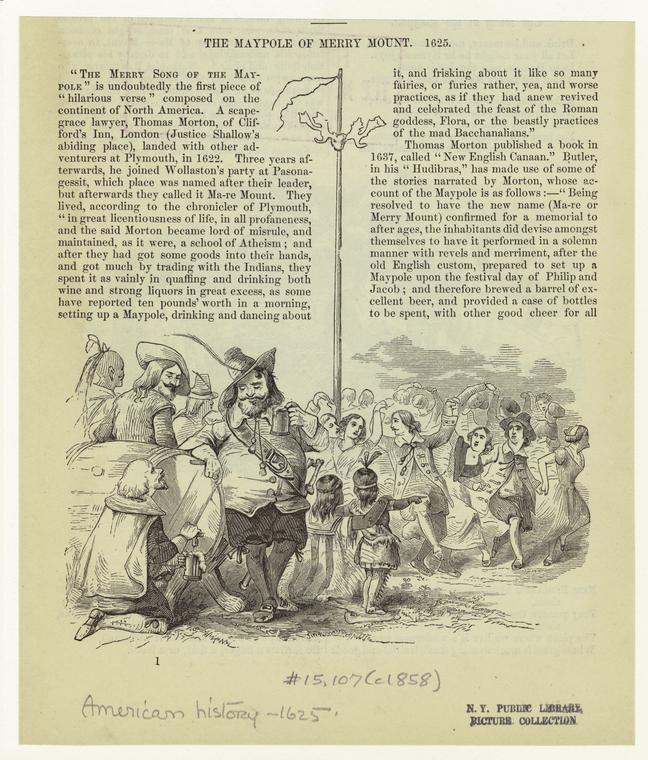
After Morton’s arrest, the Pilgrims took control over Merrymount. It was renamed Mount Dagon, because apparently paying homage to the ancient Babylonian sea god was more palatable to the Puritans than anything being merry. The maypole was also removed, and further May Day celebrations were, presumably, banned. The settlement still remained, but all that had made it Merrymount was taken away.
Würzburg
Okay, so there weren’t really any witches in that last one, but it was tangentially related enough that it still fits within the scope. During this time, though, there were still talks of witchcraft going around the Christian world. It just wasn’t in New England. Instead, we take a look back across the Atlantic, in the small German city-state known as Würzburg. At the time, Germany was not exactly a unified state as we imagine it, but divided up into a number of small cities and princedoms that fell under the jurisdiction of the Holy Roman Empire. While technically one state, the provinces within were fairly autonomous, and Würzburg was one such state, governed by a Prince-Bishop.
Another important piece of context was that during this time, the Holy Roman Empire was in the midst of the Thirty Years’ War, a conflict that split the Empire between Protestant and Catholic factions, with outside powers joining in to claim pieces of territory for themselves. This war was one of the most devastating Europe would ever see, at least until the First World War would kill millions in a day. Mercenary armies would ravage the countryside, princes would fight for the Protestants one day and the Catholics the next, and armies afflicted with some disease or another would spread them to every town and village they marched through. In short, everyone was having a very bad time.
Witch trials had become increasingly common even before this, as the Reformation caused tensions to rise and Protestants were persecuted by Catholic leaders (and vice versa). The Little Ice Age that was mentioned earlier was another factor, and a harvest destroyed by frost in 1626 led to accusations of witchcraft. As with the later Salem trials, the first to be offered as suspects were women, usually poor or otherwise considered outsiders. As religious fervor grew, though, and fear became even more widespread, so too did the list of suspects. Neither priest nor child was spared from the cleansing.
When imagining the Salem witch trials, it’s common to imagine a group of women being burned at the stake, the numbers ranging into the hundreds rather than the dozens. While this wasn’t actually the case in Salem, it absolutely was in Würzburg. To this day, we don’t know exactly how many people were executed, and even where we do have numbers, we are usually missing any names. Sources from the time mention that arrests occurred every day, taking people from all walks of life. There was a claim that a third of the city, over 3 thousand people, were thought to have attended a Witch’s Sabbath led by the Devil himself. And, rather than hanging from the noose, those accused were tied to a stake and burned. One list of people has survived, listing 157 executions under names such as “a strange man,” “the wife of Stiecher,” or “the fattest citizen in Würzburg,” but the list itself mentions that is not exhaustive, and that there were many other burnings besides the 29 provided.
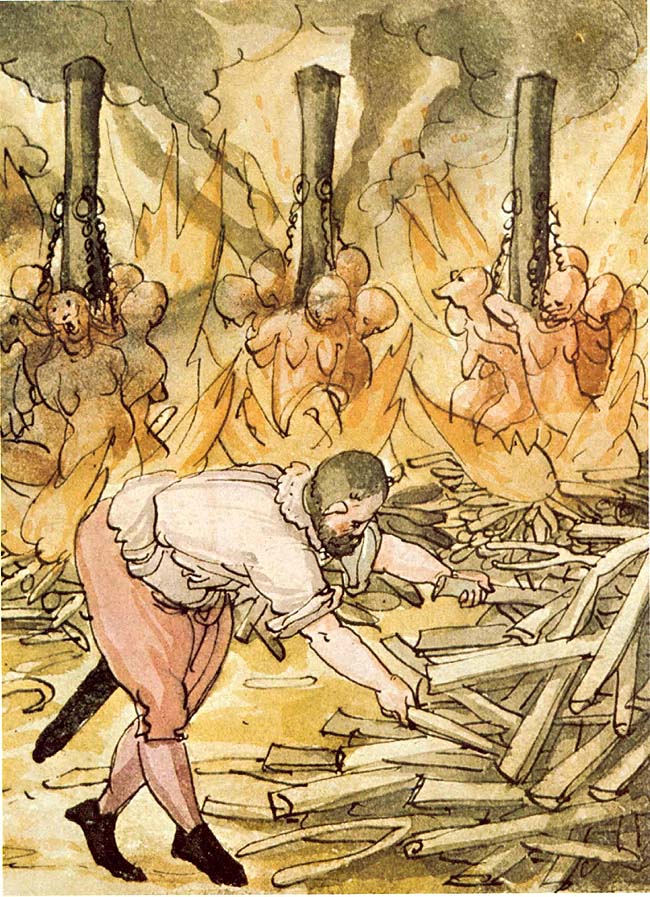
Before execution, those accused were tortured and prompted to give the names of their accomplices. No name given was treated as anything other than legitimate, and so when certain nobles or other citizens of high standing became aware that they were next in line to be arrested, they fled the city. Soon, the true scope of the Würzburg trials became known all over Europe, and condemnations came in from both the Pope in Rome and the Holy Roman Emperor in 1630. The next year, the Prince Bishop died, and later, the Swedes under King Gustavus Adolphus occupied the city, ending the witch trials.
During the Würzburg trials, it is estimated that over 200 people were executed within the city, while another 900 were either executed outside the city itself or died in custody. Even the Prince-Bishop’s own nephew was condemned. While other witch trials such as these did occur elsewhere in the Holy Roman Empire in this timeframe, none had as many victims as in Würzburg.
Why does this matter?
Earlier, I used the term “moral panic.” The term is used to describe an action or reaction to a perceived threat that is disproportionate to the threat itself. For a more modern example, think of the Satanic Panic, which gripped the US during the 1980s. People were legitimately afraid that Satanic cults were sacrificing and torturing children, and that their will was being enacted through Rock music and tabletop games. The panic ended up doing more harm to children than it did to help them, using unproven methods such as hypnosis to get children to implicate their parents in conducting satanic rituals.
The reason this kind of thing happens is because moral entrepreneurs, people who espouse these ideas, are usually looking to incite fear to promote their own way of thinking. The Puritans of Salem and Plymouth had an extremely narrow worldview, and anyone who didn’t fit into it was a poison to be removed. The Prince-Bishop of Würzburg was in the midst of a holy war, keeping his subjects in line while claiming he was acting in the best interests of his subjects, the Empire, and Christendom as a whole. Anti-war movements and counterculture movements were on the rise in the ‘80s, and so an attack on the “corrupting” elements of American society was meant to distract Americans and reinforce the idea of protecting American values.

This isn’t an idea that’s relegated to the past. We can look back now and laugh at the superstitious peasants and colonials who believed in witches, and then turn on the news to listen to politicians rave about immigrants eating people’s pets. It’s easy to get people afraid and angry, and it’s easy to get angry people to see a scapegoat as the cause of their anger, but it’s hard to direct the mob past that. Once you get a moral panic going, innocent people will get hurt. If we look at our own actions closely enough, though, and we recognize when our outrage is doing more harm than good, then we can prevent the panic from reaching a fever pitch and stop it from becoming a true witch hunt.
Happy Halloween, y’all.