By Addison Chrivia, Managing Editor
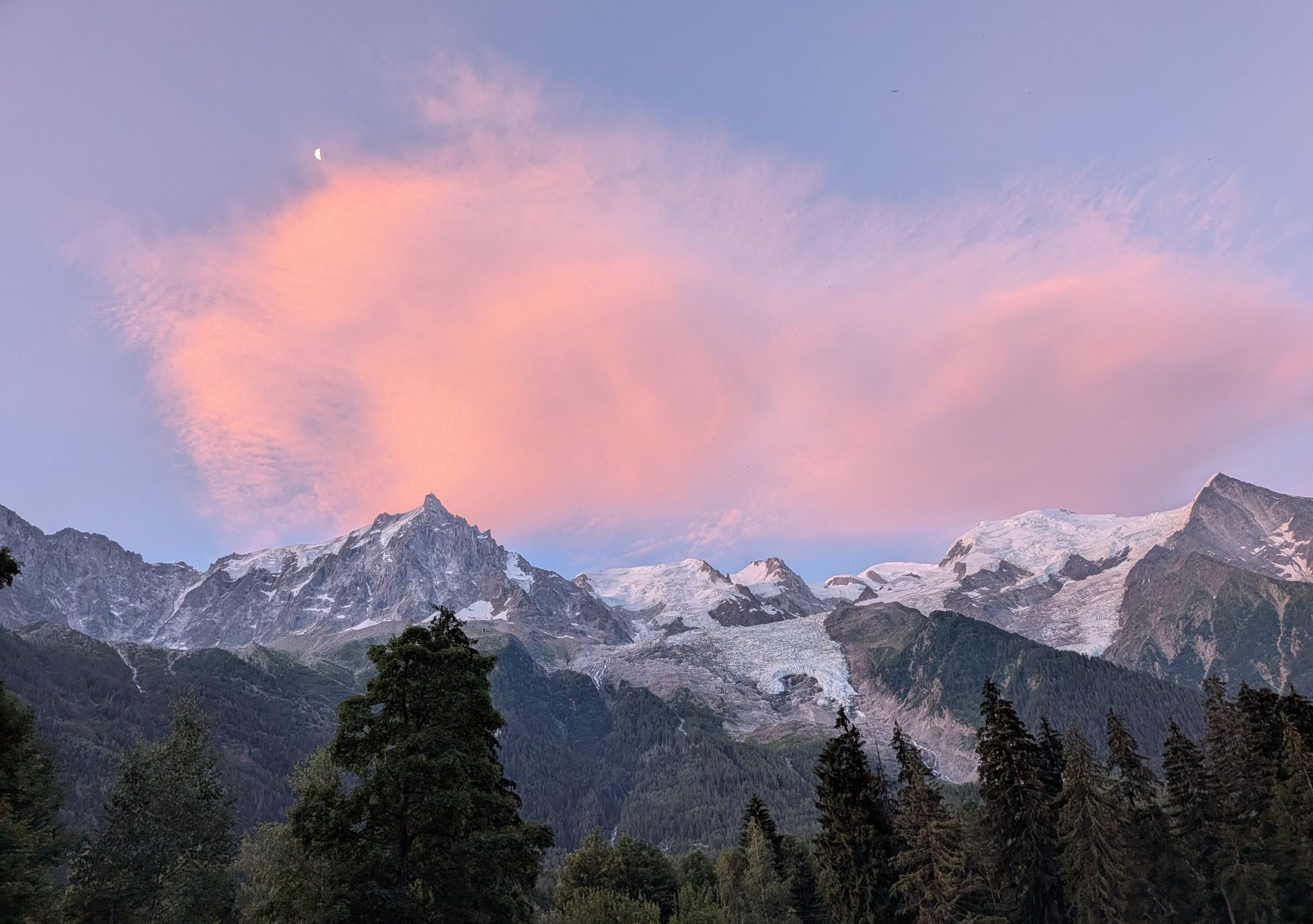
Appreciating nature is easy to forget in a world of rapidly expanding technology. With AI systems guzzling water, contributing to air pollution, and fueling global warming, it can be hard to be hopeful about the future of the environment. But nothing made me feel more in awe of nature and determined to save the Earth than my TBR Global Studies trip to the Alps. We traveled from Chamonix, France to Salzburg, Austria, for Modern World Literature class, reading Frankenstein under the shadow of Mont Blanc or listening to a concert in a cathedral courtyard in Salzburg. Our trip to Chamonix left a great impression on me, and not only was it beautiful while I was there, but it also made me appreciate the beauty of the Great Smoky Mountains upon my return.
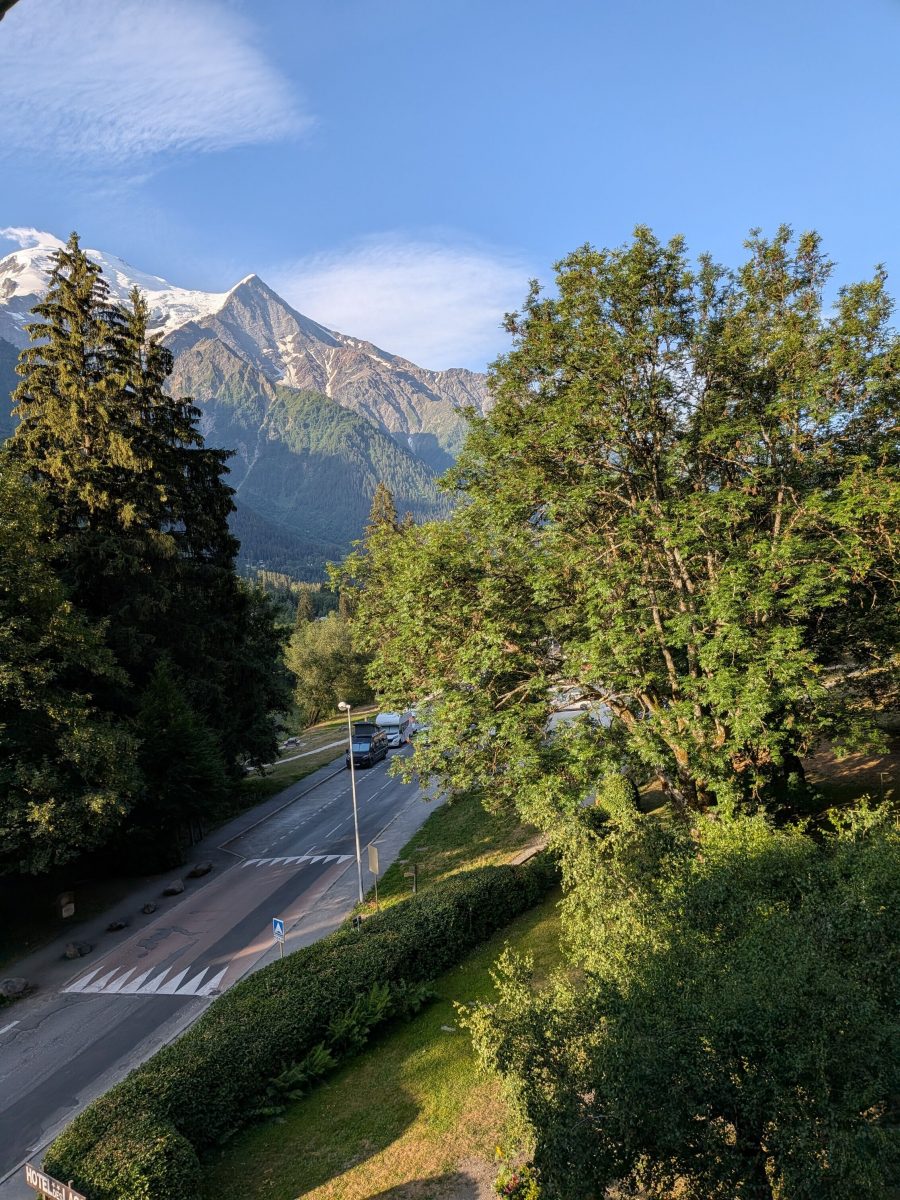
There’s something about opening your bedroom window in the morning and seeing something so beautiful that it feels like you have the whole world in the back of your pocket. It was like living in a dream, completely inconceivable that what I was seeing was real. Reading poetry in the mornings under the shadow of Mont Blanc; those sharp peaks topped with snow, towering trees, and blue skies left me breathless and dumb with awe.
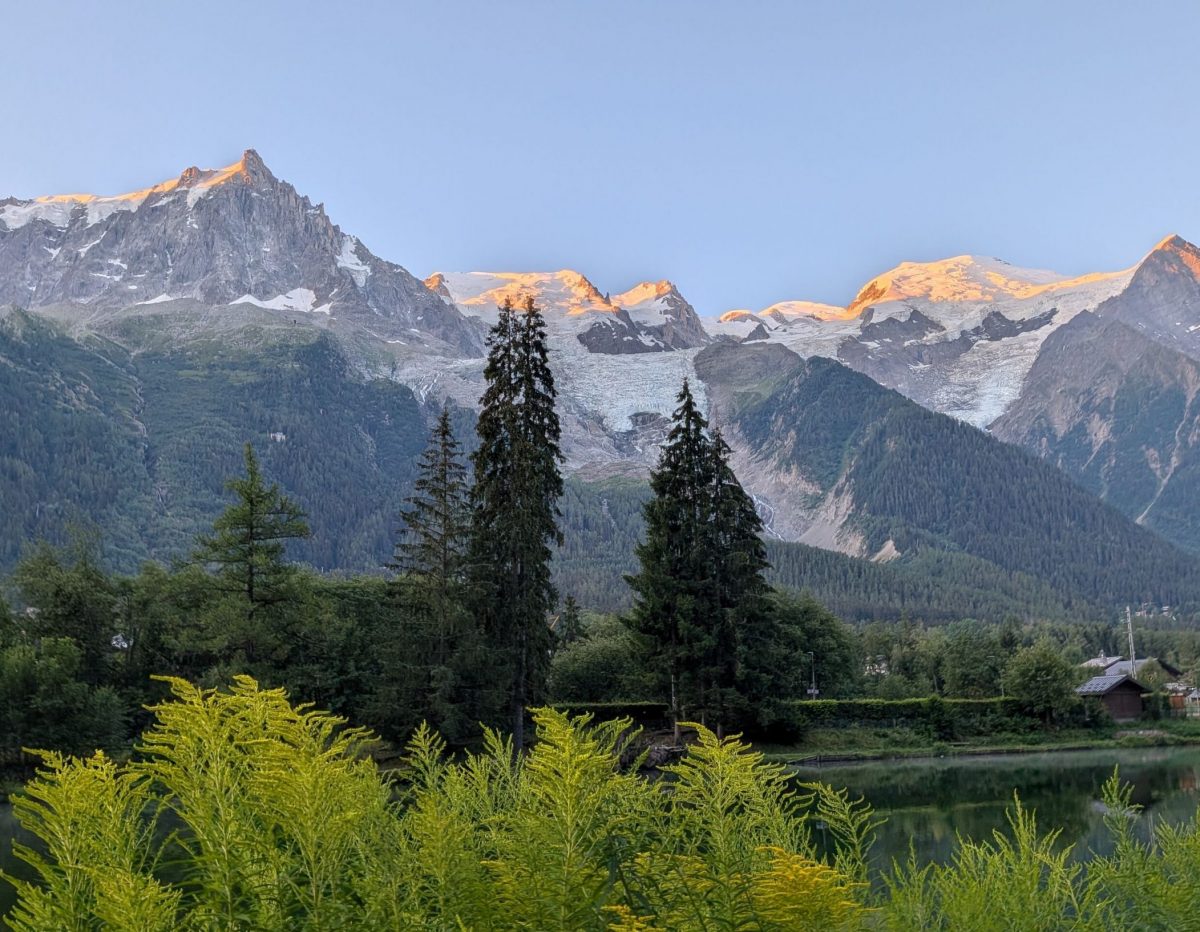
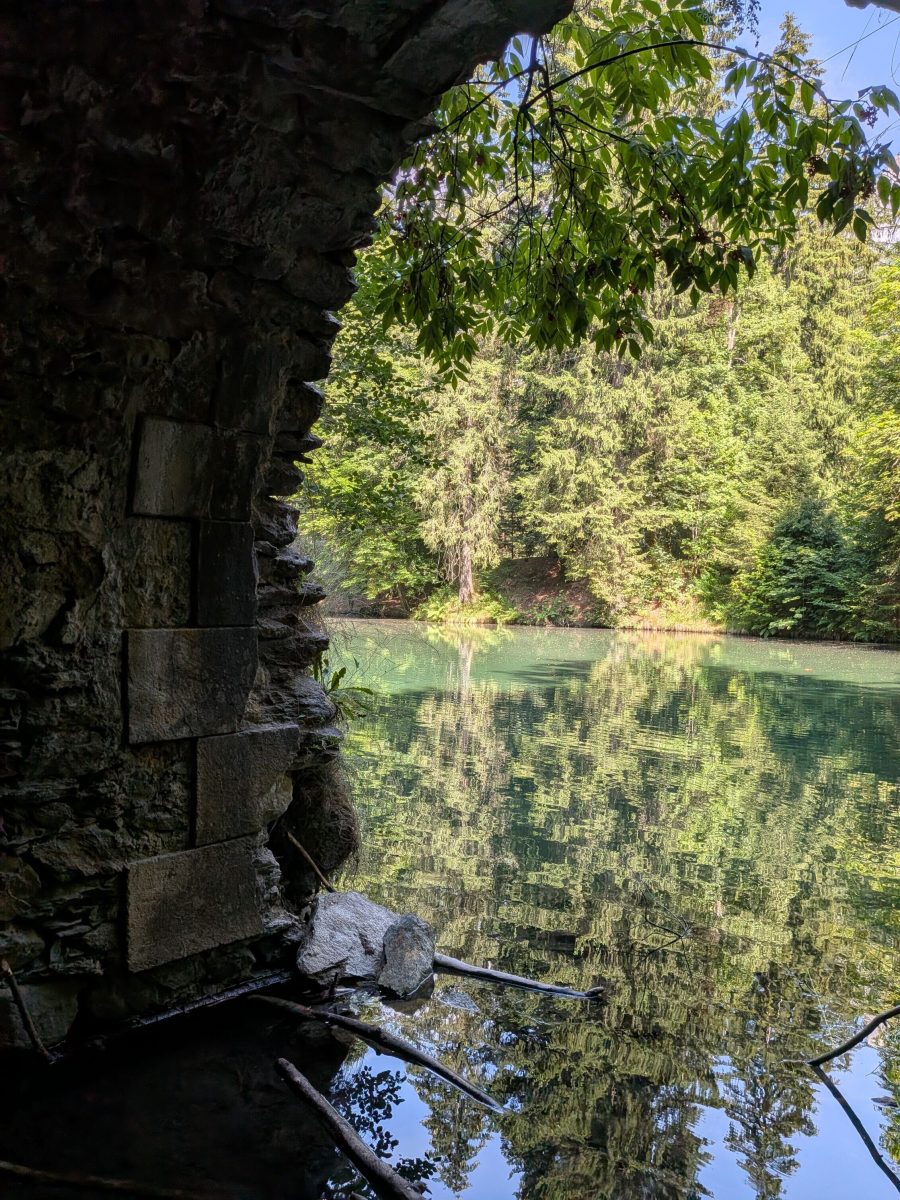
A quick exploration of the surrounding area led me to a cove hidden by a copse of trees. Man-made ruins decorated the area, allowing tourists the feeling of long-lost discovery. The revealed view was something I’d only ever imagined when reading fairy tales as a child.
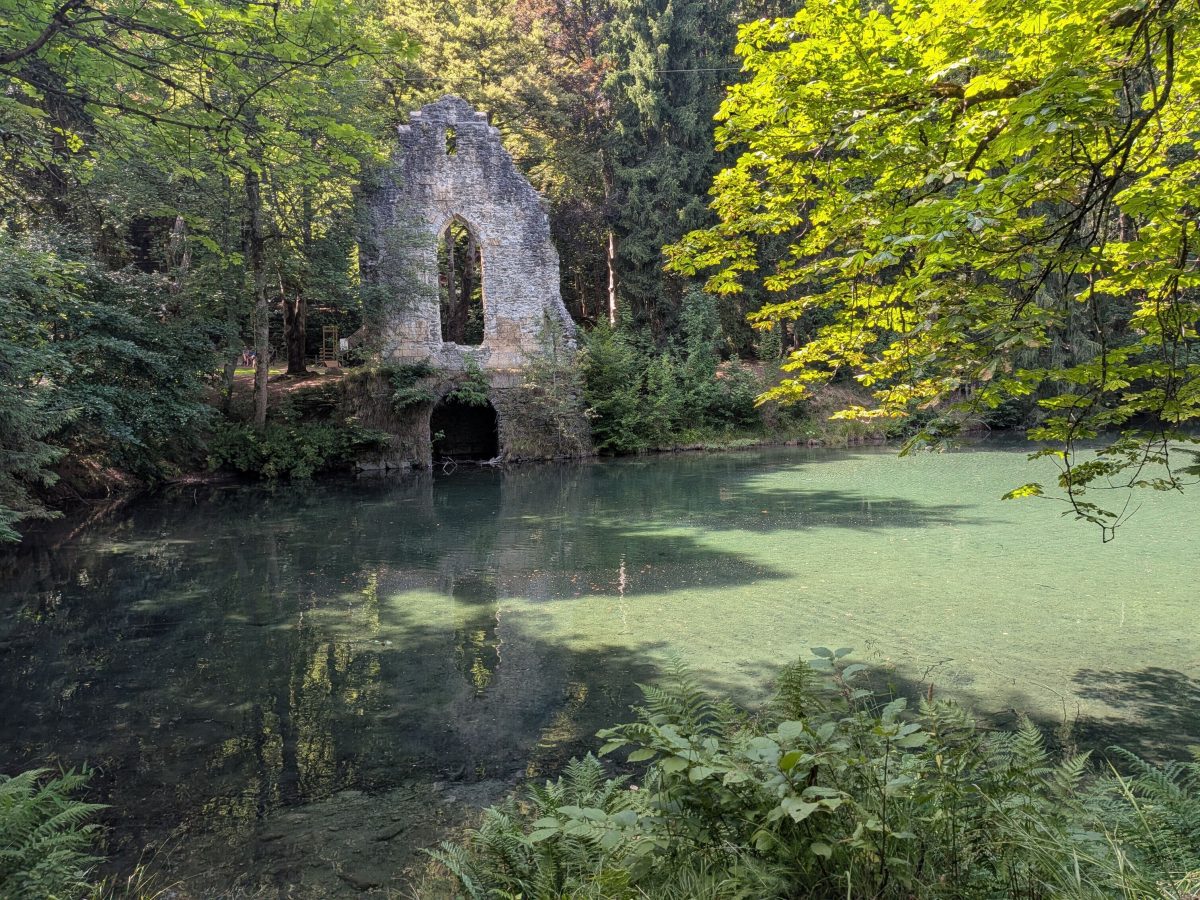
Areas like this may become flooded, causing damage to the surrounding area, due to a massive increase in water runoff from Mont Blanc. The heatwaves are causing the glacier to melt at a rapid rate; a study by Laurent on the hydrology of the area shows not only an increase in the quantity of water, but also a decrease in its quality. This negatively impacts all local wildlife, flora, and fauna alike.
Our first class trip had us take a skylift to Brevent Peak. We were told to bring heavy jackets or sweatshirts, as it would be colder at the top. After a terrifying ascent, we could see the nearby mountains and the entire town. However, it was not cold at the top whatsoever; many of us were comfortably warm in just T-shirts. Professor Oakley Atterson, the teacher for Modern World Literature and course director, said: “I have been up to Brevent five times over the past four years, all around the same time – and every time except this past summer, it has been chilly enough at the top for most people to put on a jacket or a sweater when they step out of the cable car. There were still significant lingering snow patches around the top on the majority of my trips up there. In fact, the one time I visited the peak on my own – not during a Global Studies program – I was participating in a trail race, and snow was so deep on the ground in late June that it was faster to sled down on our butts than run! This past summer, though, the whole mountain was free of snow, and while a little cooler than down in the valley, it was much warmer than usual. The views also weren’t as good – the sky was hazy with heat and what I think was smoke from nearby forest fires, which were awful this summer all over the continent.”
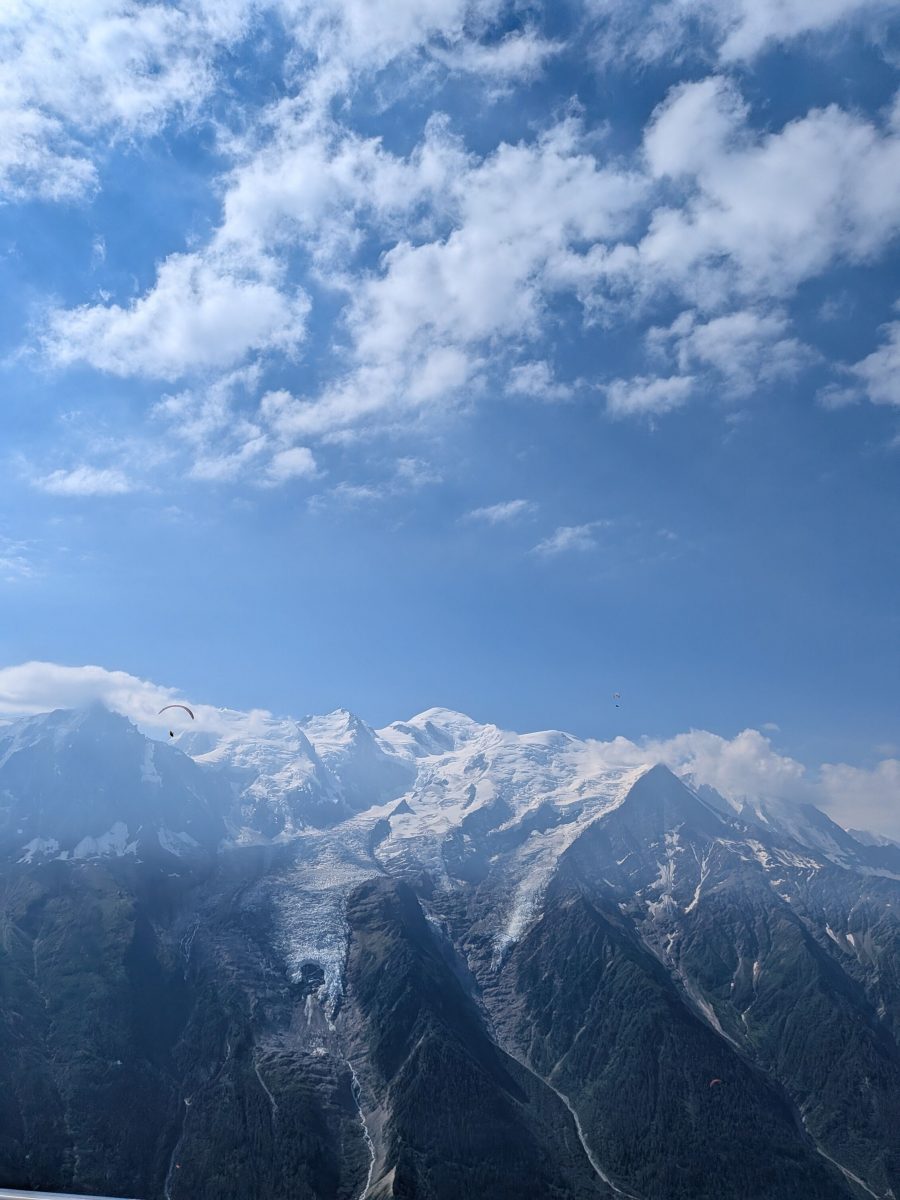
While it was beautiful nonetheless, the impact of global warming in just one year on Brevent Peak left me wondering what the Alps would look like in a decade. While being a tourist in Chamonix left me with a sense of wonder at the world, looking at the official Chamonix Guide website tells a story of devastation over the years for locals as climate change wreaks havoc. It lists some of the effects of climate change on Chamonix, including reduced snowfall, increased rockfalls, and adverse impacts on plants and animals.
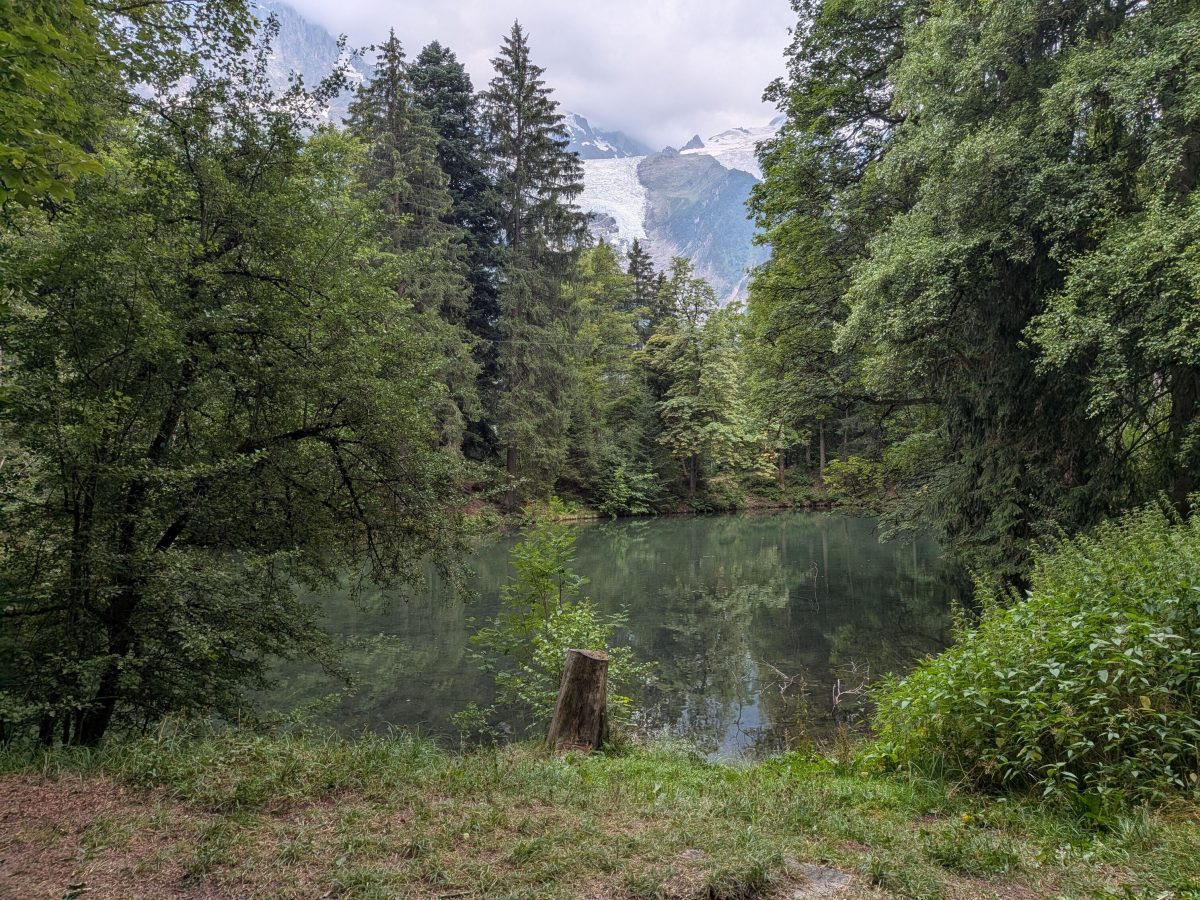
Heatwaves melt the ice that holds rocks together, triggering landslides. The ice and snow melt, transforming the area, and falling rocks constantly change the mountain, making it unrecognizable. Not to mention, creatures that have lived in a cold, steady environment for thousands of years are suddenly living through the heat and dealing with a rapidly changing landscape they can’t possibly adapt to in time.
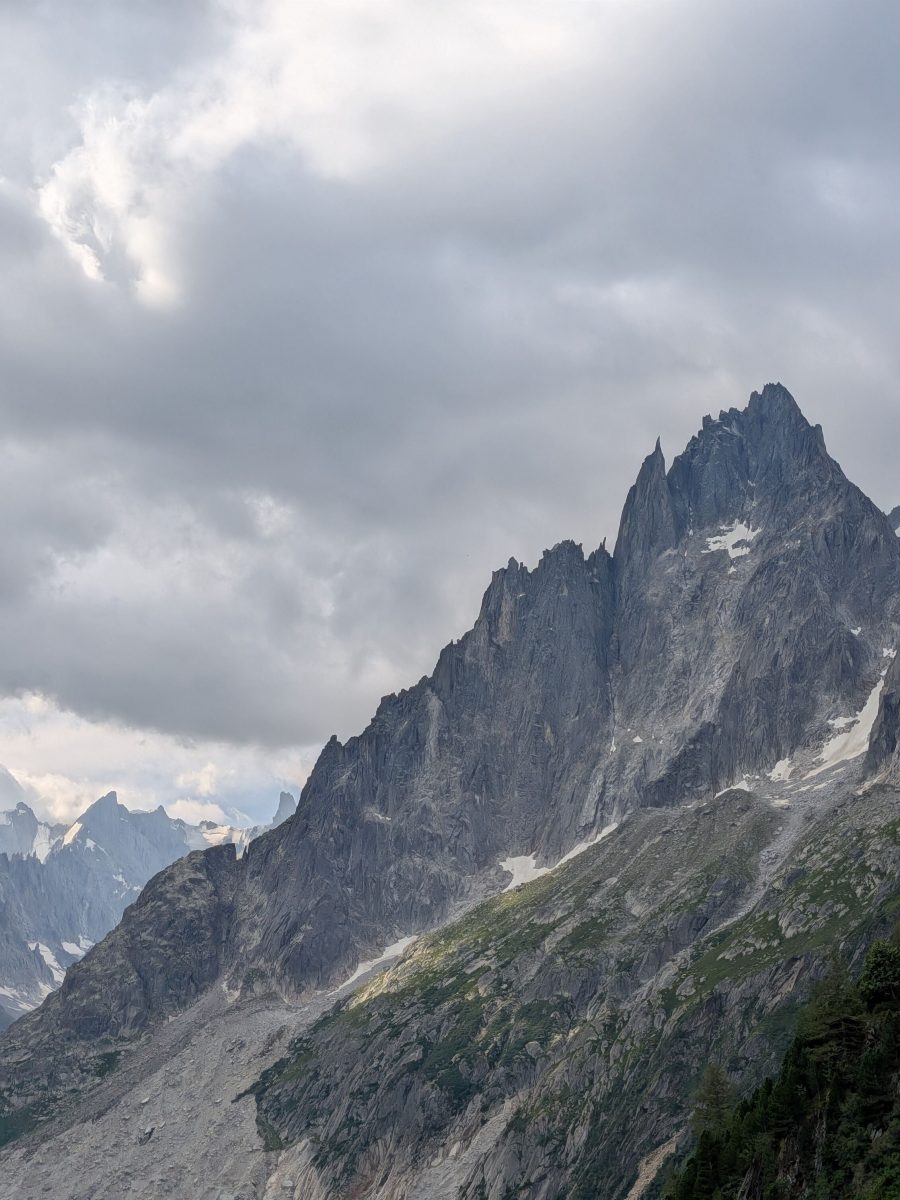
The next week we visited Montenvers and the Mer de Glace. We took a cogwheel train up; the view from up above revealed a rocky mountain dystopia, equally frightening and stunning. We quickly descended to the Mer De Glace to explore the ice cave. Completely encapsulated by vibrant blue ice, the cave was a marvel to explore. Each turn revealed more hidden treasures, and there was something so unnaturally beautiful about it all.
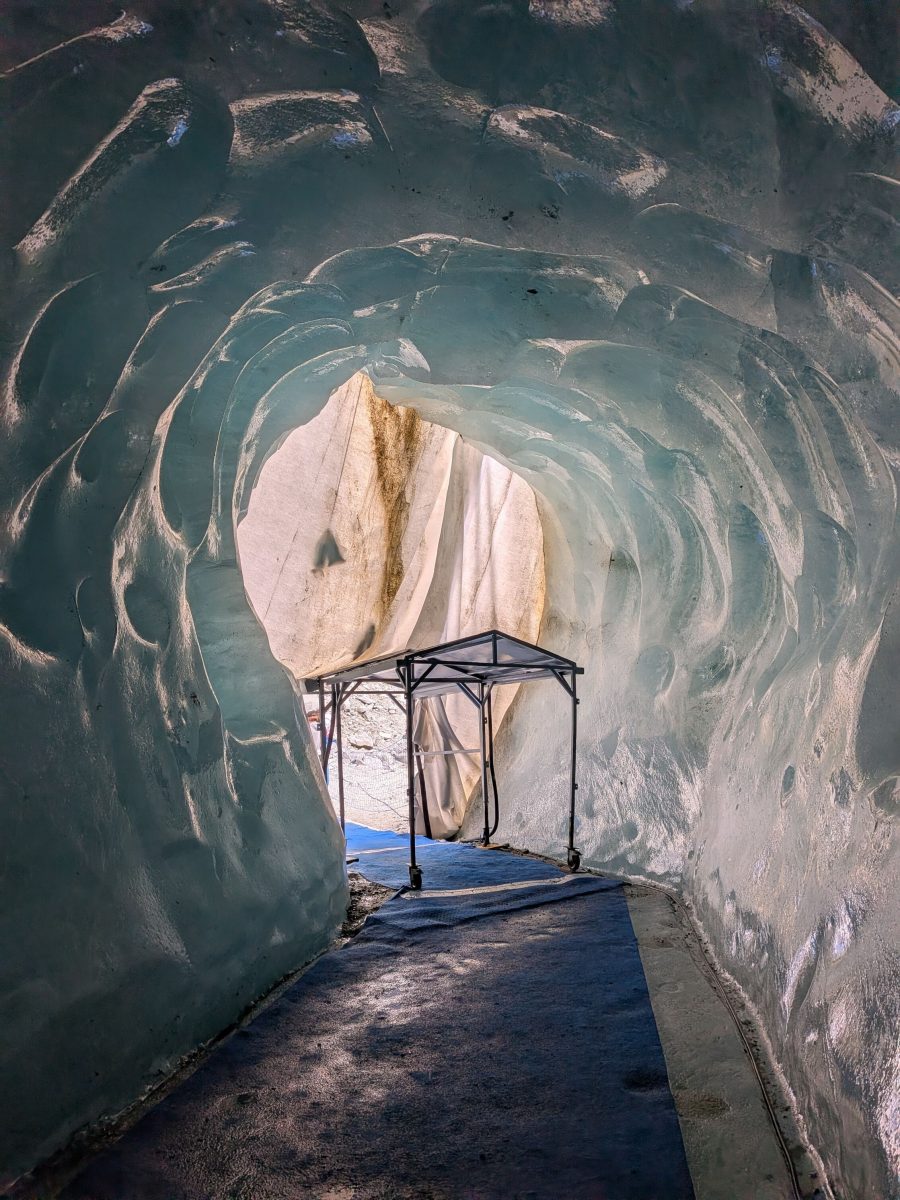
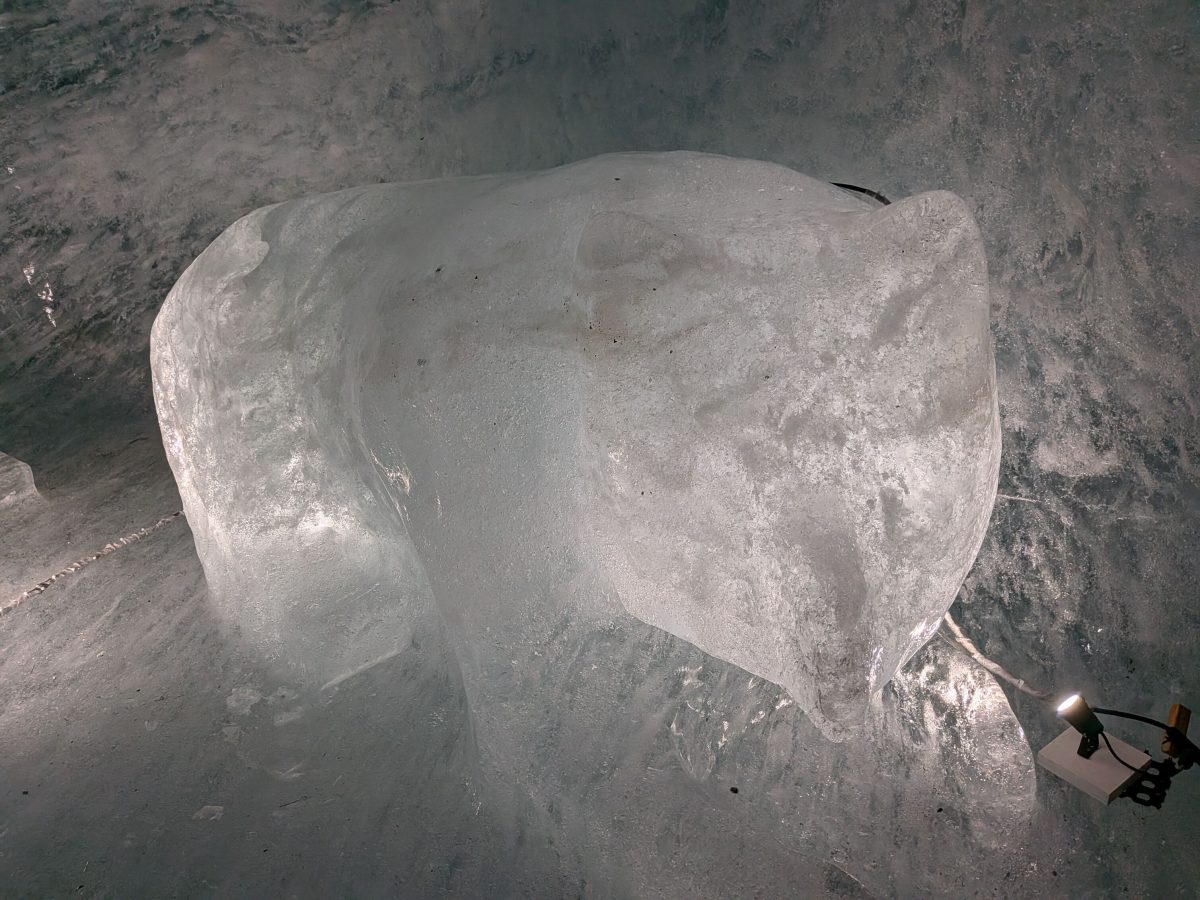
According to an article by Le Monde, the glacier has melted by half a mile in just 35 years. A marker was placed near the top of the stairs, indicating the previous glacier level from only a few years ago. It was truly baffling how much larger it used to be, only a few years ago. Crowds of people piled into the ice caves, carved out specifically for tourists; they were filled with ice sculptures replicating a house, animals, and a tardigrade.
The tourism industry seems to have only made the climate in the Alps worse, and I can only imagine the body heat from the thousands of tourists that regularly visit the inside of the Mer de Glace has caused some of the melting. Global warming would see the glacier melt within the next hundred years, according to an article by Atlas Mont Blanc.
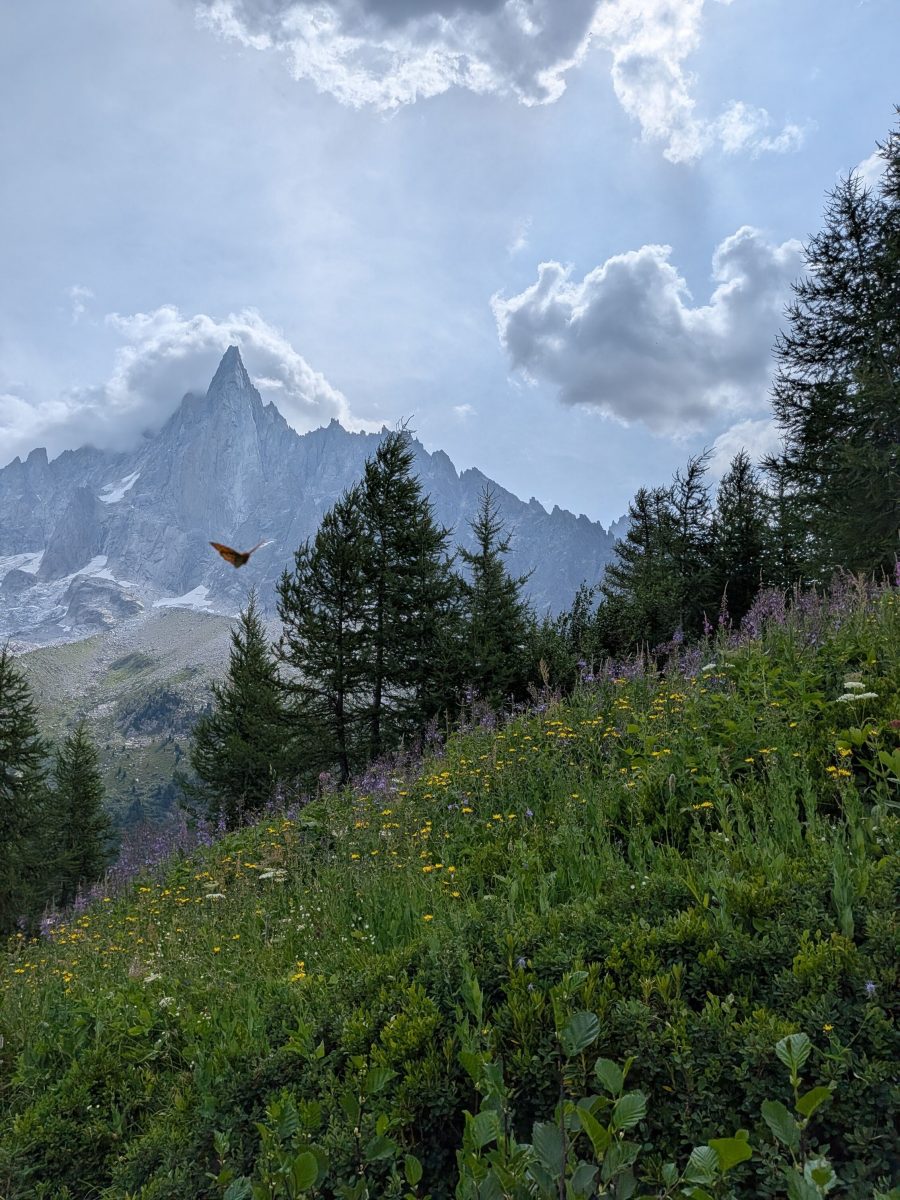
Heading back up, the class hiked on a trail atop the mountain. Covered in flowers and buzzing with insects, it was a sharp turn from the cold stone of the mountains seen before. It was magical, sitting there in a field of flowers with mountains surrounding me. Like living in a screensaver, I never thought I would experience something like that.
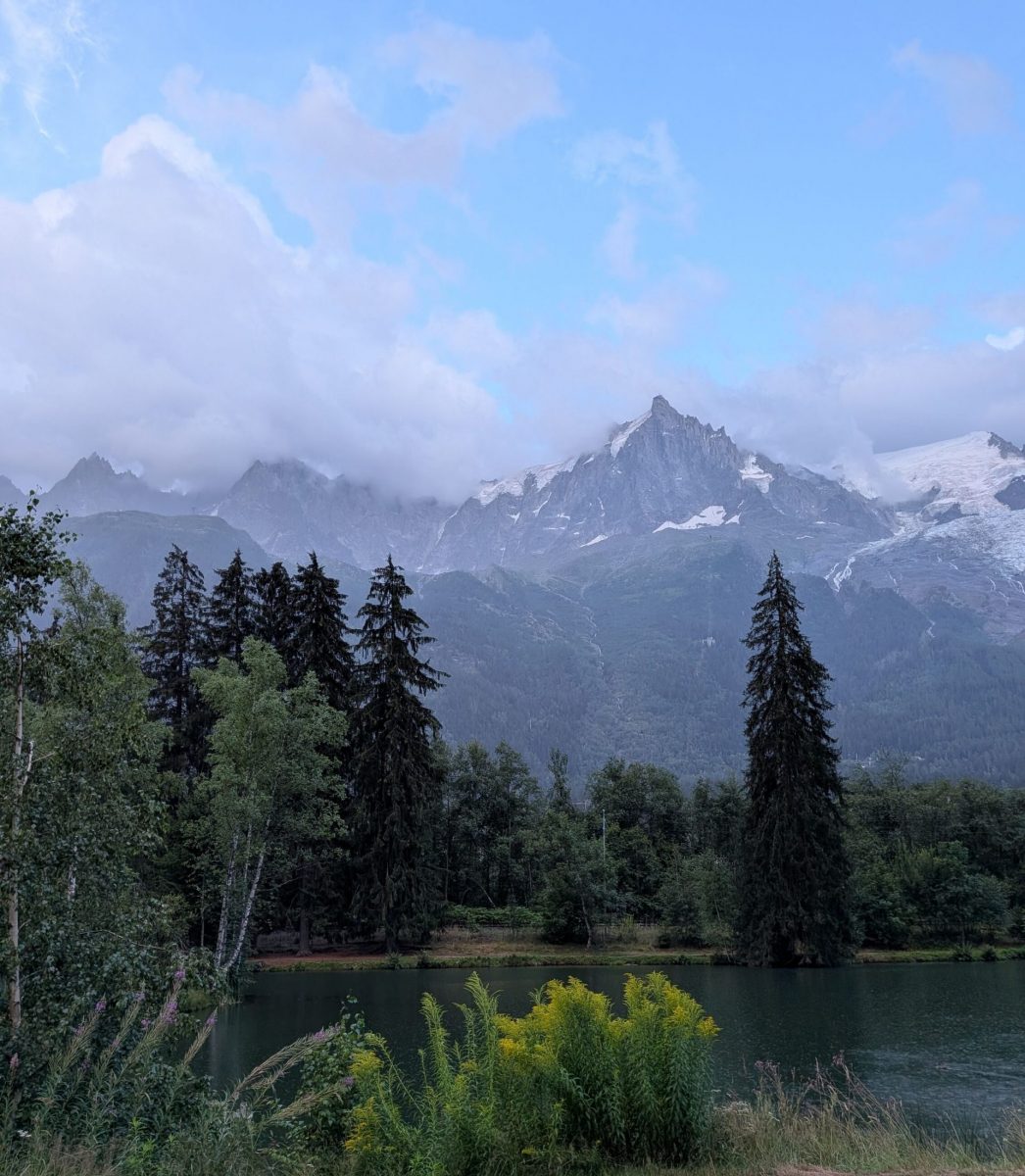
The whole trip was rife with new and wondrous things to see. Mountains that have existed for thousands of years and will continue to stand tall for more to gaze in awe at when I’m gone.
Looking upon Mont Blanc, I often felt powerless; the sheer enormity of it all put my life into perspective and instilled in me a new love for nature.
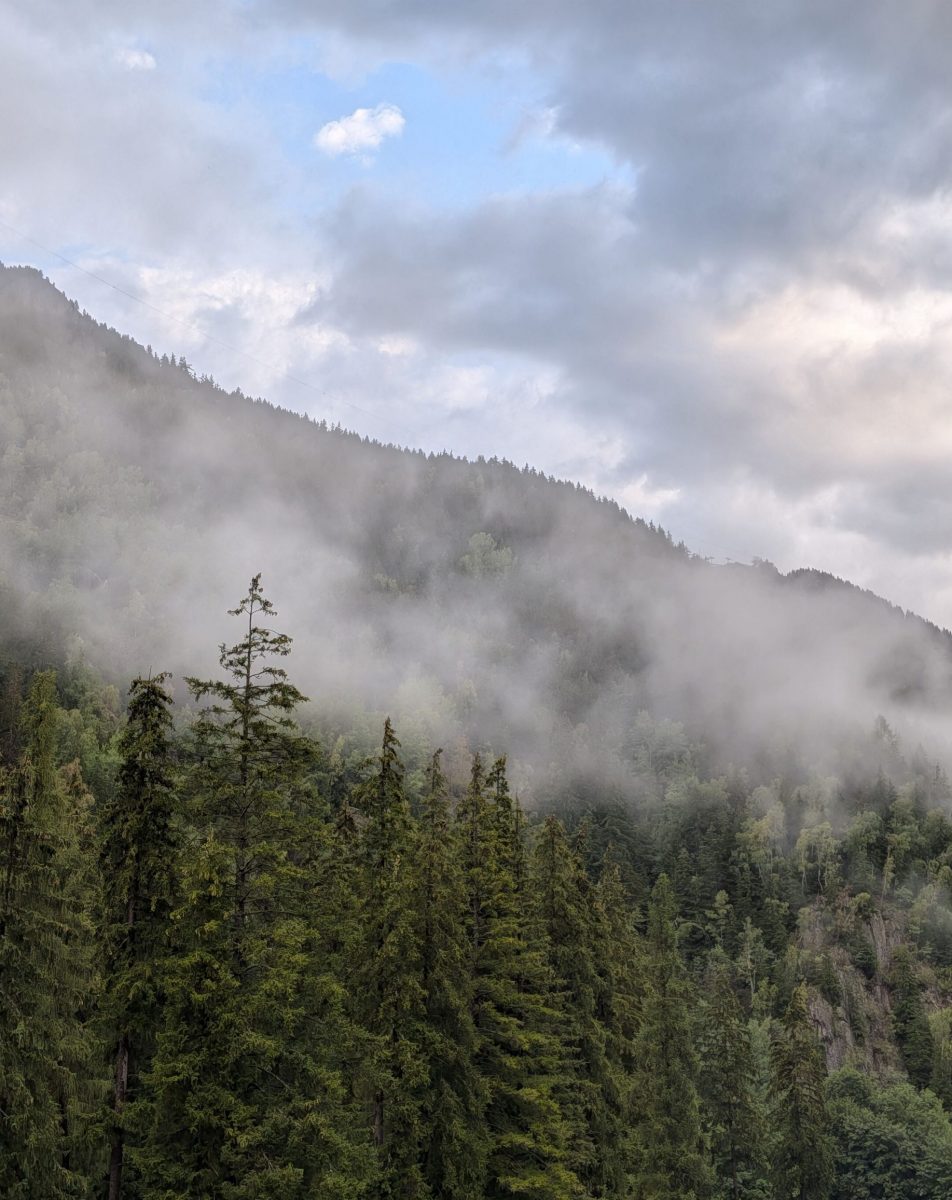
One can often feel helpless when thinking about the environmental issues we face now. How can we stop the world from changing, the sun from heating the Earth? We do what we as humans can do to prevent it as best we can, limiting carbon emissions, recycling, and keeping the oceans clean, but after that the only thing we can do is adapt.
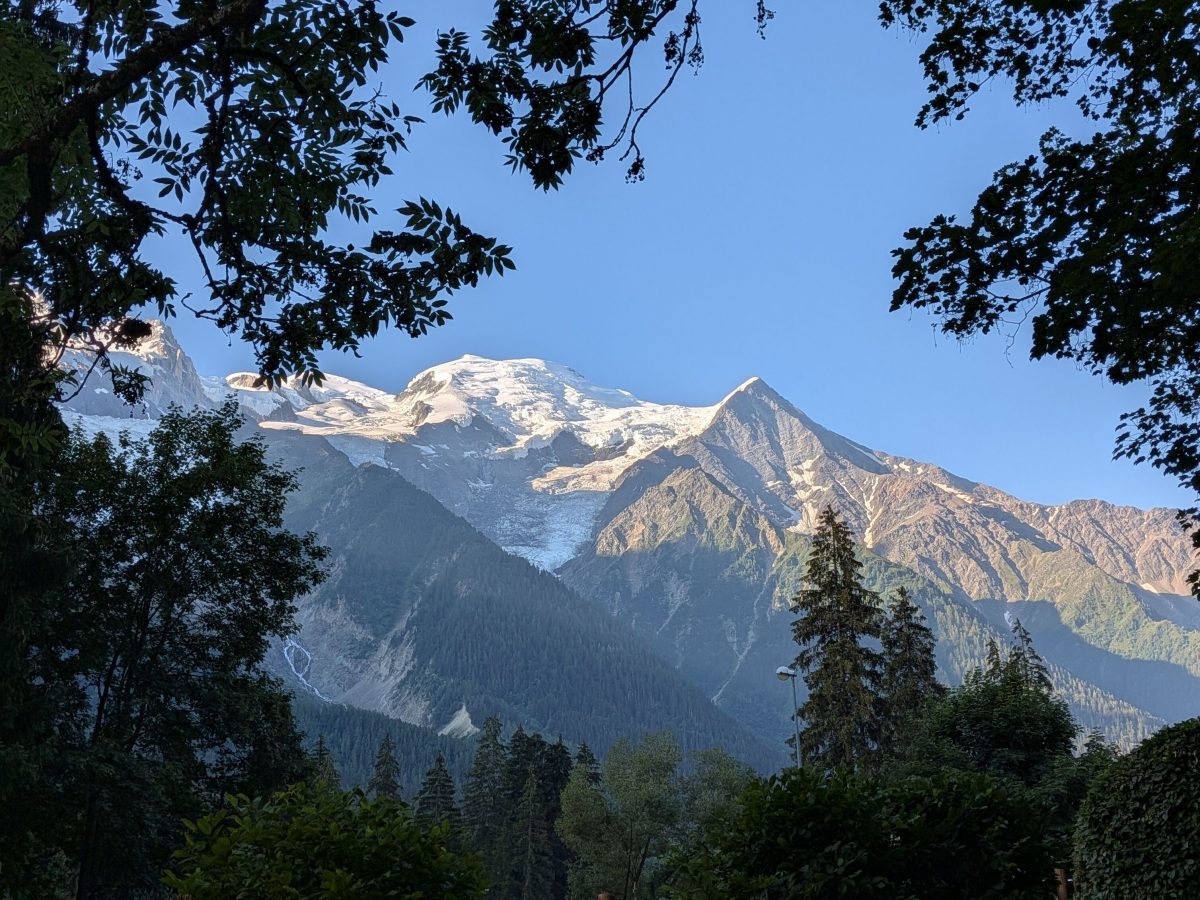
Professor Atterson says, “A week before we departed the US for Europe, I read an article in The Guardian that stayed in my mind the whole time we were there. There is an organization in Switzerland that tracks the date each year that all of the previous winter’s snowfall in the Alps has melted. In recent decades, that date has usually fallen sometime in August. Considering that snowfall begins to stick and accumulate in October each year, that means all the ice and snow that melts between that tipping point in August and October is from actively shrinking glaciers. The point of the article was that the tipping point date for this past summer was June 29, a few days before we even arrived in Chamonix. Everywhere you walk in Chamonix, you see the glacier-covered peaks of Mont Blanc, and I kept thinking, as I walked around in a much hotter-than-usual Chamonix valley, that those glaciers are disappearing. The poets we read in class wrote about Mont Blanc, its icy peaks and the raging rivers flowing off of it. They wrote about it as a symbol of the eternal, but it already looks different to us now than it did to them 200 years ago – one of its glaciers used to reach almost down to the valley floor. What is it going to look like 5, 10, 15 years from now?”
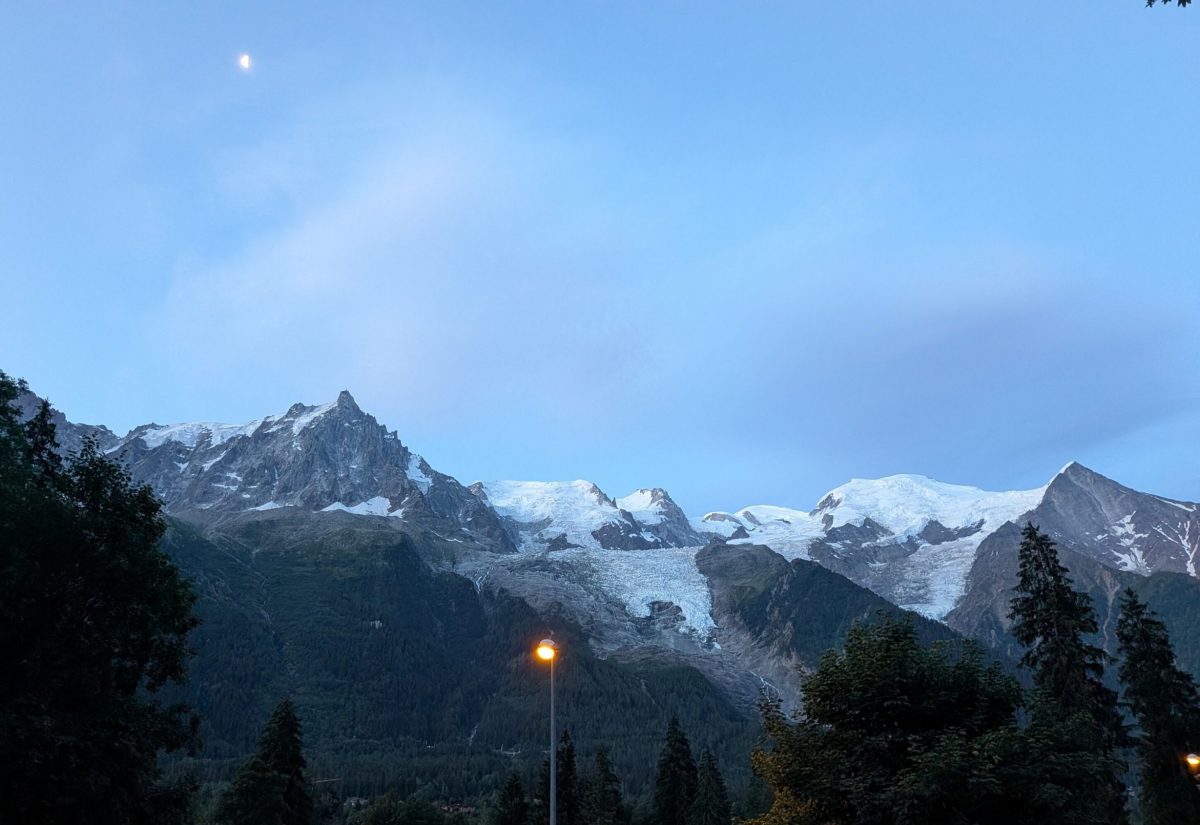
This trip was one of the most valuable experiences I’ve ever had, thanks to TBR Global Studies. I got to see beautiful, magnificent works of nature with wonderful people. While it can seem tough thinking about the impact of global warming on these places, that doesn’t mean that these things aren’t worth experiencing. Go out and see beautiful things while they last, and with them find the motivation and determination to keep them there. I had learned about global warming in Environmental Science class and talked about recycling over a hundred times, but standing there in front of Mont Blanc gave me the purpose to follow through and truly want to change the world.