By Addison Chrivia, Managing Editor
Over 60% of college students admitted to cheating in college classes, according to a PubMed study. It seems valid, then, that teachers should want an easy way to prevent that, especially when it’s so easy with online classes. Many use proctoring programs that record students to ensure they don’t cheat on online tests. It often records the student’s screen, the student themself, and any audio. The question is, does academic integrity trump student privacy?
professors require proctoring programs. Proctorio was one of these programs that was recommended and in use by the school a few years ago, before the recent switch to Verity. Professor Matsen, a teacher at Pellissippi State and Faculty Advisor at Imaginary Gardens, was asked about her experience with Proctorio.
She stated, “It was OK. I know some students felt frustrated with aspects of it. And I know that there are concerns sometimes about, or at least for some people, like privacy issues because it involves being able to see into the space that’s around them, which may or may not be private.”
Many people are uncomfortable with showing their living space to others, whether that’s because of personal, safety, legal, or financial reasons. One study shows that 45% of college students face housing insecurity, and online proctoring forces them to share that information with a stranger. Not to mention that the recordings from the test are taken by the company and stored. Students in unsafe situations, or who work in data-secure careers, would be allowing an unknown number of people access to their personal information. If Proctorio were to experience a security breach, that footage with students of all ages could be ransomed online to anyone.
Professor Matsen continues, “But I also found that on the instructor’s end, it would be like, ‘oh, we think there was a flagged activity.’ So I could go watch a bunch of footage of a student and see if I could see if they were doing something sketchy. And I just felt weird personally about that.”
First, what data exactly are they collecting? According to an article by LearnPar, Proctorio records your voice and picture during the test, your mouse, screen, browser, running applications, IP address, location, head, mouth, and eye movements, as well as a video scan of wherever you are taking your test. Do you tell all your professors where you live?
When asked further questions about the instructor’s side of things when an activity was flagged, she noted that it was very rare, with only about three incidents in her time using it. Professor Matsen describes the footage: “The one that I remember looking at, it’s hard to tell if they were cheating. Again, it’s been several years now. It was things like if they noticed certain kinds of movement. Honestly, I think at the time I was just like, I don’t think I wanted to spy on people that much. So I just didn’t; I said, ‘I’m just going to look at their answers and see if it looks problematic.’”
Pellissippi State Student and HR Representative of Imaginary Gardens, Ash Beach, was asked about their time using Proctorio. They said, “I personally have not gotten flagged for cheating, but I have had a friend who got flagged for drinking out of a clear water glass. In one of my classes, the teacher said you literally cannot look left, right, up, or down — you just have to look at the question. You can’t talk, you can’t breathe, you can’t have any sort of auditory signals, or they immediately flag you and take you out of the test, and it’s so annoying.”
Proctorio runs on AI software that tracks eye and facial movements to ensure you aren’t cheating by talking to someone who’s not visible, or looking off screen at the answers. However, according to a software engineer, it fails to recognize Black faces over 50% of the time. This could cause students to be locked out of tests and flagged for cheating for no reason other than poor facial detection software. Students shouldn’t have to be afraid of failing a class just because they want a drink of water, because they look too far to the left, or because their skin is too dark.
Student Ash Beach continues, “I hate Proctorio for many, many reasons, but mainly because you have no ability to access what data they have on you, and you don’t actually know where the data’s going, because on their website it just says it’s stored somewhere through a third-party vendor in the US and in Europe. And as a person who lives in a very data-secure house… It’s bad.”
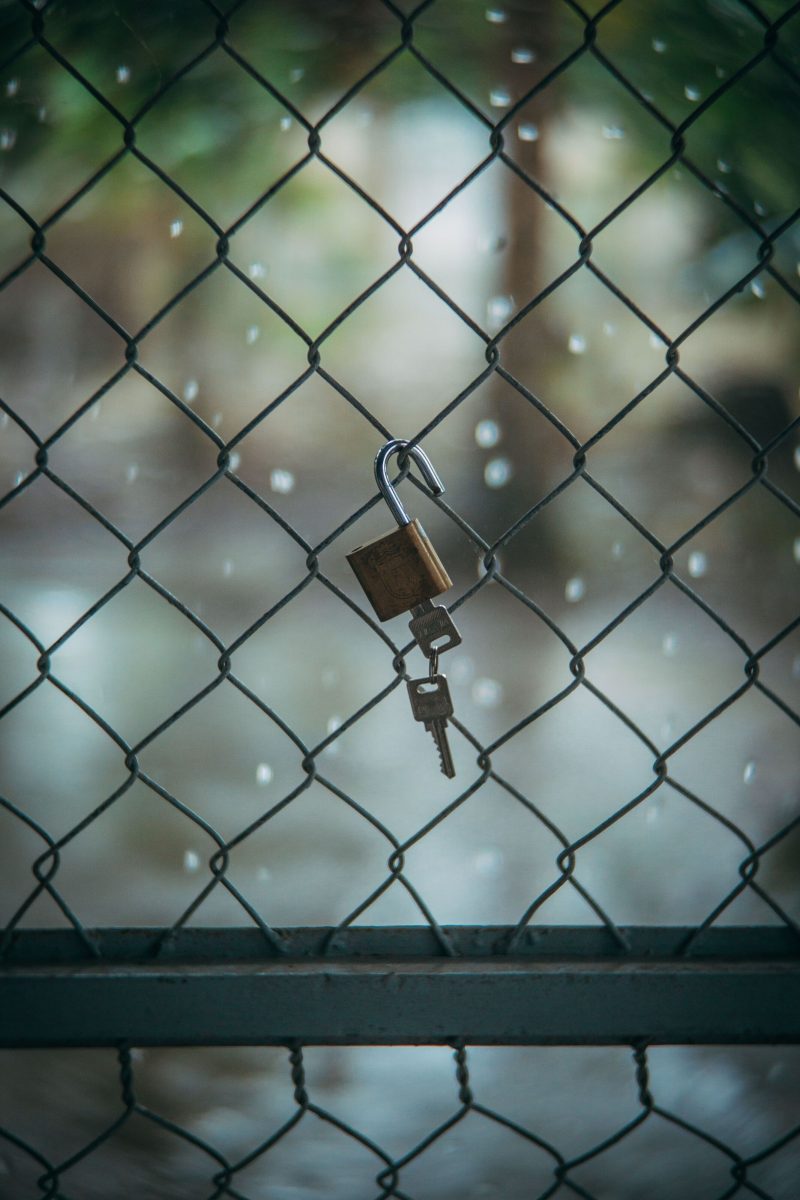
According to the Proctorio website, “Proctorio uses a third-party cloud provider for the storage of encrypted, collected data. Data is stored in data centers requested or chosen by the partnered Institution.” The security of these data centers is unknown and dependent entirely on the choice of the school. Student safety, their private information, their location, face, and voice, is entirely reliant on that data center not having a security breach. Pellissippi State itself has had a ransomware attack in the past, and it has stayed secure since then through many practices, but Proctorio and other proctoring services give hackers both means and incentive to steal student info.
But how can professors ensure students aren’t cheating through their online courses? Professor Matsen has stopped using proctoring software, stating, “I actually now have redesigned how I approach test questions so that it would be harder to cheat in those ways. According to a presentation I went to one time, putting a question or a statement at the beginning where the student completing the test has to [confirm they] did not use AI or [get] help from other people or anything like that… reduces instances of cheating.”
She uses many practices that other teachers can put into place as well, such as multi-select questions that don’t have an answer that’s easy to Google and a pool of questions that’s random for each student. She also likes to give students multiple discussion questions ahead of time, one of which will be on the tests. This allows students to prepare ahead of time, rather than in the moment of panic, using the easy button and cheating. It also forces them to study more, as they are covering multiple different questions and learning more material.
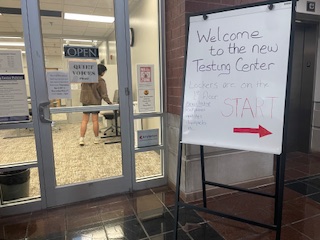
There is also the option of our on-campus testing center, which is designed for exactly this purpose. It would allow students to be monitored in a controlled environment to prevent cheating, without taking away their privacy. It eliminates technical errors that could come from AI software being used to check for cheating, and the possibility of student data being accessed. The testing center has flexible hours throughout the week, and at the very least it could be an alternate option proposed to students who are uncomfortable with being filmed in their home.
With Verity being a required tool used in College 1000, it brings these same concerns to mind. As with any proctoring service, there will still be that same question at the end of the day: is it okay to violate student privacy for the sake of academic integrity? Especially with valid alternatives, adapting curriculums and tests, as well as using the testing center. With generative AI and search engines being a constant, convenient tool for online learning, you can never be sure whether it be tests, essays, assignments, or discussion questions are free of cheating. But is it worth it to compromise the privacy of every single student in order to catch the two or three students who are cheating?