By Sandra Young, Special to the Journal
Growing up, I knew my father, George Young (George Ernest Opalisky Jr.), first simply as Dad. As I got older, I came to understand just how remarkable his life in music had been. He was a child prodigy, composer, arranger, recording artist, bandleader, teacher, and master reed player whose professional career spanned more than six decades.
My father passed away on April 22, 2026, but one of the remarkable things about a musician’s life is that death cannot silence the work that continues to resound.
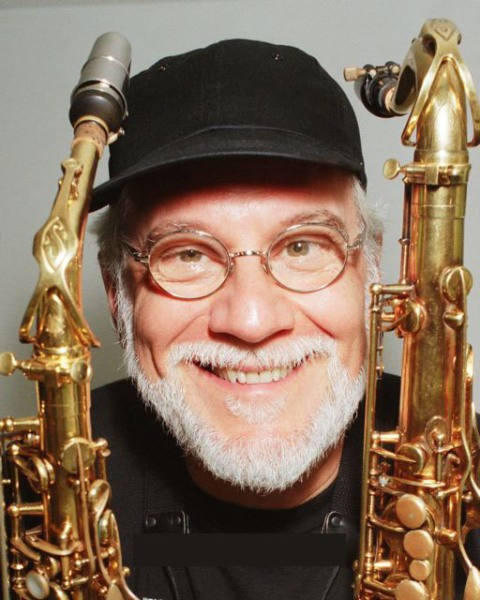
His saxophone still plays—in recordings, films, television programs, and concert footage. His compositions remain. His performances with the Manhattan Jazz Quintet remain. I can still watch him perform with Paul Simon, see him in a studio connected with Frank Sinatra, and hear the music he created decades ago.
For other people, those recordings may represent an important era in American music. For me, the musician on the screen is only Dad.
For me, preserving Dad’s career is about much more than listing famous names or impressive credits. It is about preserving the story of the gifted young musician from Philadelphia who became a composer, recording artist, bandleader and teacher—and, most of all, preserving a part of my father for our family and for people who may discover his music for the first time.
My father was born in Philadelphia and showed exceptional musical ability from childhood. He performed with the Germantown, Pennsylvania youth orchestra and received a scholarship to the Curtis Institute of Music. He studied there for three years before being offered an opportunity to enter professional music and perform in Las Vegas with his first band, the George Young Revue.
The George Young Revue became an important part of his early career, including years of performances in Wildwood, New Jersey. On November 12, 1961, the group appeared nationally on The Ed Sullivan Show, performing “Come Back to Sorrento.” His career as a recording artist and bandleader was underway while he was still a very young man.
Dad was an exceptionally versatile musician. He played tenor, alto, soprano, and sopranino saxophones, clarinet, C flute, alto flute, piccolo, and ethnic flutes. That versatility served him well in the demanding New York recording world, where musicians had to walk into a studio, read the music in front of them, change instruments when necessary, and be ready to perform.
My father also was a composer throughout his career. He wrote and recorded original music, led his own ensembles, and developed a musical voice that extended far beyond his work as a sought-after studio musician.
For my sister, Sheila, and me, our father’s career gave us a childhood that was anything but ordinary. We are originally from South Jersey; during school vacations and summer breaks, we sometimes accompanied Dad to recording dates in New York City. We had the privilege of seeing professional musicians at work and meeting many well-known singers, musicians, and performers, including Paul Simon, Frank Sinatra, Frankie Valli, and many, many more. To us, recording studios and the remarkable people inside them were simply part of Dad’s working life. Only as adults did Sheila and I fully appreciate how unusual those experiences were.
At the time, Sheila and I did not fully appreciate how unusual those experiences were. Recording studios, musicians, rehearsals and instruments were simply part of our family life. Only later did I realize how fortunate we were to see that world up close and to meet so many of the people Dad worked with.
A Luminous Career
Over the course of his career, he performed or recorded with an extraordinary range of artists, including John Lennon, Celine Dion, Mariah Carey, Madonna, Frankie Valli, and countless others. Among our family recollections are Dad’s stories of playing clarinet with the legendary Benny Goodman — one of many experiences from his long career that he shared with Sheila and me.
Depending on the artist and recording session, Dad might be heard on saxophone, clarinet, flute, or another reed instrument. In addition to albums, concerts, film, and television, he spent decades in the New York studio world recording jingles and commercial music. Much of that work was not public, but it was another important part of the career of a highly versatile professional studio musician.
My father also shared music directly with me. He taught me to play the curved soprano saxophone when I was five years old and the E-flat clarinet at six. By age nine, I was playing flute in my elementary school concert band. I also became a drummer, an instrument I have played for many years and continue to play today.
Dad’s music is still part of our everyday lives. My sister Sheila and I will be riding in the car and hear a recording he played on when it comes across Studio 54 Radio on SiriusXM, and it immediately takes us back. We both keep extensive music collections on our iPhones—our favorite music from across the years, including so much of Dad’s work. There is something very special about hearing a record decades later and knowing that the saxophone, clarinet, flute, or horn section we are listening to includes our dad. His music is not simply part of our family history; it is still key to the soundtrack of our lives.
He was also a member of G.E. Smith & the Saturday Night Live Band from 1991 through 1996. Those years remain especially meaningful to our family because archival performances still allow us to see him on television doing what he loved.
Some of my father’s performances survive on video, allowing new generations to see the musician behind the recordings. He toured with Paul Simon, and he can be seen in footage from Simon’s 1980 One-Trick Pony tour, including the October 7, 1980 concert at the Tower Theater in Upper Darby, Pennsylvania, where George played saxophone and flute.
He also participated in the historic Frank Sinatra L.A. Is My Lady recording sessions documented in Frank Sinatra: Portrait of an Album; watching the studio footage today is remarkable. I can see my father working among an extraordinary group of musicians assembled around Sinatra and Quincy Jones.
Jazz remained central to his musical identity. As a member of the Manhattan Jazz Quintet, he performed on tenor saxophone alongside David Matthews, Lew Soloff, Eddie Gomez and Steve Gadd. Their 1986 Live at Pit Inn performance in Tokyo preserves the energy and artistry of that ensemble. He also performed with the Steve Gadd Band and many other leading jazz musicians.
Millions of people heard my father without necessarily knowing his name. His film and television work included music associated with productions such as Fame, Tootsie, Working Girl, Ghostbusters, Hair, All That Jazz, National Lampoon’s Animal House, A Chorus Line, Ferris Bueller’s Day Off, When Harry Met Sally, Sleepless in Seattle, You’ve Got Mail, Miller’s Crossing, and many others.
His professional achievements were also recognized by his peers, including recognition from the New York Chapter of the National Academy of Recording Arts & Sciences. His artistry on saxophone — particularly alto and the uncommon sopranino—was part of the reputation he built among fellow professional musician
A Teacher and an Inspiration
Teaching was another important part of my father’s life. During the 1960s, advanced college music students came to my parents’ New Jersey home to study with him in master classes. After he later relocated to California, he continued teaching advanced musicians and conducting master classes, including instruction from his home.
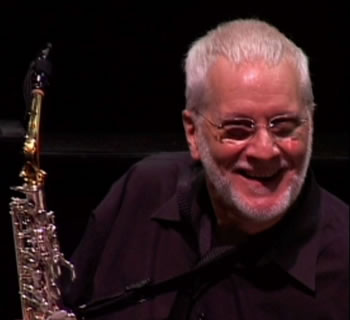
Dad may have started as a child prodigy, but I saw throughout his life that talent alone was never enough. He believed in practice, discipline, study, and continuing to grow as a musician. Those were the same things he tried to pass along to the students he taught and to his daughters.
I wanted to share my father’s story with the Pellissippi State community because his journey reminds me of the journey our music students undertake at the college.
He was once a young music student himself. His path took him from a childhood in Philadelphia to professional bandleading, composing, recording, film and television sessions, international jazz performances, and work alongside some of the most celebrated artists of his generation. Yet throughout that career, he remained both a student of music and a teacher of it.
I hope a Pellissippi State music student might hear one of his recordings, watch one of his performances, study one of his compositions, and realize that every professional career begins somewhere, and perhaps at Pellissippi State today, another young musician’s story is just beginning.
Explore George Young’s Music and Career
- Official George Young website.
- George Young official “Look and Listen” archive: Performance videos and archival material
- Additional official video archive: Manhattan Jazz Quintet, Steve Gadd Band and more
About the Author
Professor Sandra Young is a member of the Criminal Justice faculty at Pellissippi State Community College. Originally from South Jersey and now living in Farragut, Tennessee, she is the daughter of musician and composer George Young. Music has remained part of her life since childhood; she learned saxophone, clarinet, and flute from her father, has played drums for many years, and continues to play today.